What Greenville's growth left behind
Greenville County has absorbed more new residents over recent decades than most of the Southeast. That growth pushed development into formerly wooded tracts, subdivided farm parcels, and rolling Piedmont slopes — and left behind a second problem: the lots that did not sell, did not get cleared, and spent years going feral. In the Upstate's humid subtropical climate, neglected land does not hold still. Kudzu advances a foot per day in summer. Privet and Chinese tallow seed in from the edges. Sweetgum and tulip poplar saplings establish in the first growing season. What looks like a scrubby tangle from the road is often a layered mess that no push mower will touch.
For lots in that state, brush clearing is the right first scope — not full land clearing, which removes topsoil and stumps, and not a simple mow. The terrain matters here too: Greenville County's red Piedmont clay and rolling topography mean a clearing job on even a modest slope can trigger erosion control requirements that homeowners rarely anticipate. That detail shapes how every serious bid in this county should be written.
What the crew actually does, from edge to haul-off
A residential brush clearing job follows a recognizable sequence, and the walkthrough before the first cut is not optional. The crew identifies what comes out, what stays, and where material gets staged. That pass also surfaces the things price sheets skip: a drainage ditch buried under vines, a utility at the property edge, or a large hickory that will drop limbs across the cleared area in the next storm.
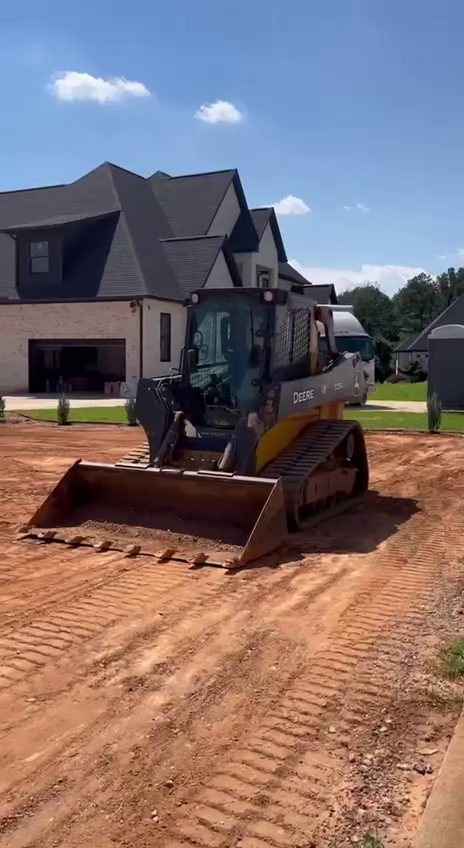
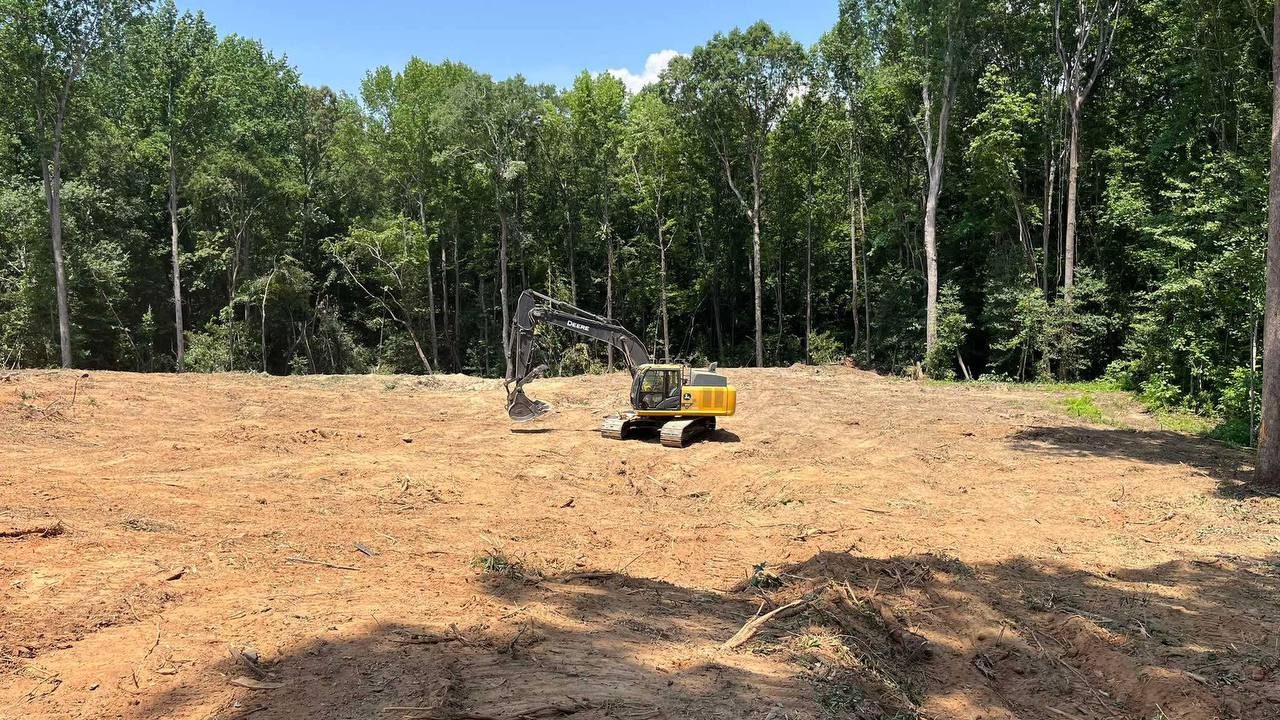
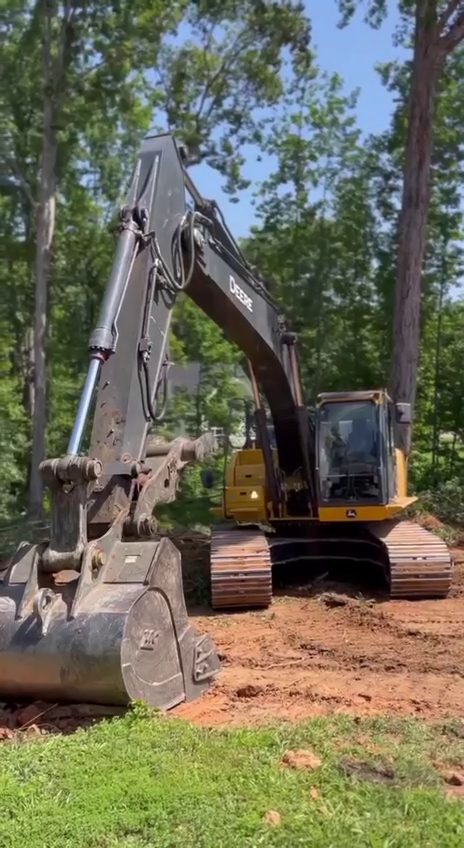
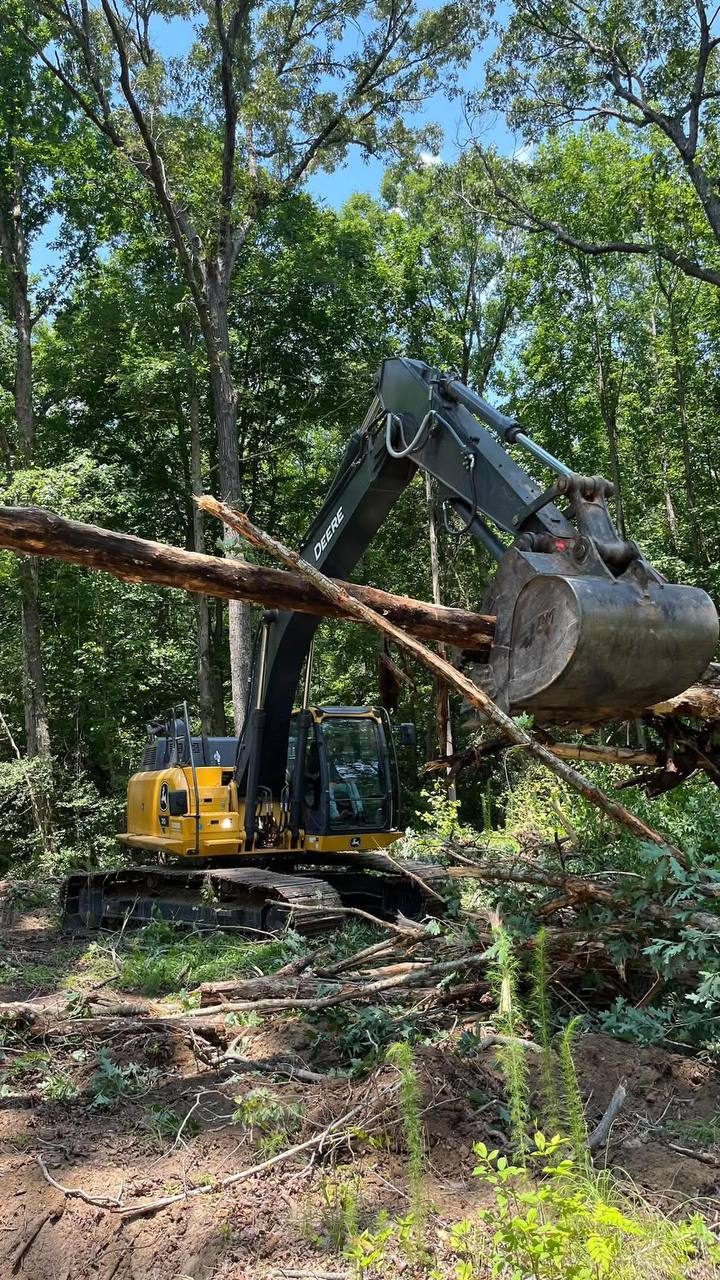
Clearing typically starts at accessible edges and works inward. For light-to-moderate growth, a forestry mulcher or brush mower processes material in place, leaving a chipped layer that stabilizes the soil while the site recovers. For heavier growth — the kind where mature privet forms a canopy — a machine cuts and piles, debris gets chipped or loaded for haul-off, and stump treatment follows: cut flush or treated with herbicide depending on species and the owner's plan for the site.
Haul-off is a cost variable worth asking about directly. Some crews include it, some bid it separately per load. On a heavily overgrown lot, haul-off can represent a quarter to a third of the total job cost. Lots left for years that need a full reset are covered in more depth on the overgrown lot page.
What it costs, and what changes the estimate
Brush clearing in Greenville County runs $500–$3,000 for a typical residential lot and $1,500–$5,000 per acre on larger tracts. The table below maps scope to expected range; the land clearing cost page breaks down the per-acre variables in more depth.
| Scope | Typical Range | Main cost drivers |
|---|---|---|
| Small residential lot, light brush, flat grade | $500–$1,200 | Debris haul-off, site access |
| Standard residential lot, moderate to heavy growth | $1,200–$3,000 | Vegetation density, stump count |
| 1-acre tract, mixed brush and saplings | $1,500–$3,500 | Kudzu or privet presence, slope |
| 2–5 acres, overgrown field or scrubland | $3,000–$5,000/acre | Invasive species density, haul-off volume |
Vegetation type is the most underestimated variable. Kudzu roots do not die when the vine is cut; a clearing job without root treatment or a follow-up visit is a temporary result. Privet re-sprouts aggressively from the stump. Both species are common enough across Upstate SC that any honest bid should address what happens to the site thirty days after the crew leaves.
Slope and red clay slow machine access, increase erosion risk, and may push a job into permit territory — which adds cost but protects the site and neighboring drainage. Debris handling (chip-and-spread versus chip-and-haul versus load-and-haul) prices differently and should be a named line item on any proposal, not buried in the total.
When a permit is actually required
Most residential brush clearing jobs proceed without a land disturbance permit. Size and slope change that calculation. Under federal stormwater rules, land disturbance of one acre or more that discharges to waters of the United States triggers National Pollutant Discharge Elimination System requirements. The EPA's NPDES stormwater program for construction activities sets the federal floor; South Carolina administers its own version through DHEC.
Smaller sites are not automatically exempt. The Greenville County Land Development Division administers local erosion and sediment control requirements that can apply below the one-acre threshold depending on slope, proximity to waterways, and overlay zones. A five-minute call to the Division before a job starts is free; a stop-work order after a machine has been on-site is not. If a contractor cannot tell you clearly whether your site requires an erosion control plan, that is worth noting before you sign anything.
Greenville County has recorded 23 federal disaster declarations over 2003-2026, most tied to heavy precipitation events. The county's stormwater system is managing real volume, and an uncontrolled disturbed slope after a clearing job adds to that load in ways that create liability for the property owner, not the contractor.
Three questions that keep a clearing bid honest
"Does this site require an erosion control plan, and who provides it?" On a sloped or large site, this separates contractors who know Greenville County's requirements from those who will leave the homeowner with a compliance problem. Contractors performing regulated land disturbance in South Carolina are licensed under the SC LLR Contractor's Licensing Board; verifying licensure before any equipment arrives is a reasonable first step.
"What is your protocol for privet and kudzu re-sprouting?" Cutting without treating is a temporary result on these species. A complete answer names either a herbicide treatment plan, a follow-up visit schedule, or both. A vague claim about getting it all out is not a plan for re-sprouting.
"How will debris leave the site, and is haul-off included in this number?" On a heavily overgrown Upstate lot, debris volume surprises homeowners and sometimes surprises contractors. Get a line item. If the debris stays on the property as chip, ask where it goes and whether it will impede drainage at the low point of the lot.