Red clay, rapid growth, and what actually changes the job
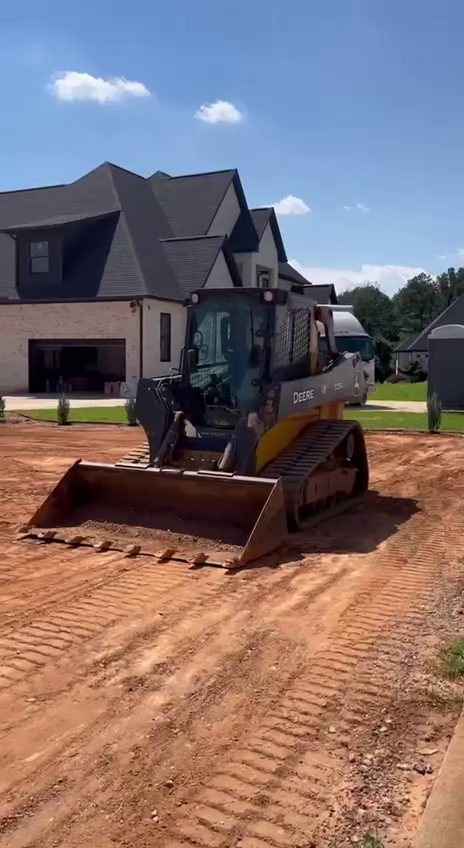
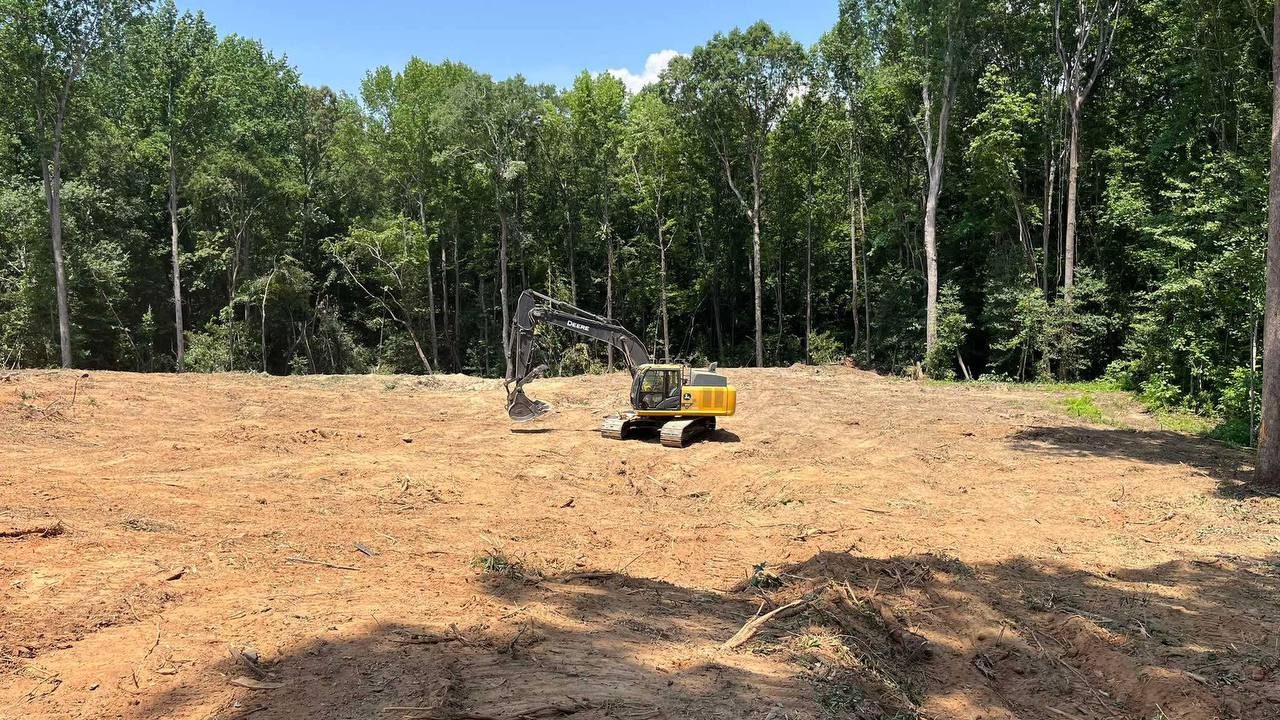
Fountain Inn sits at the southern end of Greenville County's I-385 growth corridor, where residential development is steadily filling in what was recently pine forest and old farmland. The ground beneath those new lots is classic Upstate Piedmont: a thin layer of topsoil over dense red clay that sheds water sideways rather than draining down. The moment tree roots stop holding it in place, that clay goes from stable to mobile.
That single fact shapes every land clearing job in this part of the county. The standard scope handles trees, brush, and debris removal; Fountain Inn's clay-and-slope combination adds a stormwater chapter that out-of-area contractors routinely underquote. Sites with any meaningful grade can move significant sediment in a single heavy storm before sod or seed takes hold. Getting the sequence right — clearing, then erosion control, then grading — costs less than addressing a sediment problem after a corrective notice from the county.
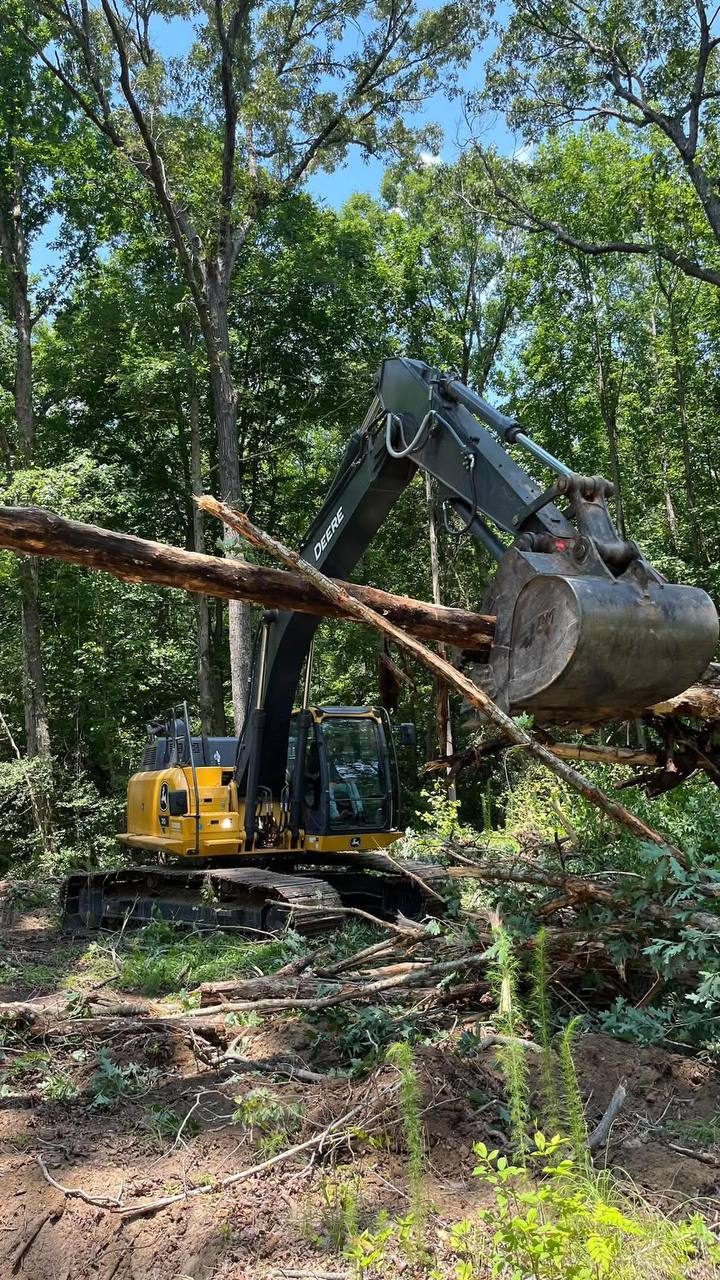
The tree mix adds a second variable. Most undeveloped lots here carry loblolly pine alongside mixed hardwoods — hickory, oak, and sweetgum that fill the edges of old fields and creek margins. Pine clears quickly; the hardwoods take more machine hours and push the top line up. A lot at the edge of a newer subdivision often has both.
Clearing costs by scope and site condition
Price on a clearing job in Fountain Inn depends on three variables: tree density and species mix, stump disposition, and whether grading follows the fell. The table below shows working ranges for Greenville County residential lots. The full land clearing cost guide gives line-item detail on each category.
| Scope | Typical Range | Main Price Driver |
|---|---|---|
| Light brush and saplings, under 1 acre | $750 – $1,500 | Density of understory growth |
| Residential lot, mixed trees, stumps left in place | $1,200 – $3,500 | Tree count and trunk diameter |
| Residential lot with full stump grinding | $1,500 – $5,000 | Stump count and soil hardness |
| Clearing plus rough grading, under 1 acre | $2,500 – $8,000 | Slope, fill volume, erosion control |
| Heavily wooded acreage (1+ acres) | $3,500 – $10,000+ | Hardwood density, debris haul distance |
Hardwood lots run higher than pine across every category, and the gap widens on sites with tight equipment access. If the property slopes toward a road, neighboring parcel, or any creek or ditch, erosion control fabric and interim seed are real budget line items in Greenville County, not optional extras. Any bid that omits them on a sloped Piedmont site is worth scrutinizing before you sign.
Permits, stormwater, and Greenville County rules
South Carolina and Greenville County both set clear thresholds for when you need approval before clearing starts. Any land disturbance of one acre or more triggers the federal NPDES Construction General Permit — the EPA's stormwater program for construction activities requires a Stormwater Pollution Prevention Plan on site before ground breaks. Smaller disturbances can still require county review; the Greenville County Land Development Division handles grading and erosion control submittals for sites across the county.
Greenville County's storm record explains why these rules carry weight. The county has recorded 23 federal disaster declarations spanning 2003-2026, the majority tied to storm and flood events. Each one sent runoff across recently disturbed land and into drainage systems sized for stabilized conditions. Erosion fencing, stabilized construction entrances, and temporary cover seed are not paperwork formalities — they are what keeps a site compliant between rain events and out of corrective enforcement.
For lots under one acre with no downstream drainage risk, the NPDES threshold may not apply. The practical test is whether the site slopes toward a stream, drainage channel, or road right-of-way. If it does, a call to the county before the first tree falls is worth more than a stop-work order mid-project.
When clearing is only the first cut
Not every Fountain Inn clearing job requires full mechanical removal of the canopy. Overgrown easements, creek banks encroached by brush, and fence lines taken over by volunteer growth are better handled by brush clearing — a targeted scope that costs less, permits more easily, and leaves the larger trees in place. Full mechanical clearing is for construction pads and development parcels; brush clearing handles the maintenance-and-access category.
When the goal is a construction-ready site, sequence is a real money factor. Clearing in one mobilization, then returning for grading in a second, doubles the setup cost and leaves bare Piedmont clay exposed through any rain event in between. A combined scope — felling, stump grinding, rough grading, and erosion blanket in one pass — typically pencils out better. Before comparing bids, confirm whether stumps are ground or only cut, what the debris plan covers, and whether erosion control is priced in. Those three questions separate complete scopes from stripped-down openers.
Timing matters in the Upstate. Late fall through early spring sees drier ground conditions relative to summer afternoon storm patterns and less competition for equipment scheduling when development activity slows. That said, most clearing runs year-round; the clay condition and site access matter more than the calendar month.
What to ask before the crew starts
Clearing work that includes grading and site preparation falls under South Carolina's contractor licensing requirements. The SC Contractor's Licensing Board governs grading contractors at defined project thresholds — ask for a license class and verify it at the board's public lookup before signing a contract. A crew that cannot produce one on a grading scope is not operating within state requirements.
Three questions specific to working in southern Greenville County: whether the crew has cleared Piedmont clay sites before (red clay under heavy equipment behaves differently from coastal sand or mountain terrain); who pulls the erosion control permit if one is required; and what the debris plan is. In a fast-growing county with active code enforcement, an unsecured debris pile creates inspection exposure before the job is finished. The answers reveal whether a contractor has cleared Upstate South Carolina lots before or is pricing this one on flatland assumptions.