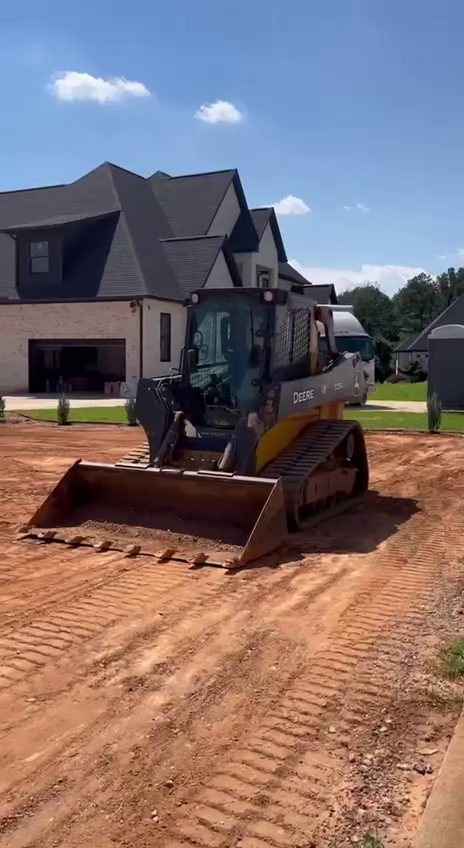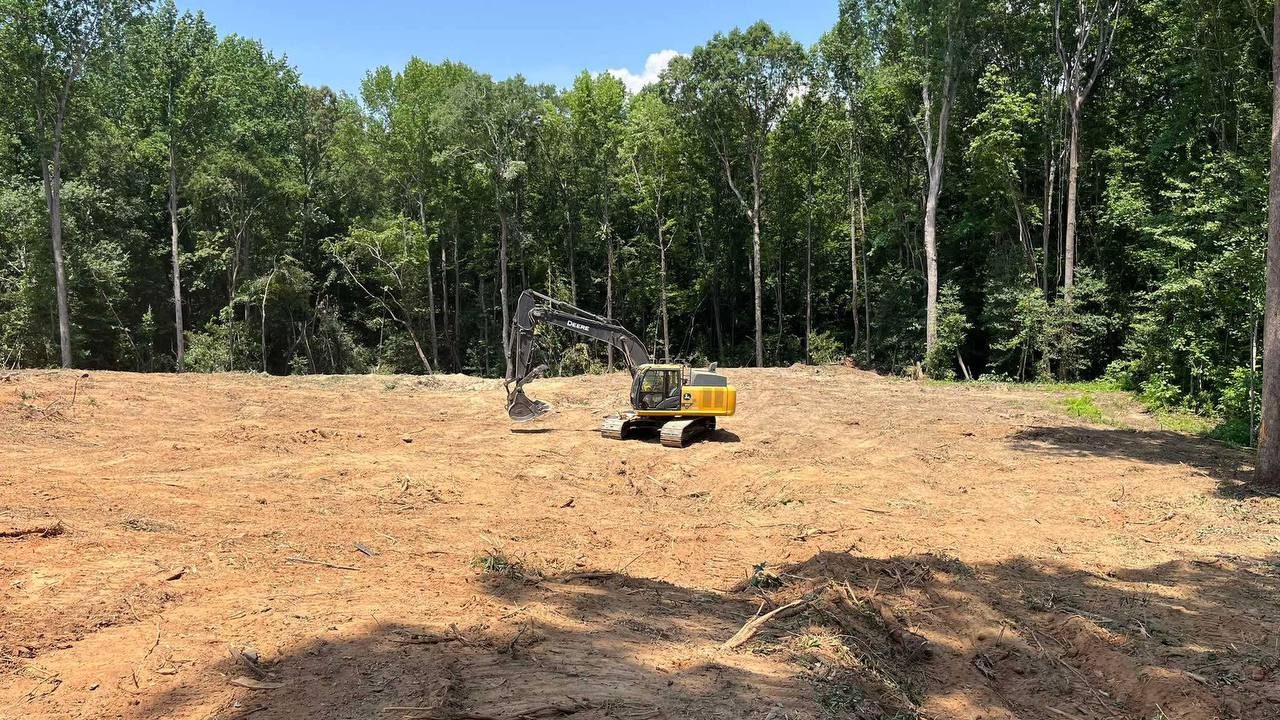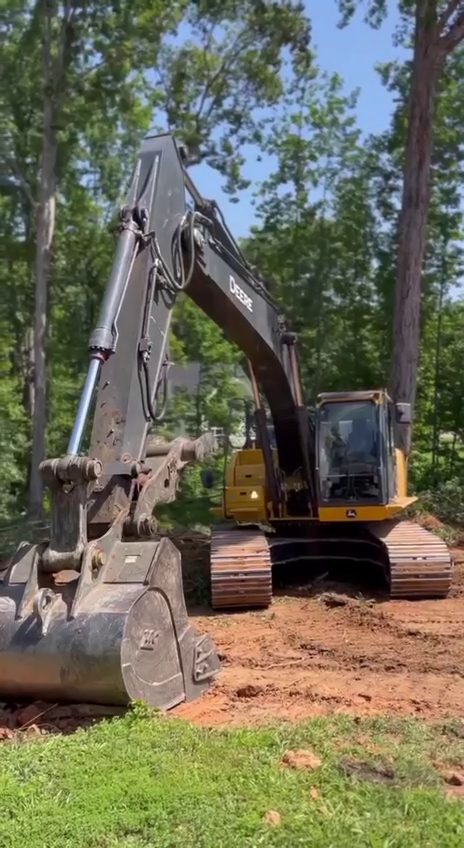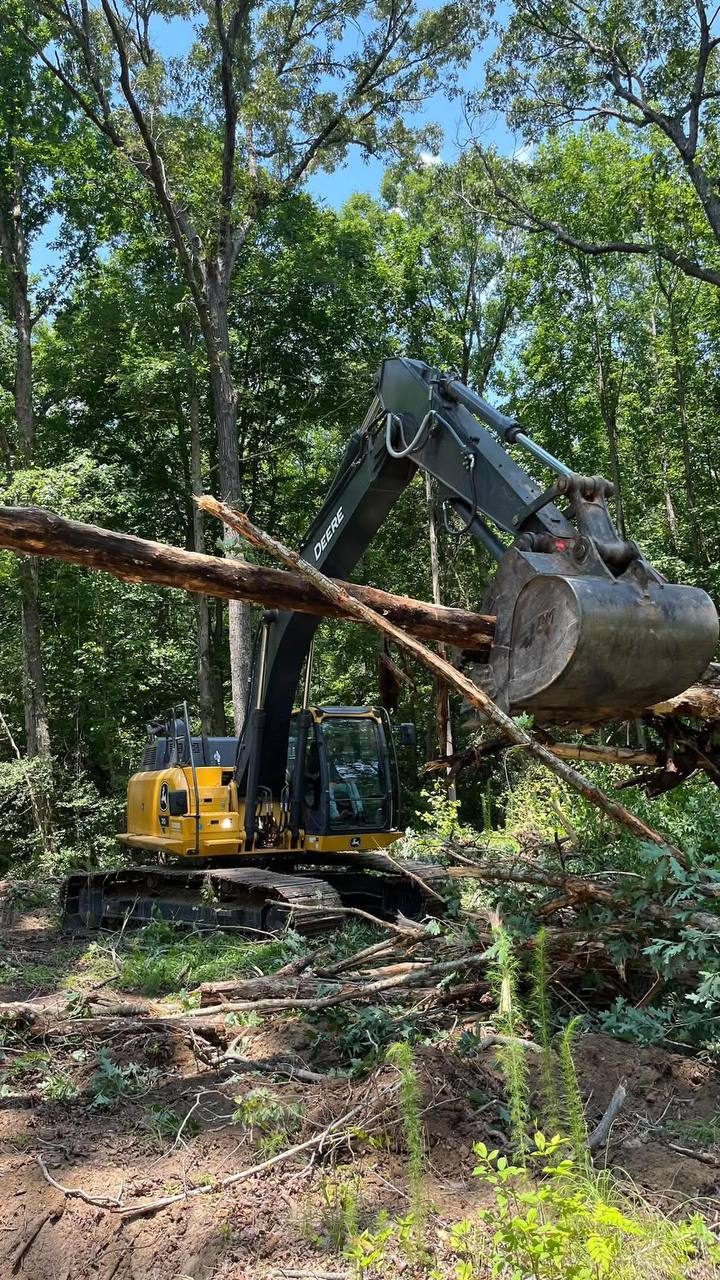
What grading a Greenville County lot actually costs
Greenville County has absorbed some of the fastest population growth in South Carolina over the past decade, and much of that growth is landing on rolling Upstate terrain that was never touched by a grader. From the Five Forks corridor south of the city to new parcels near Greer, Taylors, and Mauldin, contractors are regularly bidding on lots that look manageable from the driveway and open into Piedmont clay the moment the topsoil comes off. That red clay — dense when dry, plastic when saturated, and slow to compact correctly — is the primary reason Greenville County grading quotes run higher than the coastal Lowcountry benchmarks that dominate most national search results.
| Scope of work | Typical Greenville County range | What drives it |
|---|---|---|
| Finish grading, relatively flat lot | $1,200 – $2,200 | lot size, final slope, access |
| Drainage swale and regrade | $1,800 – $3,800 | outlet location, clay content, run length |
| Backyard slope correction with fill | $2,500 – $5,500 | fill volume, compaction layers, haul distance |
| Full lot regrade, heavy clay or poor drainage | $5,000 – $8,000 | engineered fill spec, soil testing, outlet design |
These are honest working ranges, not phone quotes. A contractor who gives a firm number before visiting the lot and walking how the grade sheds water after rain is working from a price list, not from your property. What those ranges also cannot capture is what lies beneath a lot that has already been partially graded — infill parcels and older subdivisions throughout the county regularly turn up legacy fill that was never compacted to spec, which changes the scope and the price once work starts.
What Piedmont red clay actually does to the job
The Piedmont physiographic region runs straight through Greenville County, and the iron-rich, highly plastic subsoil it produces is not like the sandy loam a Lowcountry contractor prices against. Piedmont Ultisol — what most locals call red clay — stays dense enough in dry conditions to push back hard against machine buckets and add hours to what a looser soil handles quickly. When it saturates after a storm, it turns plastic: it flows under load, it shrinks as it dries, and it fails compaction tests in ways that cause grades to settle visibly months after a job is considered finished.
The cost consequence is specific. Every cubic yard of Piedmont clay moved takes more machine time than lighter soils, and fill material placed on a slope or against a structure needs to be laid in lifts — typically six to eight inches at a time — with each lift compacted and tested before the next layer goes on. A bid that does not mention compaction testing on a clay fill job has not accounted for the clay. That step is not optional; it is what makes the grade hold when the county gets three inches of rain in an afternoon. See our grading and excavation overview for how the full scope gets built from the soil condition up.
Greenville County has recorded 23 federally declared disaster events over its history (2003-2026), a share of them tied to the kind of storm-driven flooding that heavy clay subsoil and inadequate outlet grades make significantly worse. When an upslope lot gets regraded without a designed outlet, the displaced stormwater has to go somewhere — and in a dense suburban county, that usually means a neighbor's yard or a downstream structure. Responsible grading bids account for this reality from the first site visit.
Permits, stormwater rules, and what Greenville County requires
Grading work in Greenville County falls under several overlapping regulatory layers, and knowing which apply to your project protects you if the finished grade is later inspected or a neighbor questions your drainage outlet.
The Greenville County Land Development Division administers grading and land disturbance permits for unincorporated areas of the county. Projects that disturb drainage patterns, alter finished grade near a structure, or move meaningful volumes of soil generally require a permit before grading begins. Lots within the limits of the City of Greenville, Simpsonville, Mauldin, Greer, or other incorporated municipalities follow that city's engineering or public works department process — threshold requirements are similar, but the offices differ.
At the state level, the SC LLR Contractor's Licensing Board governs who can legally perform earthwork and site-grading contracts above the state's licensing threshold. A licensed contractor matters beyond legal compliance: unlicensed grading without proper drainage design is among the most common sources of neighbor disputes and failed site inspections on residential builds in this county. The SC LLR Building Codes Council sets residential code requirements governing how finished grades must drain away from structures — a standard any grading job done as part of new construction or renovation is expected to meet.
Federal stormwater rules add another layer. The EPA's NPDES stormwater program requires a Construction General Permit for land disturbances of one acre or more. Single-lot residential grading jobs that sit near that threshold, drain to a waterway, or are part of a larger phased project can still trigger the requirement. A contractor who treats NPDES compliance as optional is not managing real legal and financial exposure on your behalf.
Drainage design is not a line item you can remove
In Greenville County, drainage is not an optional upgrade priced separately for people who want to spend more. It is part of the structural integrity of a correctly graded lot. The Upstate receives meaningful precipitation year-round — the National Weather Service tracks a precipitation pattern here with no long dry season in which inadequate drainage quietly holds without consequence — and clay-heavy soil does not absorb it quickly. A finished grade that does not positively drain away from structures and toward an engineered outlet will pool, saturate the subsoil, and undermine whatever was built on that grade, sometimes gradually and sometimes in a single severe storm.
The practical question on every grading bid is not whether drainage matters but where the outlet is and what it ties into. A swale that terminates at the property line without connecting to a roadside ditch, a detention structure, or an approved outlet is a drainage design that solves one problem and creates another downstream. If the bid does not name the outlet, ask. If the answer is that it will drain fine, that is not an engineering answer.
Drainage design adds cost proportional to the outlet configuration, run length, and whether any pipe work is involved. A correctly specified swale on a standard residential lot sits within the ranges in the table above. Projects requiring pipe, outfall structures, or coordination with the county drainage system move toward the upper end of that range and into site prep cost territory.
How to read a grading bid before you sign
Three questions protect you when comparing quotes in this market:
- What happens to the excavated material? On clay-heavy Upstate lots, whether removed soil is hauled off-site, stockpiled for reuse as fill, or redistributed immediately changes the price meaningfully and sometimes the schedule. Get the disposition in writing before work starts.
- Is compaction testing in scope? Fill placed on or near a structure, or on any slope, needs to be placed in tested lifts. If the bid does not mention compaction testing, the quote has not accounted for it. Ask directly — a contractor who knows clay explains this without being prompted.
- Where does the outlet drain? A bid without a named outlet is a bid for half a job. The price is usually lower than it should be because the second half has not been accounted for yet.
If your project runs deeper than surface grading — clearing timber, cutting for a foundation, running utilities — the excavation cost guide covers what changes below grade. For a combined picture of what site preparation costs from raw lot to build-ready, the site prep cost breakdown puts grading in context with the full scope. The complete overview of what earthwork involves on a Greenville County lot starts at grading and excavation.