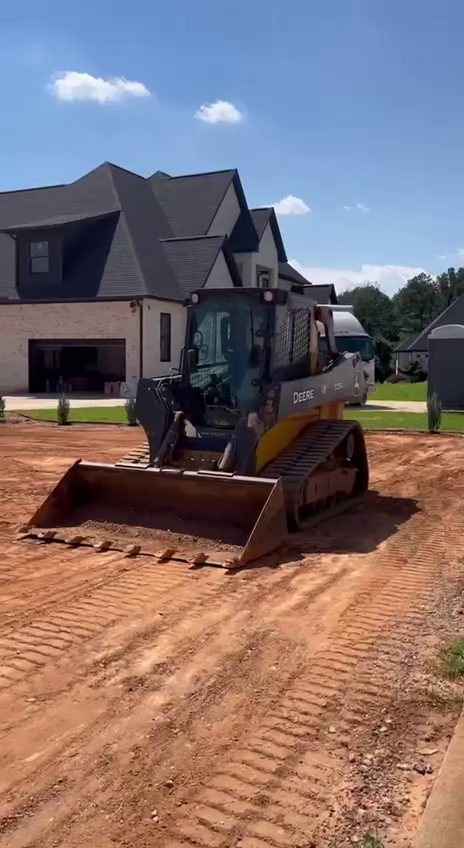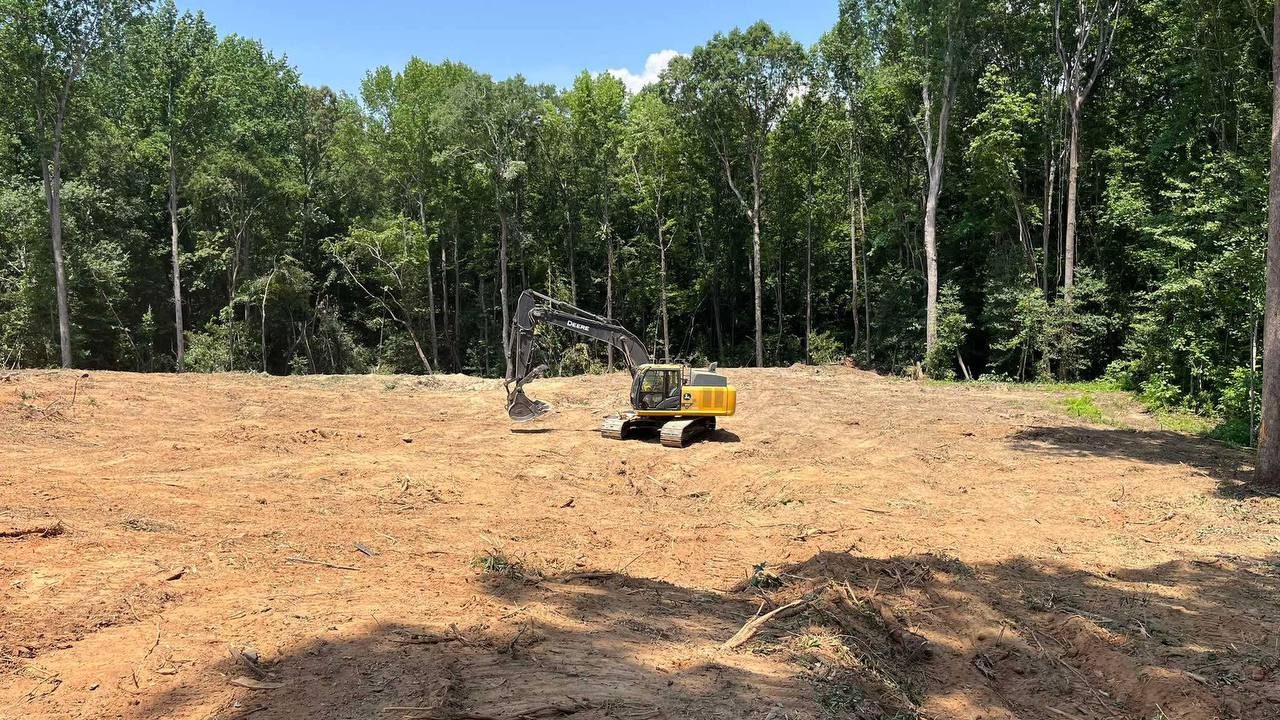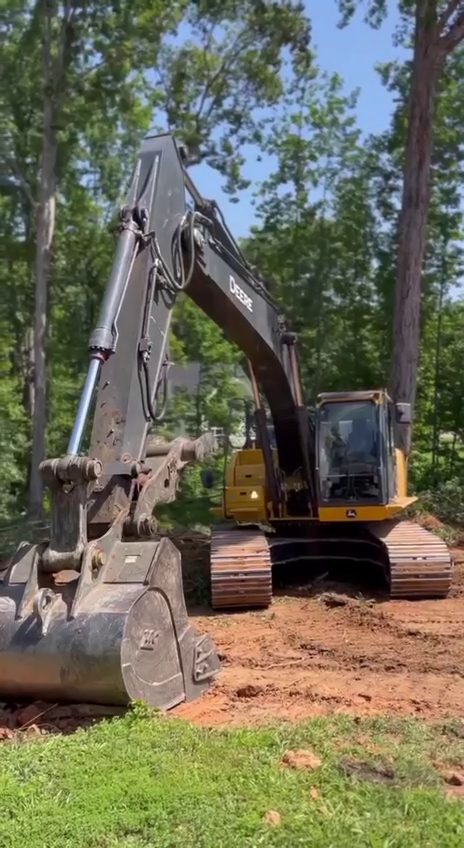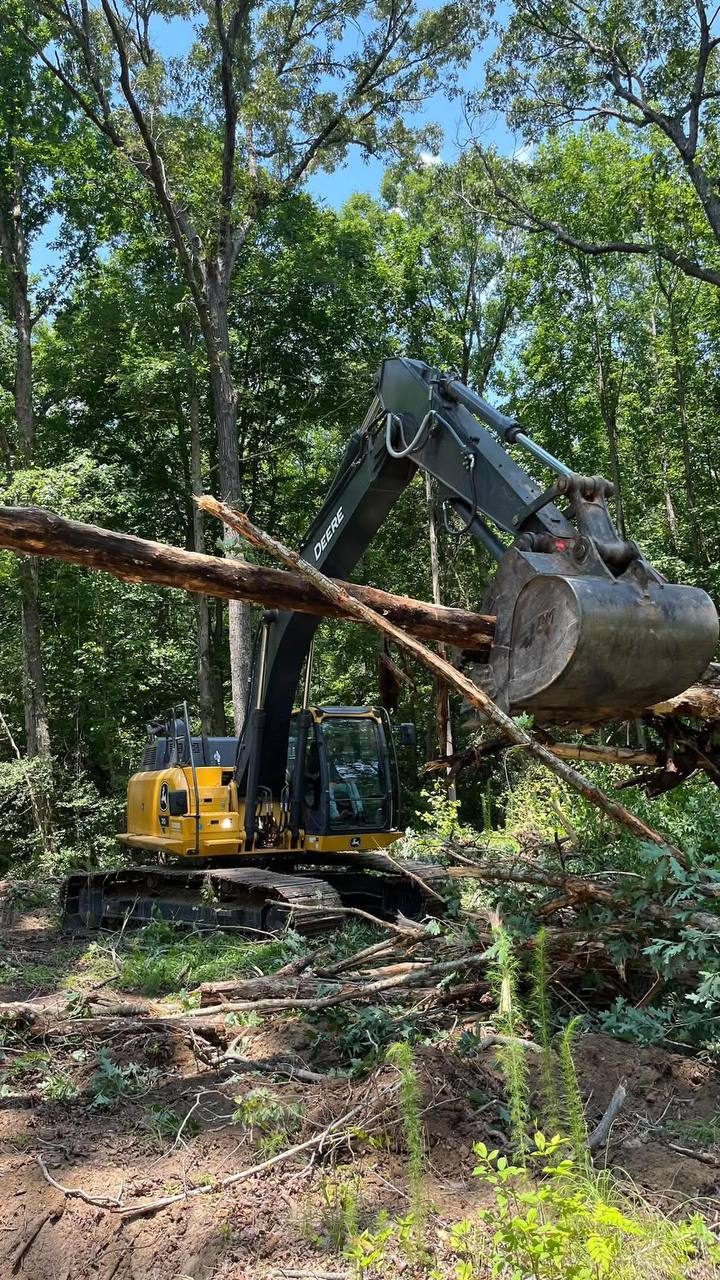
Red clay is what makes this job different
Greer sits squarely in the South Carolina Piedmont, and that geology is what makes French drain installation in Greer SC different from the same job run on the coast or in sandier Midlands soils. The red clay under most Greer residential lots holds water near the surface, swells when saturated, and releases moisture slowly enough that a heavy afternoon storm can leave a backyard standing in water for three to four days. That behavior is not a French drain design problem — it is a French drain outlet problem.
Perforated pipe buried in gravel performs exactly as intended in a sandy soil with somewhere for the water to go. In Greer's clay, the same installation fills up and backs up unless it connects to a real outlet: a daylight point at a lower grade, a sump basin with a pump, or a path to a storm structure. The distinction between a system that works and one that creates the appearance of work is almost always the outlet design. The Upstate growth corridor along Hwy 29 and the neighborhoods near Greenville-Spartanburg International Airport have added thousands of lots over the last decade, many graded to drainage requirements at close of construction and then altered by fencing, raised beds, retaining walls, and mature landscaping — all of which change where water flows. Older neighborhoods closer to downtown Greer carry a different pattern: decades of landscape settlement and root displacement have shifted grades that were once functional. French drain installation in Greer SC addresses both, but the starting point is knowing which one you have.
What drainage failure looks like on a Greer lot
The problems that bring most Greenville County homeowners to this page share a few patterns. Standing water that takes three or four days to clear after a moderate rain. A wet, spongy corner of the lawn even in dry weather, which usually means a high point uphill is quietly routing runoff toward that low. Efflorescence on a foundation wall — the white mineral stain that traces where moisture has been migrating through masonry for a season or more. And the crawl space or basement that never floods but never fully dries out, taking on humidity every time the clay outside is saturated.
Before pricing a French drain, it is worth identifying whether you are dealing with a surface grading problem, a subsurface drainage problem, or a combination of both. The standing water diagnostic guide walks through the difference and helps you match the solution to the actual failure. Getting that call right matters: sometimes regrading and downspout extension handles most of the problem, and a full French drain run is only part of the answer, not all of it.
What the job costs in Greenville County
French drain pricing in Greer turns on three variables: how far the water needs to travel, what the trench passes through, and where the outlet connects. Clay soil means more labor per linear foot than sandy soils, and a system without a viable outlet adds cost for a sump basin or for routing pipe far enough to reach a storm structure at the street. The full French drain cost breakdown covers every line item; the table below reflects the ranges that apply to most Greer residential jobs.
| Scope | Typical Range | Main cost driver |
|---|---|---|
| Single French drain run (50–100 ft) | $3,000 – $6,000 | Outlet type, trench depth, clay density |
| Multi-run or catch-basin system | $5,500 – $9,000 | Number of basins, pipe diameter, gravel volume |
| Full residential drainage plan | $7,000 – $12,000 | Combined French drains and surface grading |
| Whole-yard regrading | $15,000 and up | Topsoil volume, erosion control, seed or sod |
Bids that come in well under these ranges in Greenville County often reflect pipe laid without a proper gravel envelope, no outlet engineering, or aggregate too fine to stay clear in clay soil. That category of bid tends to require a correction installation within a few years, not decades.
Stormwater rules and permits for drainage work
Greenville County has been among the fastest-growing counties in the Southeast, and that growth has meant increasing stormwater oversight. Work that moves a meaningful volume of soil or redirects drainage across a property line connects to two regulatory layers. Greenville County's Land Development Division oversees grading and stormwater management for projects that disturb enough ground to trigger a permit — the threshold is lower than most homeowners expect, and a drainage installation that changes where runoff leaves a lot may qualify. At the federal level, construction activities that disturb an acre or more require coverage under the EPA's NPDES stormwater permit program, which governs larger site work but sets the design standards that county rules echo at the residential scale.
The 23 federal disaster declarations on record for this region over 2003-2026 are overwhelmingly storm and flood events. That history is the reason county and federal stormwater rules exist: improperly managed drainage on one lot shifts water onto the neighbor's property, and repetitive flood losses in the Upstate were the driver behind the oversight framework now in place. Greer also straddles Greenville and Spartanburg counties, and a minority of addresses carry Spartanburg County jurisdiction for permits rather than Greenville's — worth confirming with your contractor before any permitted work begins.
What to ask before hiring a drainage contractor
South Carolina requires contractor licensing for work above certain dollar thresholds, administered by the SC Contractor's Licensing Board under LLR. Any drainage or excavation job at or above the licensed threshold should be performed by a licensed contractor — verify license status before signing a contract. The licensing requirement also matters when comparing bids: a crew pricing under the licensed threshold is operating in a different regulatory category than a licensed contractor, and the two are not equivalent for a job of this scope.
Three questions to ask every crew you evaluate: how they design the outlet (the answer tells you immediately whether they understand the clay drainage problem), whether they pull the required permit when one applies, and whether the system includes an accessible cleanout point. A French drain installed in clay soil without a cleanout has no maintenance path and fails silently over time as fine clay particles migrate into the aggregate. The French drain installation guide covers what a proper installation looks like from trench profile through outlet engineering — useful reading before evaluating any bid in Greer or the broader Greenville County market.