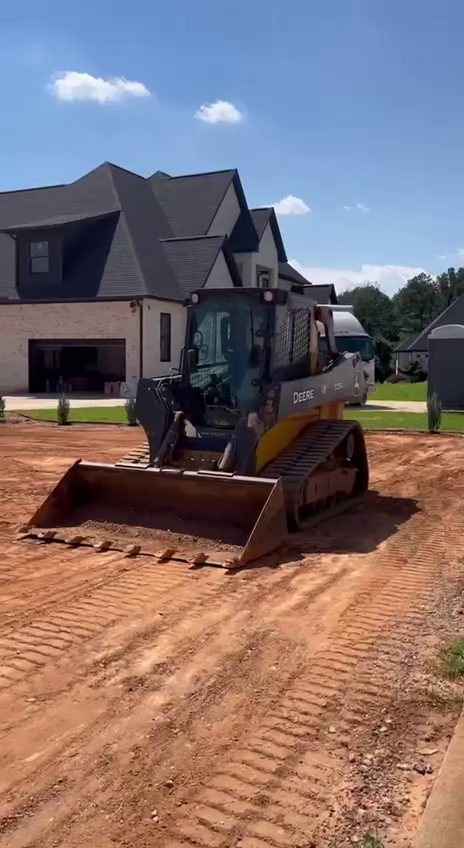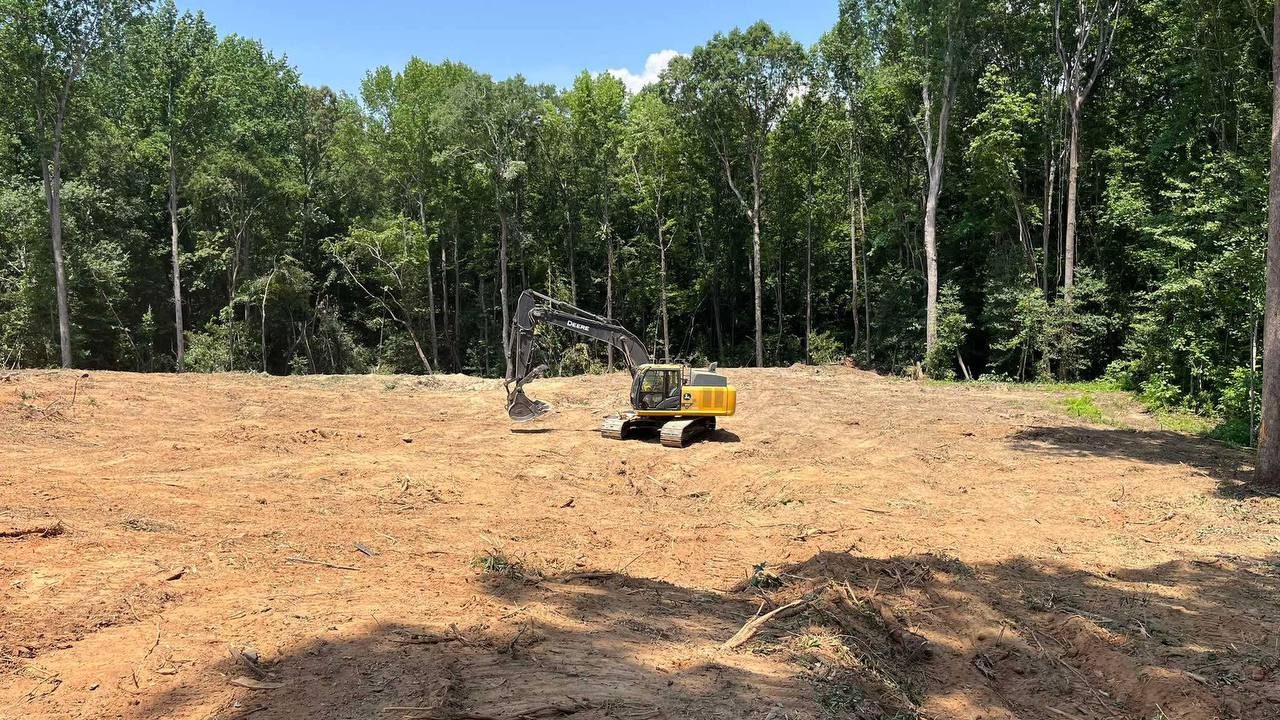
Red clay and rainfall set the real price here
Greenville County sits where the SC Piedmont grades up into the Blue Ridge foothills, and that geography comes with a subgrade problem that shapes every gravel driveway quote in the Upstate: red clay. It is dense, slow to drain, and it contracts and swells through the wet-dry cycles that define Upstate seasons. Lay gravel directly on undisturbed clay without excavating and compacting a proper crushed-stone base, and you are budgeting for annual regrading, not a durable surface.
The rainfall pattern amplifies the problem. Greenville is one of the rainiest metro areas in the Southeast, with summer convective storms layering on top of spring frontal systems. Storm and flood events have touched Greenville County 23 times on federal record (2003-2026). That history matters at the driveway scale: the same sustained rain that makes regional headlines is what sends improperly based gravel migrating into the yard or down toward the road. A lot in a Simpsonville subdivision and a rural acreage parcel north of Travelers Rest will drain differently, but both sit on the same clay and both need a contractor who checks drainage before quoting gravel tonnage.
That sequence, drainage first and gravel second, is the core of what a correct install looks like in this market. Our gravel driveway service overview explains what a full installation covers from first cut to finish grade.
What the job actually costs in Greenville County
Prices here vary more by site condition than by square footage. Length and width set the floor; base depth, drainage requirements, and site access move the number up from there.
| Scope of work | Typical Greenville range | What drives it |
|---|---|---|
| Gravel top-dress, stable existing base | $1,800 – $2,500 | tonnage, haul distance, spread depth |
| New residential driveway, standard install | $2,800 – $5,500 | length, excavation depth, clay condition |
| Re-grade with drainage correction | $4,500 – $8,000 | slope, swale work, outlet routing |
| Long drive (200+ ft) with full base prep | $8,000 – $12,000 | gravel volume, base layers, culverts |
These are working ranges, not quotes. A job that presents as a standard new install can move into the drainage-correction tier the moment a contractor sees standing water at the edge of the existing pull-in or a swale that channels toward the foundation. That is not a bait-and-switch; it is a site condition the initial phone call cannot predict. Honest contractors find it at the site visit; the ones to avoid find it on change orders after the deposit clears.
Culverts are their own line item. If your driveway crosses a roadside ditch, a correctly sized culvert is a required part of the installation, not an optional upgrade. Our culvert installation cost guide covers what diameter, length, and headwall work typically add to the project total.
Permits, stormwater rules, and what Greenville County requires
Most residential gravel driveways in unincorporated Greenville County do not require a building permit for the driveway surface itself, but that changes quickly once the project touches a public right-of-way or creates a new entrance onto a county-maintained road. The Greenville County Land Development Division handles driveway access permits for those connections, and their review determines setback, sight-distance, and culvert requirements at the road edge.
Stormwater rules reach further than most homeowners expect. Projects disturbing an acre or more of land — a long rural driveway installation with significant re-grading can get there faster than it looks on a quote sheet — require coverage under the EPA's NPDES program for construction stormwater discharges (EPA NPDES Construction Stormwater). Your contractor handles that paperwork, but knowing it exists is useful: a contractor pricing a large site-disturbance job who never mentions stormwater compliance is worth scrutinizing on the base-prep detail too.
For general contracting work involving significant excavation and grading, verify contractor licensing through the SC LLR Contractor's Licensing Board before work begins. A gravel driveway with meaningful re-grading moves soil, redirects drainage, and has real consequences for neighboring properties if done wrong. License status is public record and the lookup takes two minutes.
When drainage work belongs in the quote
Gravel driveways in the Upstate fail in a recognizable pattern: surface gravel migrates downhill or washes into the yard after heavy rain, the base beneath erodes or softens, and two years later the driveway needs re-grading that costs most of what the original install did. The root cause is almost always drainage. Water moving across the surface during storm events carries gravel with it, and water wicking upward through clay subgrade that never fully dries weakens base compaction over time.
A contractor addressing this correctly will work through two questions before the quote is final: where does runoff go when it leaves the driveway during a two-inch rain, and is there a low spot on the lot that collects water toward the drive? The answers determine whether edge swales, surface crown shaping, a French drain behind the base, or a culvert at the road entrance belongs in the scope. Excluding those items lowers the bid number; it does not lower what you will spend over five years.
If your existing driveway is already showing washout patterns — rutting, gravel migration toward the edges, standing water after storms — our gravel driveway washing out guide covers the diagnostic questions and what a repair-versus-rebuild decision looks like in Upstate SC clay.
How to keep the quote honest in this market
Three checks protect you when comparing bids for a gravel driveway job in Greenville County:
- Base prep should be itemized. The estimate should specify excavation depth, base material type (typically crush-and-run or ABC stone), and compaction method. A quote that bundles everything into a per-foot rate with no base detail is not a full quote; it is a floor price that grows once the machine is on-site.
- Drainage must be addressed, not assumed. Ask each bidder what happens to water during a two-inch rain event. How they answer tells you whether they have actually looked at your lot or are working from a template price sheet.
- License status is public record. Check the contractor's current standing with the SC LLR Contractor's Licensing Board before signing anything. Meaningful excavation and grading carries real liability; you want a licensed contractor with current general liability insurance, not just a low bid.
Getting two or three bids is worth the extra week. Honest bids for comparable scopes cluster near each other. A bid that lands well below the ranges in the table above deserves a detailed explanation. Sometimes there is a real reason — shallower clay layer, easier road access, shorter haul — and how the contractor explains it tells you everything about how the job will go.