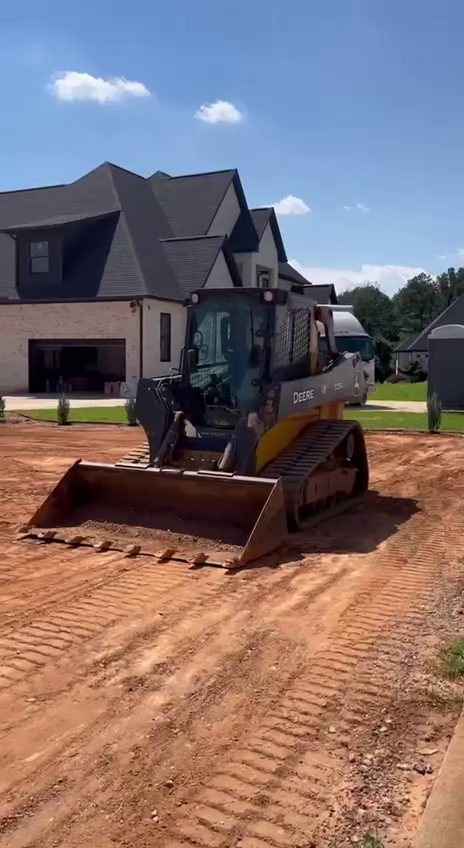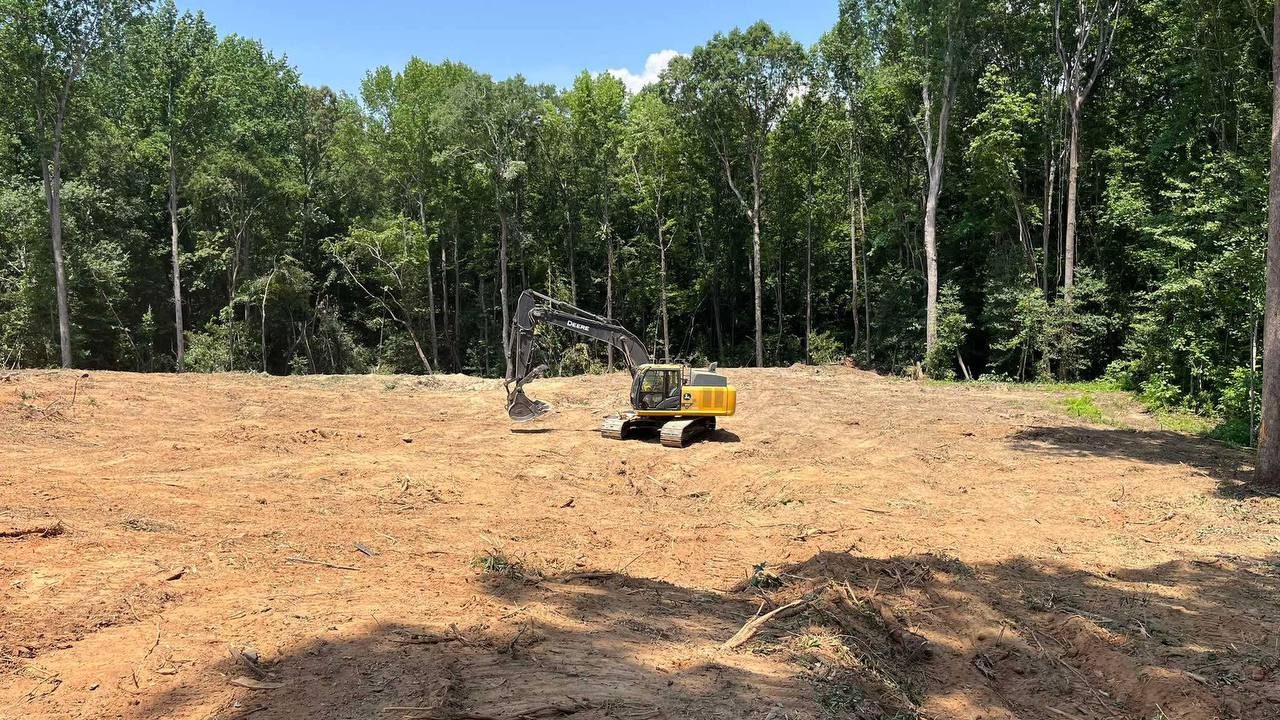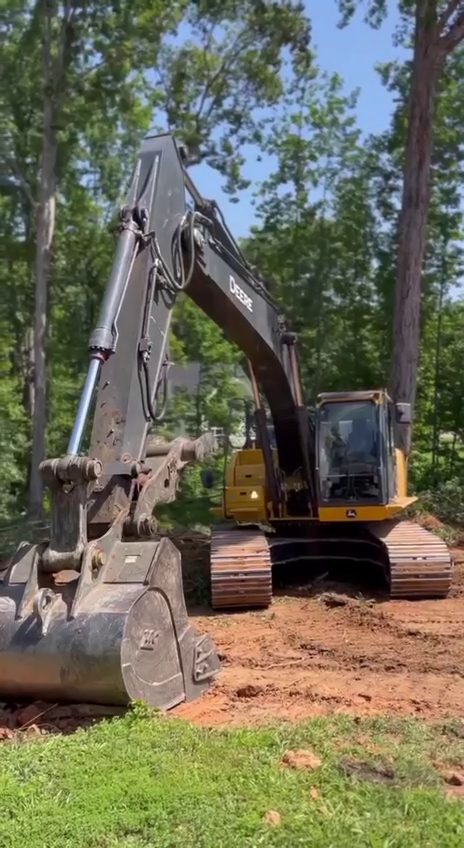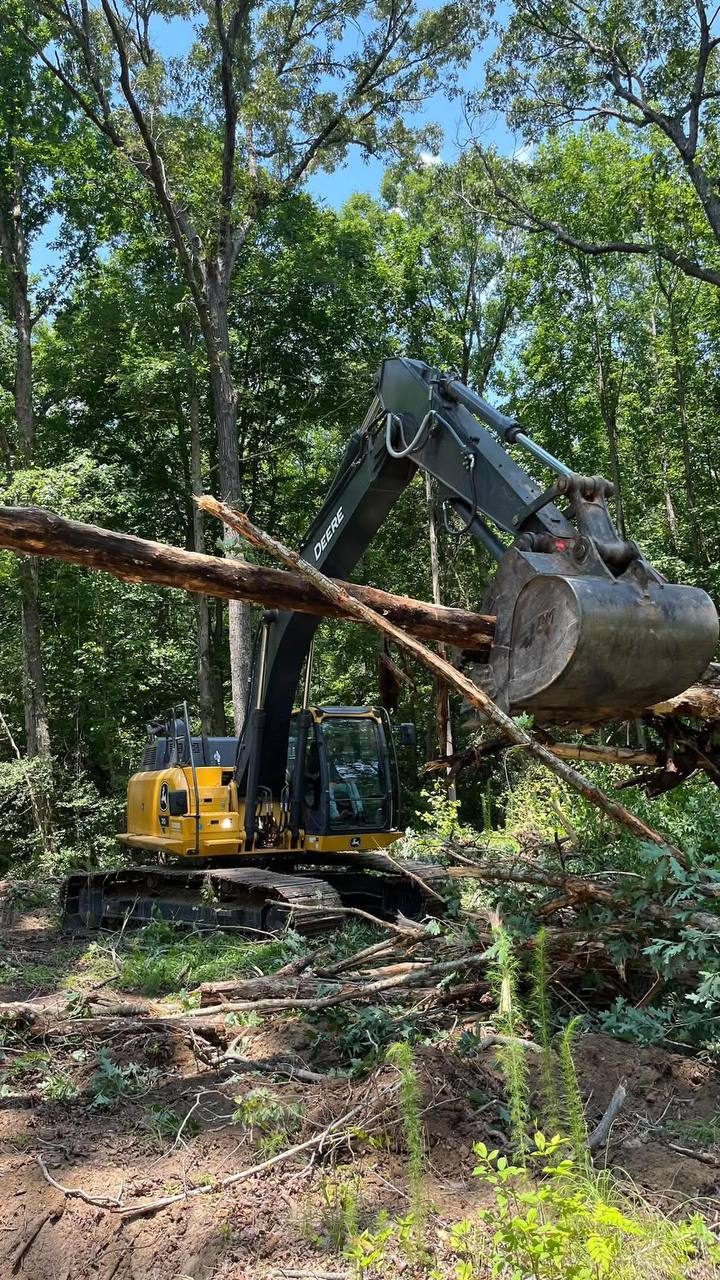
Red clay is the job underneath the job
Greenville County's Piedmont red clay is the defining condition of every gravel driveway installation in the Upstate. It holds water instead of draining it, compacts poorly under repeated load, and slowly absorbs gravel into itself when the native soil isn't properly addressed before installation begins. The gravel itself is a commodity. What you're actually buying is the excavation depth, the compacted base, the crown angle, and the drainage plan — the decisions made before the first stone truck arrives on site.
The rolling terrain common to Greenville County parcels compounds the clay problem. Where the land drops across the driveway's run, water doesn't just pool — it accelerates and carries gravel with it on its way downhill. This is the gap between a driveway that holds through fifteen years of Upstate weather and one that washes out in a season, and both can look identical the day the crew leaves. For the specific failure patterns, see why gravel driveways wash out.
What installation involves, step by step
A residential gravel driveway in the Upstate typically runs one to two days depending on length and soil conditions:
- Layout and crown plan. Crown direction and overall drainage slope are mapped before equipment moves. A correctly crowned drive sheds water to both sides rather than collecting it in the center where traffic runs.
- Excavation. Piedmont clay typically requires removing 6–10 inches of native soil before base work can start — more in areas with seasonal saturation or chronically soft ground. This is the step most low bids undersize or leave out entirely.
- Geotextile fabric. A filter fabric layer between the native clay and base stone stops clay fines from migrating up into the gravel over time. That migration is what turns a gravel surface into a mud surface within a few seasons.
- Compacted base. Crusher run or #57 crushed stone is placed in lifts and mechanically compacted — not dumped to full depth and graded in one pass. Each lift needs compaction before the next goes down, which is how a base actually performs under load.
- Culvert at the road connection. Where the driveway crosses a roadside swale, a correctly sized culvert passes water through without backing up or eroding the tie-in. See culvert installation for sizing requirements and what a right-of-way permit involves at a county or state road.
- Top course and final grade. Finish stone placed and shaped to the finished crown, then compacted. The final grade check on crown and runoff direction is worth the few minutes it takes.
What it costs and what moves the number
Installed pricing in Greenville County reflects real variation in excavation depth and drainage requirements, not marketing flexibility. Full scope-level pricing is at the driveway cost page.
| Scope | Installed Range |
|---|---|
| Short driveway, 100 ft or less, good existing grade | $1,800–$2,800 |
| Standard residential, 100–300 ft | $2,800–$5,500 |
| Long run or significant clay base work required | $5,500–$8,000 |
| Long driveway with heavy base, grading, and culvert(s) | $8,000–$12,000 |
Driveway length is the most visible variable. Excavation depth driven by soil saturation is the one that separates bids on jobs that look identical on paper. A lot with chronically wet soil requires removing significantly more material before base work can start, and that additional excavation is real time and equipment hours. Gravel type is a smaller price driver than most homeowners expect — the base is where the cost lives on a well-built driveway.
Gravel selection for Upstate soil and traffic conditions
Crush-and-run, also called crusher run, is the workhorse material for Upstate driveways. It compacts into a stable, interlocking mass rather than rolling loose under traffic, which matters on a crowned surface that needs to hold its shape through Greenville County's wet seasons. It is the right default for base and finished surface on most residential driveways in clay conditions.
#57 washed stone is angular, clean, and drains freely through its voids — which makes it a useful top course where surface drainage is the priority, though it won't bind as tight as crush-and-run and will migrate more under repeated turning movements near the road. Pea gravel is used in low-traffic and decorative applications. It offers no structural benefit as a primary driveway surface on clay soil and is not the right material for a working driveway in this region.
The material choice is a smaller driver of cost than most homeowners expect when collecting quotes. The difference between a $2,500 estimate and a $4,500 estimate on the same length of drive is almost never the stone — it's the base specification and what the contractor plans to do with the clay before the gravel arrives.
Stormwater, permits, and what Greenville County administers
Grading and excavation disturb soil, and disturbed soil produces runoff. Most residential driveway jobs fall below the thresholds that trigger full federal NPDES permitting — but the trigger is one acre of land disturbance, and long hillside driveways on larger Upstate parcels can approach it. The EPA NPDES stormwater rules for construction activities apply based on what is actually disturbed, not based on whether anyone checked the acreage.
In Greenville County, the Land Development Division administers grading and drainage standards for private property. Most standard residential driveway installs fall below the county's land disturbance permit thresholds. Projects that reshape drainage patterns or connect to a county road involve additional requirements, and road access connections typically need a right-of-way permit regardless of overall project size. It is a reasonable question to put to your contractor before work begins.
Greenville County's storm history makes drainage design a permanent investment. With 23 federal disaster declarations over 2003-2026, saturating rain events are part of this county's documented record. A culvert undersized for local rainfall and a crown too shallow to shed standing water will announce both failures in the same storm.
What to ask a contractor before signing
South Carolina requires contractor licensing for grading and excavation work above defined thresholds, administered through the SC Contractors' Licensing Board. Any contractor performing significant earthwork should be appropriately licensed and willing to verify it on request. That is the baseline, not the selection criterion.
The questions that distinguish experienced grading crews from driveway-gravel delivery operations:
- "What depth are you excavating to?" A specific answer based on soil conditions is a reasonable expectation. Vague assurances are not.
- "Are you compacting the base in lifts?" Lift-by-lift compaction and a single-pass grade over full depth produce different results under load.
- "Are you using geotextile fabric, and where?" Not every contractor does. The ones who know why it matters in clay are the ones worth hiring.
- "How is the culvert sized?" Culvert sizing follows drainage calculations, not intuition. An undersized culvert backs water up and erodes the road tie-in.
Contractors who answer these questions without hedging are not overselling the work — these are the standard decisions that determine whether the driveway holds through a Greenville County wet season. The ones who can't answer them are telling you something worth hearing before you sign.