Red clay is why the same fix keeps failing
Greenville County sits squarely in the South Carolina Piedmont, where the subsoil is a dense, expansive red clay that holds water long after a storm clears. That clay is the reason a gravel driveway here behaves differently than one on sandy coastal soils or on well-draining loam. When rain saturates the base of a gravel driveway in this county, the clay swells, softens, and pushes upward into the stone above it. The result is mud at the surface, and spreading more gravel on top only delays the same outcome by a season.
The signs are consistent across the county: tire ruts that fill with standing water, gravel that sinks into the ground rather than compacting, and a surface that holds through August only to turn to slick red paste by February. These are base failures, not surface failures. They show up on subdivisions off Woodruff Road, rural lots in the Travelers Rest corridor, and infill lots in Simpsonville alike — the soil is the constant.
That diagnosis changes what the repair looks like. A material delivery that fills the ruts is not a fix; it is a delay. The lasting repair works on the base, not the top.
What a base repair actually involves
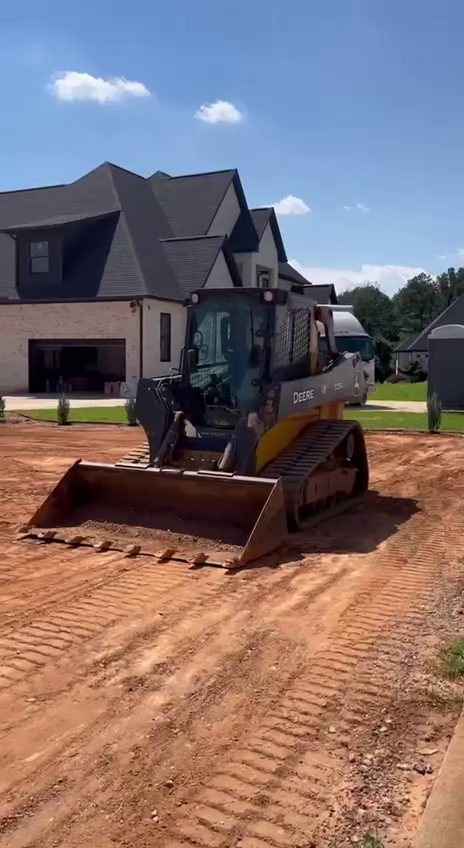
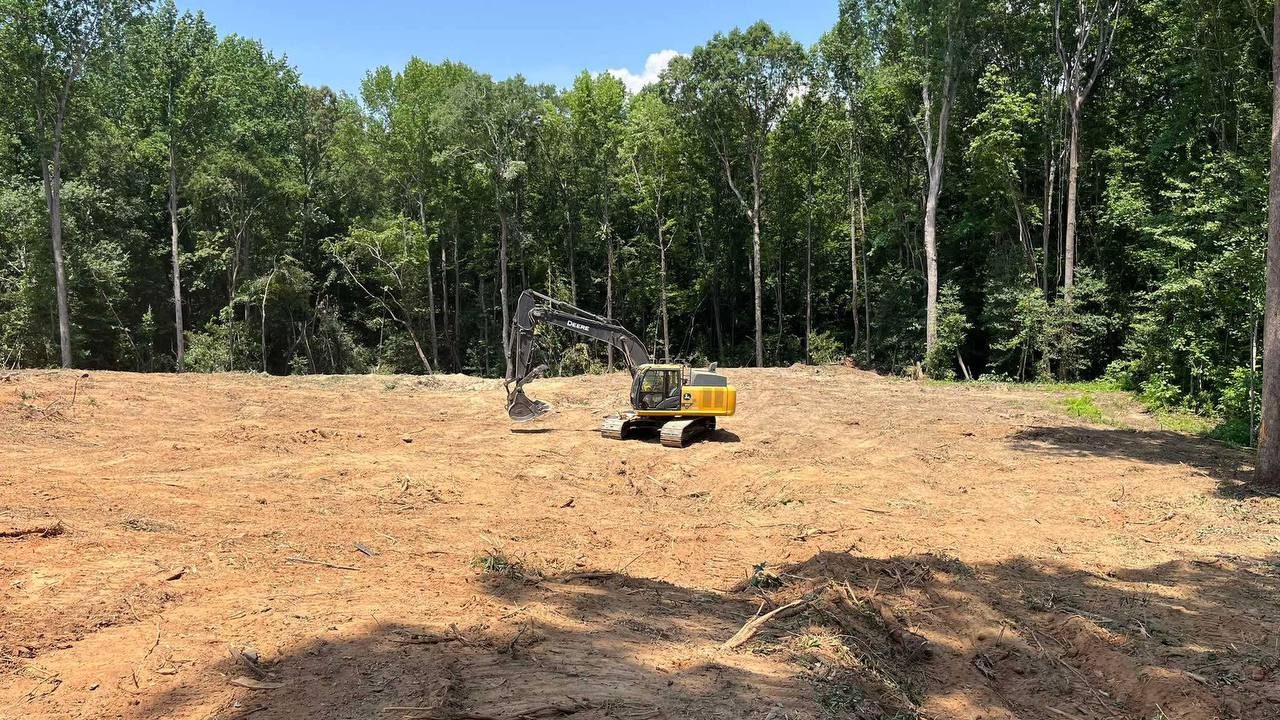
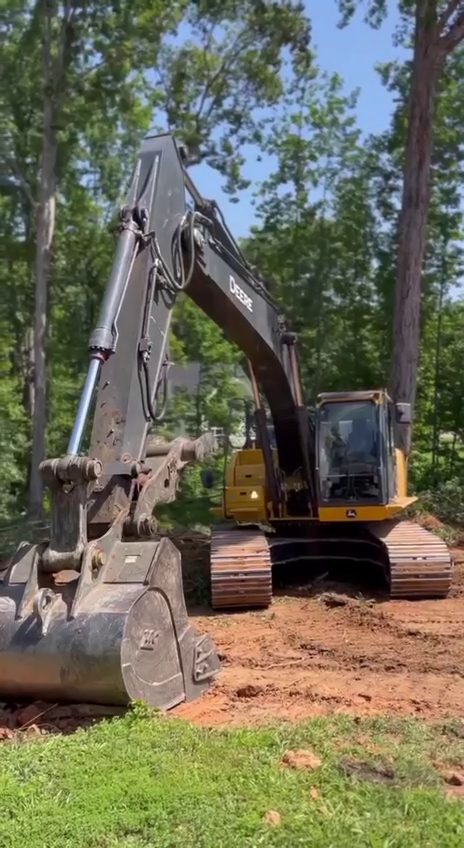
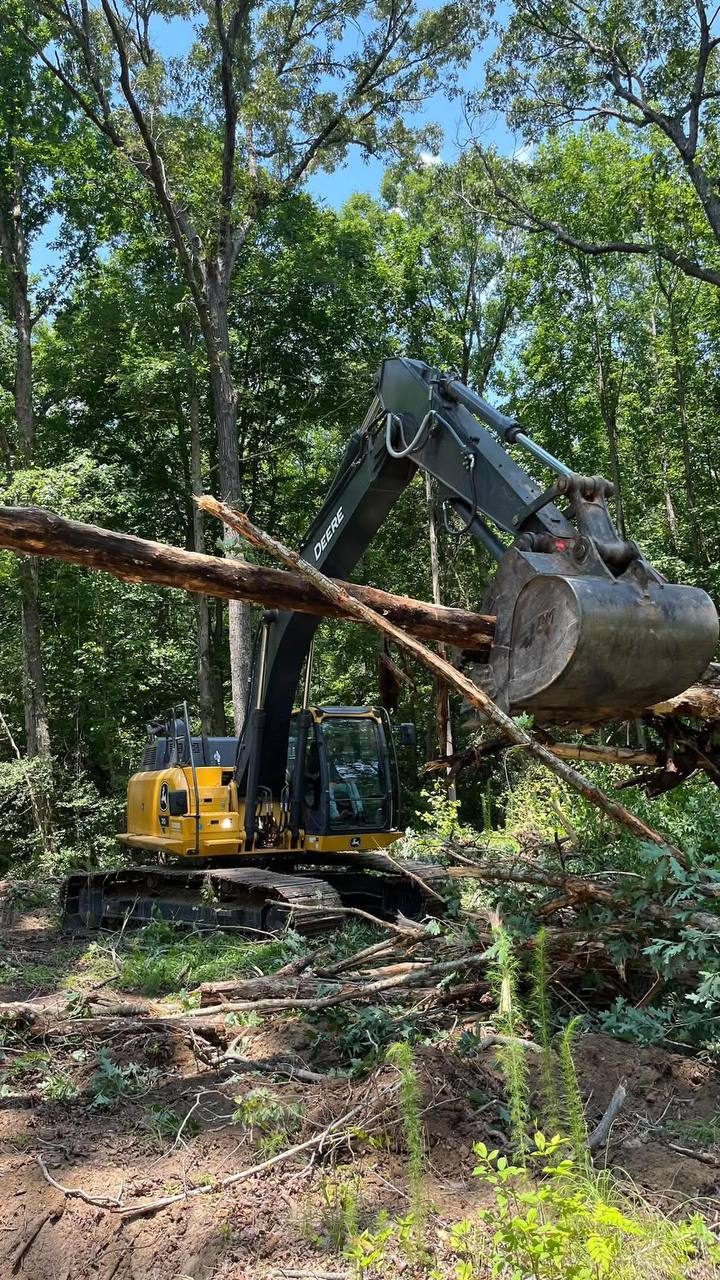
A durable repair in Greenville County clay soil requires three things a standard topdress skips: excavation, geotextile separation fabric, and positive drainage slope. The process starts by pulling the existing gravel and cutting into the clay base, typically six to eight inches deep, until stable compactable material is reached. Geotextile fabric goes in across the full driveway footprint to create a physical barrier between the clay and the aggregate above. Without that barrier, any crushed stone layer will gradually mix with clay and disappear within two to three wet seasons.
Compacted sub-base aggregate goes in over the fabric, followed by a finish gravel layer matched to the traffic load. For residential driveways, #57 stone or #4 crusher run handles typical vehicle traffic well in Upstate conditions. The gravel driveway overview covers how material grades perform under different use patterns. Cross-slope on the finished surface, at least two percent toward the shoulder, is what prevents ponding and keeps the base from resaturating with every storm.
Most homeowners discover the cost of skipping these steps the hard way: a topdress lasts a season, a second topdress lasts a season, and by the third repair the cumulative spend exceeds what a single base rebuild would have cost at the start.
What the work costs in Greenville County
Cost tracks scope closely. A surface material delivery is fast and inexpensive but solves nothing below grade; a full base rebuild with drainage work is a larger project that holds for years. The ranges below reflect realistic regional pricing for each repair scope.
| Scope | Typical Range | What it covers |
|---|---|---|
| Surface topdress (gravel only) | $400–$900 | New gravel over existing base; short-term fix on clay subgrade |
| Fabric + gravel, no excavation | $800–$1,800 | Fabric laid, fresh stone on top; works if base is still firm |
| Full base rebuild | $2,200–$5,500 | Excavate, geotextile fabric, compacted sub-base, finish gravel |
| Base rebuild with drainage correction | $3,500–$8,000 | Regrading, swales, or pipe drainage included |
| French drain addition | $1,200–$3,500 | Interceptor drain installed alongside or below the driveway |
Driveway length, slope grade, and the depth of base failure are the main cost drivers. The full Greenville County gravel driveway cost breakdown covers per-foot pricing and what a complete bid should itemize so you can compare proposals on equal terms.
Where the water is actually coming from
Greenville County has recorded 23 federal disaster declarations over 2003-2026, the majority connected to storm and flooding events. The Upstate gets intense convective storms through summer and into fall, the kind that drop two or more inches in an hour, and a driveway without adequate cross-drainage becomes a water collection point by default. Before gravel work begins, tracing the actual water source matters: roof runoff landing at the driveway edge without gutters, sheet flow from a higher adjacent lot, or a low-grade driveway with no outlet all produce conditions that will overwhelm a repaired base if they go unaddressed.
The French drain installation overview explains how interceptor drains work alongside base repairs when regrading alone is not enough to redirect surface flow. The National Weather Service station data for the Greenville region shows the county receives well above 50 inches of precipitation annually — in a climate that wet, any weakness in a driveway base and drainage will find water on a regular basis.
Permits, licensing, and what to ask a contractor
Routine gravel resurfacing on a residential driveway typically does not require a permit. Grading and drainage work that disturbs a significant land area or changes how stormwater leaves the property can require review before work starts. The Greenville County Land Development Division administers stormwater and grading permits for projects above certain disturbed-area thresholds. For larger scopes, federal stormwater rules under the EPA NPDES construction stormwater program apply once land disturbance exceeds one acre — relevant if the project includes significant regrading of the driveway corridor or surrounding drainage channels.
For the contractor, verify licensing before any work agreement is signed. South Carolina requires contractor licensing above defined project dollar thresholds, and the SC LLR Contractor's Licensing Board is the state authority for verification. A properly licensed contractor carries bonding and insurance that protects you if drainage work creates downstream issues on neighboring property.
The right question for any bidder is how they handle the clay-to-gravel interface: the fabric specification, the aggregate grades, how they establish finish slope, and whether drainage is planned into the same mobilization. Those answers separate contractors familiar with Piedmont clay conditions from those who learned the trade somewhere easier.