Greenville County's converted farmland changes every quote
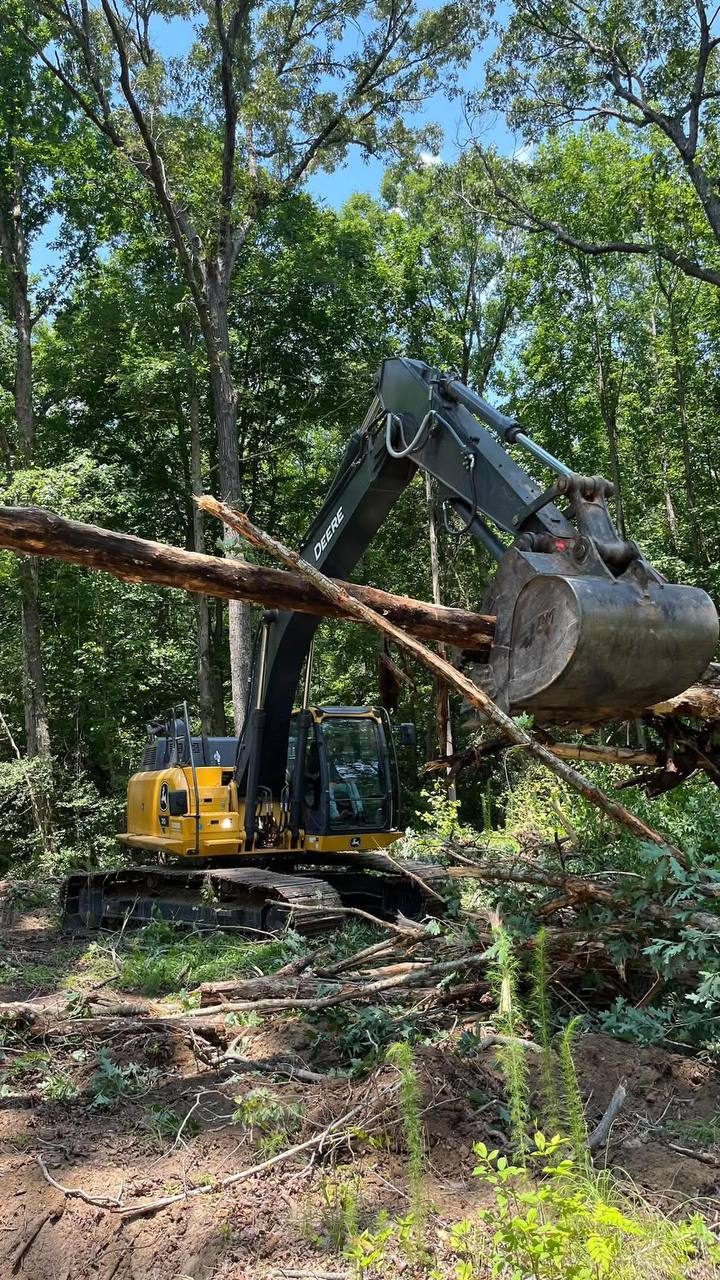
Drive the county roads between Simpsonville and Fountain Inn, or the rural stretches north of Travelers Rest, and you will pass parcels that were actively farmed one generation ago. When those tracts get subdivided and sold as residential or commercial lots today, they carry something most buyers do not price for: mature hardwood trees — white oaks, water oaks, shagbark hickories — that established along old fence lines and creek margins over decades. These are not pine saplings a mulcher knocks over in an afternoon. They are the stumps that add $200 to $400 each in removal cost and the root systems that push grading estimates up before a shovel touches the soil.
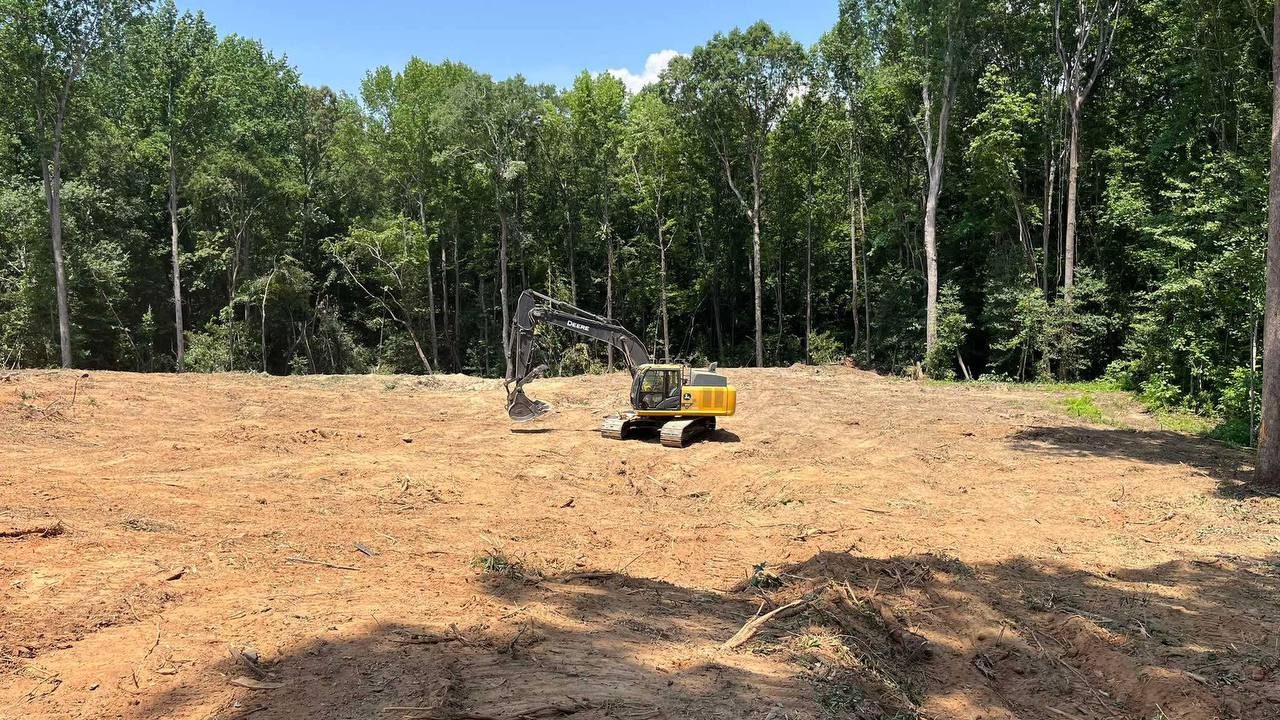
That is the defining land-clearing reality of Greenville County right now. The county is absorbing population growth from the broader Upstate region, and the lots being cleared today are more likely to be old pasture edge with established hardwood than the pine-covered coastal scrub that sets the national cost averages you find on lead-generation sites. What most online guides describe is benchmarked against Georgia pines or Carolina Lowcountry brush — neither of which applies here. See our land clearing overview for how we scope a Greenville County lot before any price is discussed.
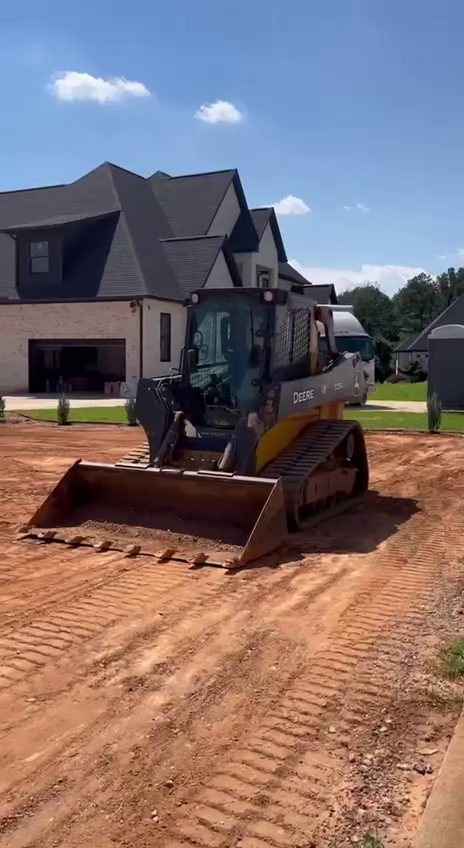
The Piedmont terrain adds the other variable. Greenville's red clay holds equipment differently than sandy or loamy ground. During dry stretches it hardens; after rain it becomes plastic and ruts easily, adding machine time and sometimes requiring stone access when heavy equipment is working near a structure. On the county's northern edge where terrain begins its transition toward the Blue Ridge foothills — Travelers Rest, northern Greer — grade change can be significant enough to affect both the equipment required and the drainage plan built around the job. Any quote that does not account for the season, the recent rainfall, and the topography is treating all three as fixed costs when they are not.
What clearing jobs actually cost in Greenville County
These ranges reflect working experience from Greenville County lots, not national averages adjusted by a regional multiplier. The spread within each row is real: two half-acre lots two streets apart can quote $1,500 apart because one has open pasture and the other has a fence line of fifty-year-old hardwoods. That difference is not a contractor padding the estimate — it is the actual gap in machine hours, stump-grinding runs, and debris haul loads between a pasture lot and an old farmstead edge lot.
| Scope of work | Typical Greenville range | What drives it |
|---|---|---|
| Light brush and grass clearing | $750 – $1,800 | access, lot size, haul distance |
| Mixed brush with trees under 6 inches | $1,500 – $3,500 | tree count, mulch vs. haul preference |
| Wooded lot, mixed hardwood and pine | $2,500 – $5,000 | canopy density, stump count, lot size |
| Wooded lot with full stump removal | $3,500 – $8,000 | stump diameter, soil hardness, rough grading included |
| Heavily wooded acreage, mature hardwoods | $8,000+ | acreage, hardwood density, haul volume, grading |
These are honest working ranges, not bids. A quote built off acreage alone — without a site walk to count stumps and assess canopy density — is a starting number that will grow once work begins. The legitimate protection is asking for stump removal and debris haul as explicit separate line items before you sign, so scope is locked rather than assumed. For overgrown residential lots where vegetation has been unchecked for years, the work differs from raw acreage clearing; our overgrown lot clearing page covers that scope and what it typically adds to the base range.
Permits and stormwater rules that affect Greenville County clearing jobs
South Carolina's stormwater rules catch a lot of property owners off-guard because the threshold is lower than most people expect. Any land disturbance of one acre or more — including clearing and grading for a residential lot — requires coverage under the federal EPA NPDES Construction General Permit. That means a stormwater pollution prevention plan, silt fencing or equivalent erosion controls, and inspection documentation during active work. It is not optional; unpermitted disturbance of one-plus acres carries enforcement exposure that runs to the property owner as much as the contractor if a complaint is filed.
At the county level, land disturbance work in Greenville County runs through the Greenville County Land Development Division. Permit requirements vary by scope, but any project involving significant grading or drainage changes in advance of construction will typically require a permit application and an approved erosion and sediment control plan. The county's red clay soils and position in the upper Reedy River watershed make sediment runoff a genuine issue — a bare disturbed lot after a heavy storm generates the kind of sediment load that prompts neighbor complaints and site-visit orders. Getting the permit and the controls right before work starts is cheaper than corrective action after a stop-work notice.
Contractors performing clearing and grading work in South Carolina fall under SC LLR Contractor Licensing Board requirements for general and specialty contractors. Ask for license documentation before signing any clearing contract. A contractor who cannot produce it is operating outside the state's rules, and that exposure does not stay with the contractor if something goes wrong on your property.
Three things a realistic clearing quote covers
Most quote disputes on clearing jobs trace to the same three omissions. Each is preventable if you ask before signing.
- Stump disposition. Clearing and stump removal are separate line items, and on Greenville County hardwood lots the stump cost frequently rivals the clearing cost. Ask whether the quote includes grinding, full extraction, or simply cutting to grade — the answer changes the base price, the site prep timeline, and what the lot looks like on the last day of work.
- Haul vs. mulch. Debris can be ground on-site or hauled off. Grinding reduces volume and leaves mulch that some lots can absorb; hauling clears the site completely but adds disposal cost. If you are prepping for a foundation pour or a hardscape installation, mulch piled on-site becomes a liability in the subsequent grading step. Know which the quote assumes.
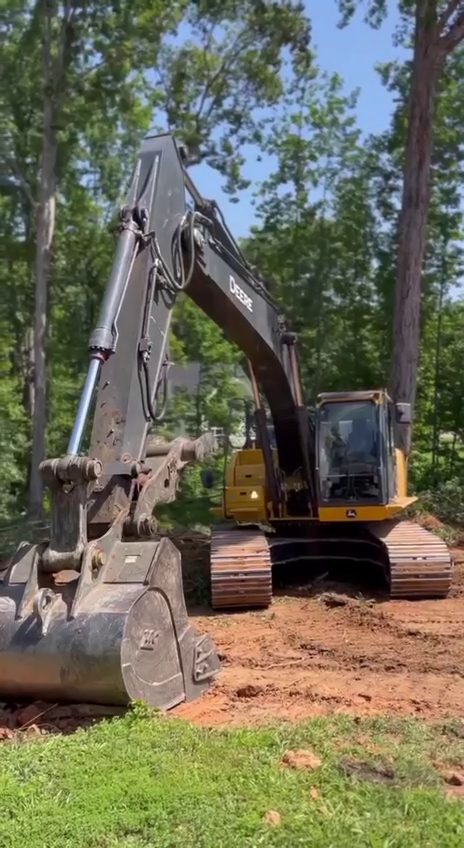
- Equipment access and site conditions. On lots with grade change — common on the county's northern edge toward the foothills — getting heavy equipment in and out can require stone access lanes or additional setup time. A contractor who has not walked the access path is not quoting the same job you are picturing.
If your project is more shrub and vine overgrowth than standing timber, the work and equipment are meaningfully different from full tree clearing. Our brush clearing guide covers that scope, which typically runs at the lower end of the ranges in the table above and does not always require the same machinery as a wooded lot job.
Why grading after clearing is not optional in this county
A cleared lot and a graded lot are not the same thing, and in Greenville County the gap between them has real consequences. Clearing removes vegetation; grading establishes drainage. Greenville County sits in a region that sees 23 federally declared disaster events over 2003-2026, many of them tied to severe weather and flooding. A lot that drains toward a future structure rather than away from it will show that mistake within the first few storm seasons. Correcting a drainage grade after a slab is poured costs multiples of what it costs to get it right during the initial clearing and grading operation.
The Upstate's red clay soils compound this. Because Piedmont clay sheds water rather than absorbing it, cleared lots can experience significant surface runoff after storms — the kind that cuts channels, undercuts fill material, and deposits sediment on adjacent properties. Downslope neighbors have standing to file stormwater complaints, and Greenville County Land Development has authority to issue stop-work orders and require corrective grading. A clearing job done without a drainage plan is not money saved; it is cost deferred to a worse moment, often after an adjacent property owner has already filed a complaint.
If your project scope includes both clearing and site work, the sequencing matters as much as the quote. Ask your contractor how they plan to stage the work — clearing, then grade, then compact — and how they handle the interval if rain interrupts on a clay lot. Contractors who have worked Greenville County's mix of topography and soil have a specific, grounded answer. Those who have not will give you a vague one.