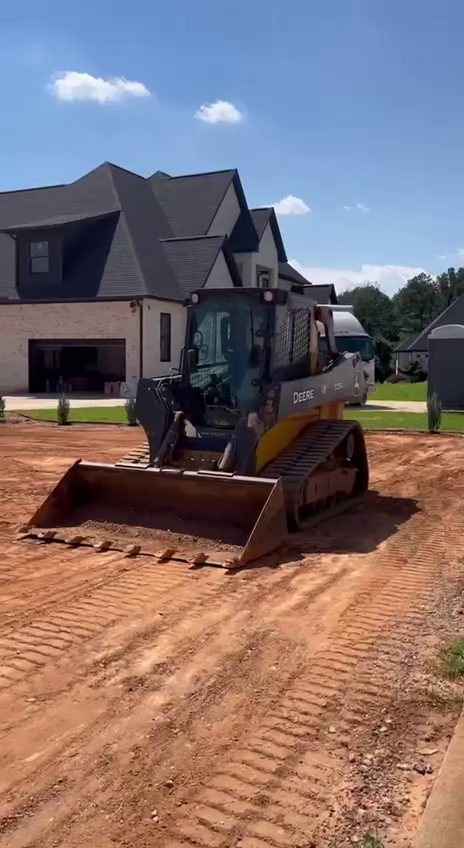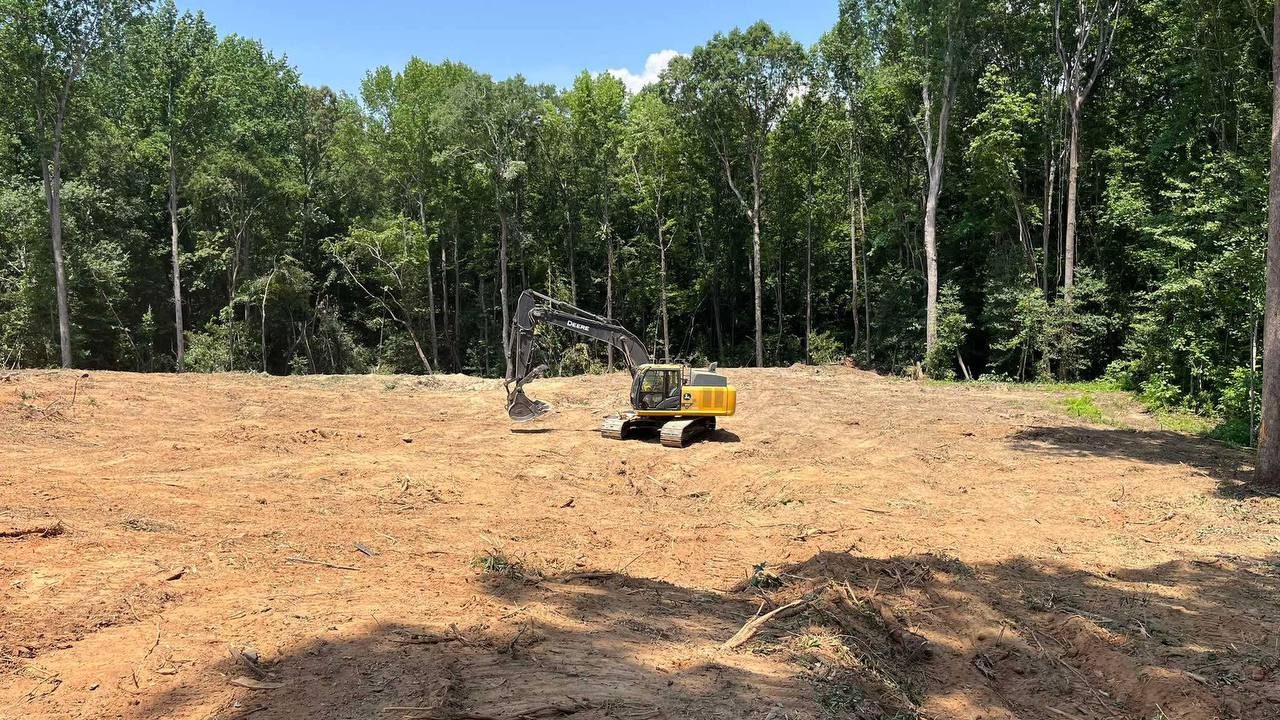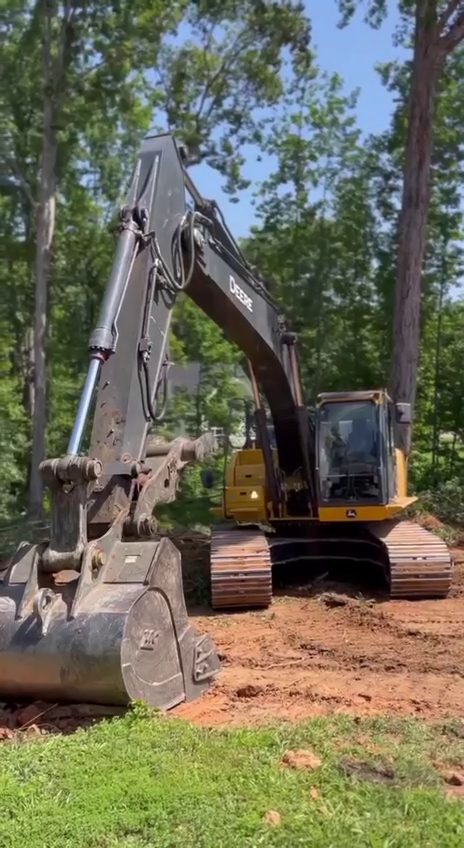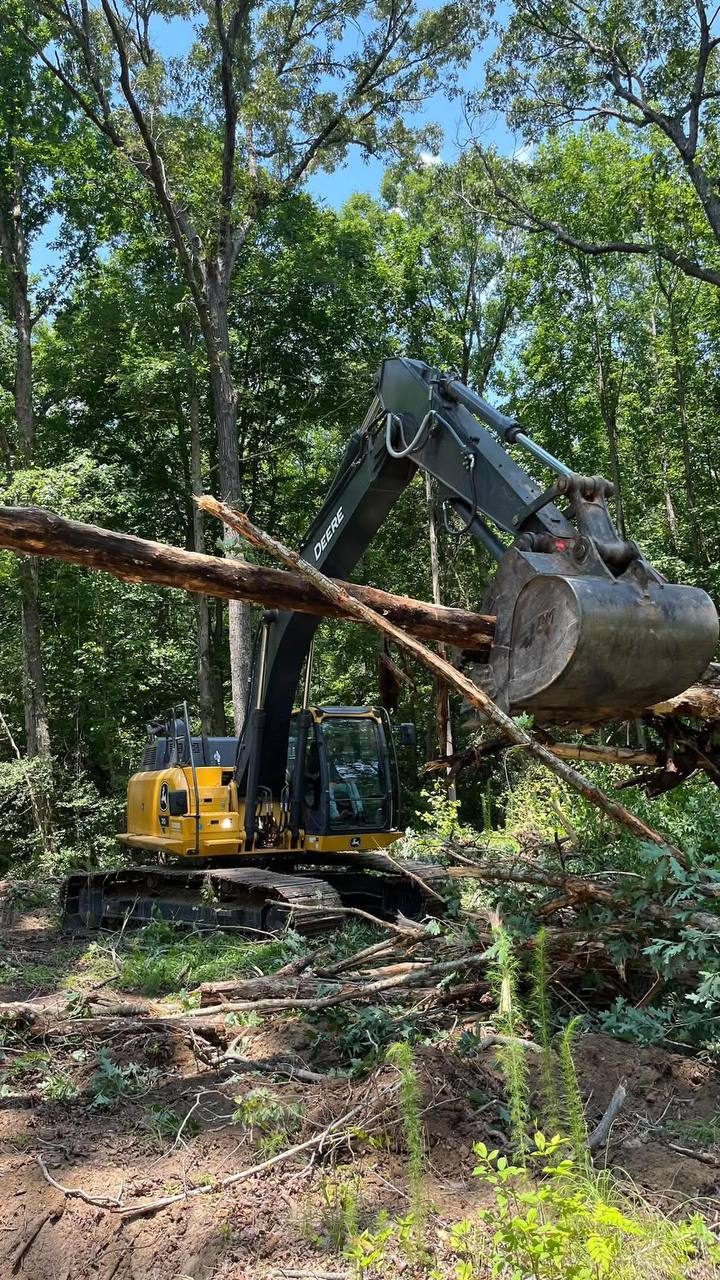
Red clay changes the job before the first stone drops
Powdersville sits in the Upstate piedmont on a band of Anderson County red clay that is dense, poorly drained, and unforgiving to any gravel surface that skips a proper base. After a hard rain (and the region gets them regularly) the evidence shows up on rural roads and unpaved approaches all over the county: ruts, soft shoulders, and gravel that migrated a foot from where it started. Clay doesn't drain; it saturates, holds water laterally, and turns any aggregate layer without a barrier beneath it into a temporary feature.
The functional part of a gravel driveway job here is what goes down before the stone: a geotextile fabric layer to separate aggregate from the clay subgrade, a compacted crusher-run base at four to six inches minimum depth, and a finished surface layer with enough crown to push water toward the edges rather than the center. Skipping the fabric saves money on day one and shortens the serviceable life to a few seasons.
The driveway stock in Powdersville reflects the community's growth pattern: older rural properties with long gravel approaches, newer lots developed on former farmland, and in-between properties being improved for the first time. That last category — first-time installation on undisturbed clay — is both the most common call and the most demanding scope. The gravel driveways service page explains what a full installation includes and why base specification changes with soil type.
What the job costs across common scope in Powdersville
Driveways in this part of Anderson County tend to run longer than the county average. Rural lot setbacks, wooded approaches, and older properties that predate subdivision-era lot sizes mean many calls here involve 150 feet of linear run or more, pushing more local jobs into the upper portion of the typical range. For a full line-item breakdown by material and base depth, see the gravel driveway cost guide.
| Scope | Typical Installed Range |
|---|---|
| Short run, up to 80 ft (surface layer on stable base) | $1,800 – $2,800 |
| Standard residential, 80–150 ft (fabric + crusher-run + surface) | $2,800 – $4,500 |
| Long driveway, 150–300 ft (full base on clay subgrade) | $4,500 – $7,500 |
| Long run with grading, crown work, or roadside drainage swale | $8,000 – $12,000 |
Regravel of an existing, stable base lands at the lower end of each range. First-time installation on undisturbed clay, which describes most rural lots sold in the last decade in this area, runs toward the top. Any bid that omits base depth and fabric specification should be treated as an incomplete scope, not a competitive price.
Upstate rain and what it does to unprepared driveways
The National Weather Service documents the Upstate SC region as prone to summer convective storms that deliver two to four inches of rain in under an hour, the kind of intensity that overwhelms any surface not graded to shed water intentionally. Anderson County has recorded 18 federal disaster declarations spanning 2005-2026, the majority in the flood and severe storm categories. Those events test exactly the drainage assumptions built into every driveway that runs toward a road, a structure, or a low point on the lot.
Proper grading and crown work aren't contractor upsells; they're what separates a driveway that handles Upstate weather from one that channels water toward the foundation. The relationship between driveway slope, crown height, and edge management matters more in a high-intensity rainfall climate than in drier regions. Getting the drainage geometry right before the stone goes down is cheaper than correcting it after the fact.
For jobs that disturb an acre or more of ground — a threshold easily reached when a driveway installation runs alongside land clearing or a new outbuilding — the EPA's NPDES stormwater permit program for construction activities applies. Most standalone residential driveways fall below that threshold, but a contractor who raises the question before work begins understands the regulatory environment better than one who doesn't.
Licensing, permits, and what to ask before you sign
Contractor licensing in South Carolina is administered through the SC LLR Contractor's Licensing Board. There is no universal state permit for a residential gravel driveway as a standalone improvement, but culvert crossings at county or state roads require SCDOT review, and any work that touches formal drainage infrastructure may need county sign-off. Powdersville straddles the Anderson-Greenville county line, and properties in the Greenville County portion of the community may fall under the Greenville County Land Development Division for drainage-related work. Your deed or county GIS confirms which authority applies in under two minutes; that check is worth making before a drainage tie-in generates a stop-work notice.
Three questions worth asking any contractor before agreeing to a scope: what base depth they are specifying and why; whether geotextile fabric is included in the quote or treated as an add; and how crown and edge drainage are handled on grades. Those answers predict the outcome more reliably than the price line alone.
Why some driveways hold and others walk away
Gravel driveways that need work every year aren't failing; they were installed without a base matched to the soil underneath them. On Anderson County clay, aggregate without a separator layer works downward and sideways until the two materials merge and the surface loses its structure. On grades steeper than about five percent, water channels form down the centerline without a proper crown and carry surface stone with every significant rain event.
A correctly installed Upstate driveway needs light maintenance: a regravel pass every five to eight years as stone compacts down, spot treatment of soft spots in early spring after a wet winter, and periodic inspection of the crown profile before it flattens entirely. Driveways that need attention every season were either missing a layer at installation or are fighting a drainage problem the original work didn't address at the source. The gravel driveway washing-out guide covers the diagnostic steps for each failure pattern in detail.