Red clay under every Greenville road job
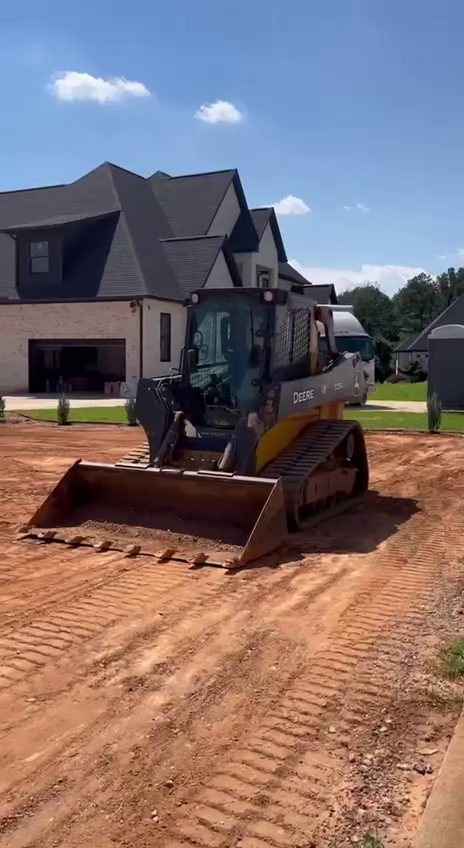
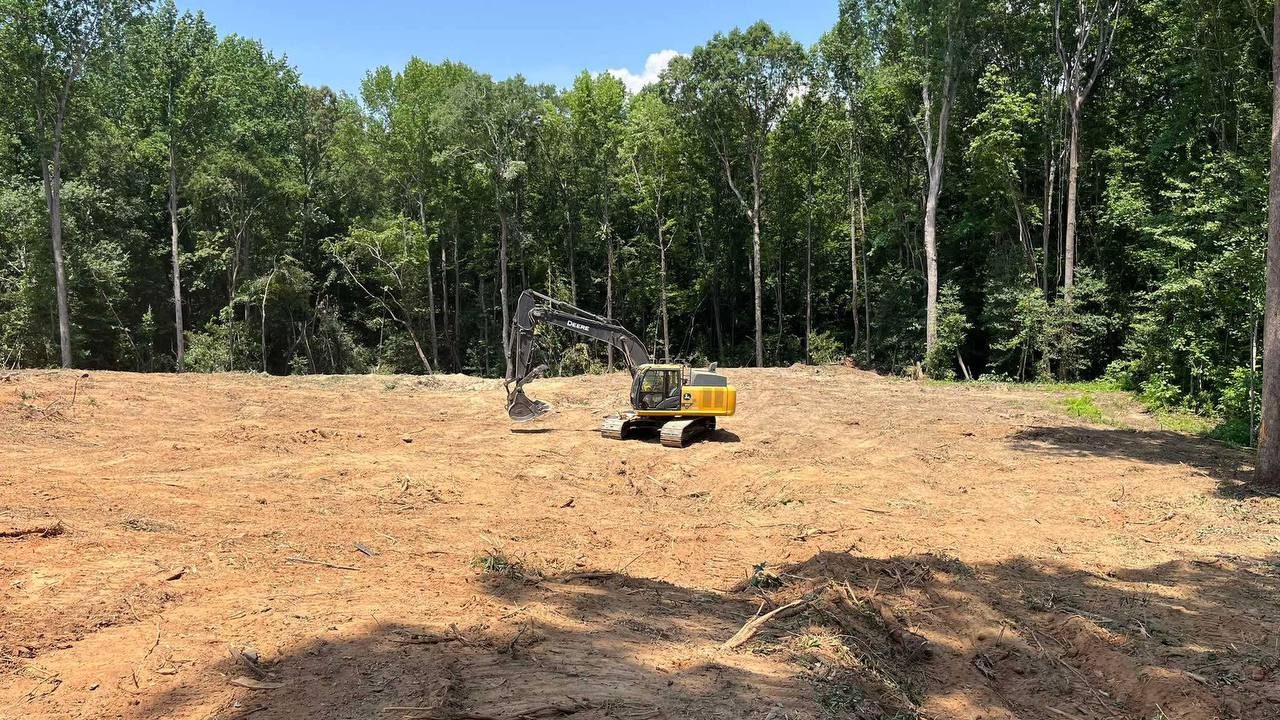
The Piedmont red clay that underlies most of Greenville County's rural properties is not an abstract soil science concern — it is the reason private road repairs in this county routinely cost more than quotes from other markets suggest they should, and why repairs done cheaply rarely last. Clay-rich subgrades absorb water slowly and release it more slowly still. The wet spring and early-summer rainy season that runs through the Upstate leaves road bases saturated long after surface puddles disappear; the late-summer dry stretch then contracts the same material and pulls the road apart from below. That failure cycle repeats every season until someone addresses what is happening beneath the gravel.
The properties most exposed are the rural-road subdivisions and long private drives along the county's growing edge — the Travelers Rest corridor, the rural stretches south toward Pelzer, and the wooded lots off secondary roads in the foothills approaching the Blue Ridge. On these roads, a re-crown and blade grade is the right answer about half the time. The other half requires cutting into the base, correcting drainage, and recompacting before any surface gravel goes down. Identifying which situation you have is the first question a reputable crew answers before quoting. The private road repair overview covers how to tell the difference between a maintenance pass and a structural repair.
What repair and rebuild costs in Greenville County
The working ranges for private road repair in Greenville: regrading and re-crowning a gravel surface runs $1 to $3 per square foot; rebuilding a washed-out section runs $4,000 to $10,000 per 100 feet. Where a job lands within those ranges turns almost entirely on the subgrade — how saturated the clay is, how long drainage problems have been compounding, and how much base work is required before the surface is worth touching.
| Scope | Typical Range |
|---|---|
| Regrade and re-crown, gravel surface | $1–$2 per sq ft |
| Regrade with clay base stabilization | $2–$3 per sq ft |
| Washed-out section rebuild | $4,000–$7,000 per 100 ft |
| Full rebuild with culvert and drainage work | $6,000–$10,000 per 100 ft |
Clay base stabilization — adding geotextile fabric, reshaping the subgrade profile, and sometimes bringing in a base course of crusher run before surface aggregate — is what separates the lower and upper ends of the regrade range. A culvert replacement or ditch re-cut on a washed-out section adds to the per-100-foot total without appearing in the visible surface work. For a full line-item breakdown with Greenville County-specific notes, the private road repair cost page has the working table.
Drainage and storm damage in the Upstate
The Reedy River watershed and the broader Upstate drainage network mean that Greenville County roads do not absorb a hard rain and recover quickly. The county has recorded 23 federal disaster declarations over 2003-2026, most of them storm and flooding events. Each one exposed the same weakness in private roads: culverts sized for ordinary rainfall fail under surge flows, and ditches that have not been maintained for years cannot carry the volume a saturated watershed delivers in a short window.
The damage sequence is consistent. Water finds the ditch outlet, overwhelms the culvert, and channels across the road where the base was already weakest. Repairing the surface cut without resizing the culvert or re-cutting the ditch inlet means the same sequence produces the same damage after the next comparable storm. Any serious repair starts with resolving the upstream water path, not grading over it. If the problem on your road is slower — washboard corrugation and persistent soft spots that build between storms rather than arriving as a single washout — the private road potholes and washboard page covers those mechanics and what actually corrects them.
Road repair work that disturbs an acre or more of land is subject to the EPA NPDES construction stormwater permit program, which applies in South Carolina. Most targeted private road repairs stay under that threshold, but a full rebuild of a long subdivision road can cross it quickly — worth confirming before mobilizing a crew.
What Greenville County and state rules require
Private road work in Greenville County is not automatically permit-exempt. Any grading or earthwork that affects stormwater runoff from the disturbed area may fall under review by the Greenville County Land Development Division, which administers the county's land disturbance standards. For a targeted fill or a short regrade, this rarely triggers formal review. For a full-road rebuild that changes grade and ditch routing near a creek or tributary of the Saluda or Enoree drainages, a conversation with the county office before mobilizing is the right first step — not an afterthought.
On the contractor side, South Carolina licenses general contractors through the SC Contractors' Licensing Board. Grading and road work above the state's dollar threshold requires a licensed contractor for permit purposes. Below that threshold, crews can legally operate without a license — but for any rebuild over $5,000, confirming your contractor holds a valid license is a reasonable floor. It is a proxy for bonding, insurance, and a track record the state has verified.
Getting a quote that holds up
Three questions separate a Greenville County road contractor who understands what they are walking into from one who is about to under-scope the job. Ask what they do when they find saturated clay under the existing base. Ask how they determine drainage requirements before touching the surface. And ask for references specifically from road work in this county — not the Midlands, not the Lowcountry, where the soil profile and drainage dynamics are fundamentally different from Upstate Piedmont conditions.
On the written scope, any rebuild quote should state base depth, compaction method, culvert size and material where applicable, and the aggregate type and depth for the finished surface. A quote that lists only linear footage and a total price is not a complete scope on a Greenville County road job — it is a starting number that will grow once the crew opens the base. When you are ready to compare bids, the private road repair overview includes a checklist of what a proper scope document should contain.