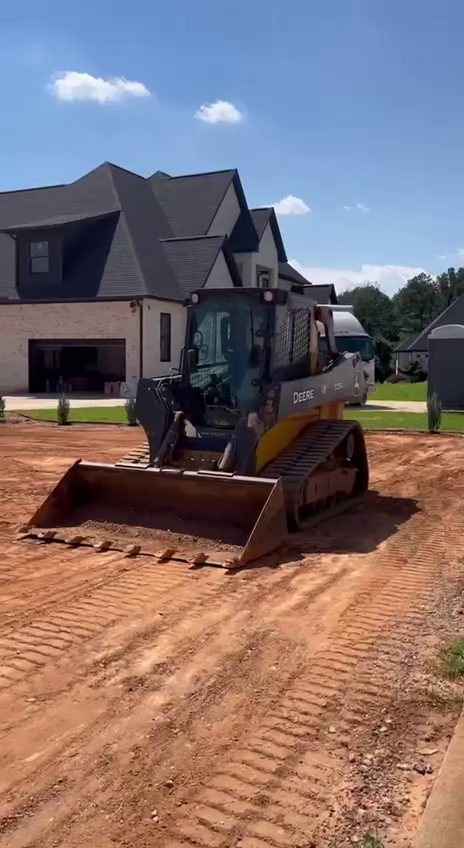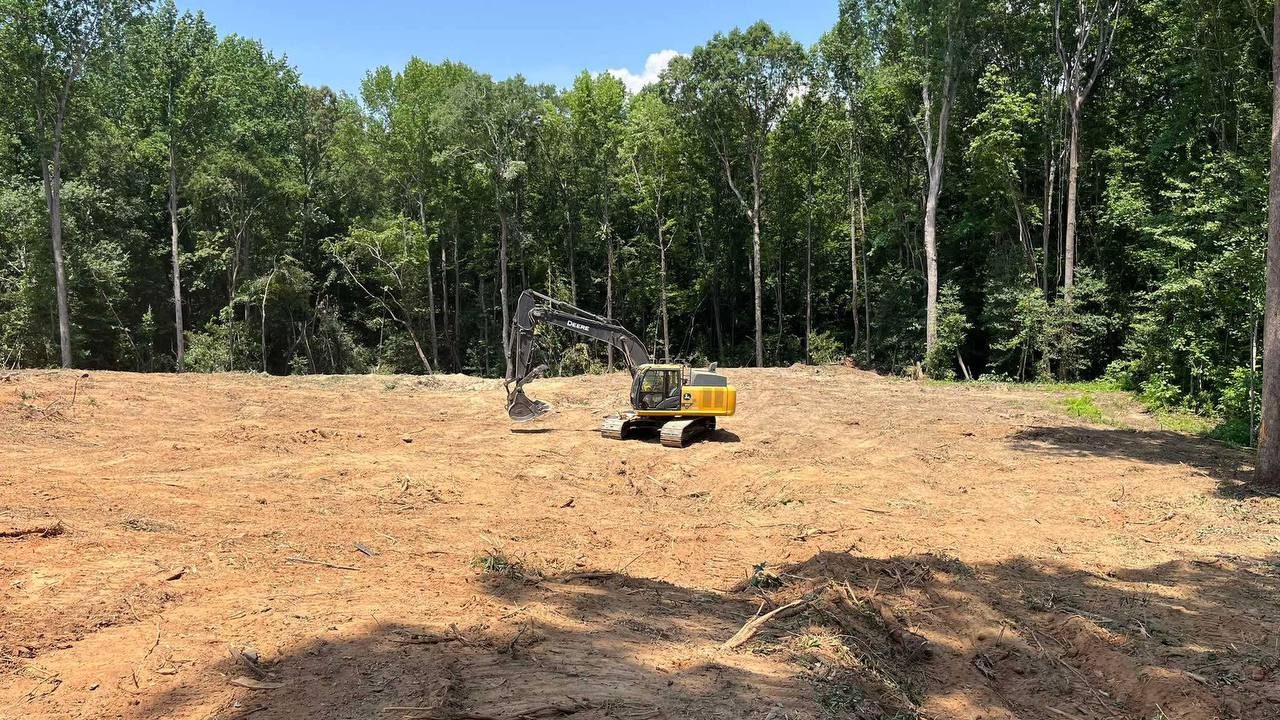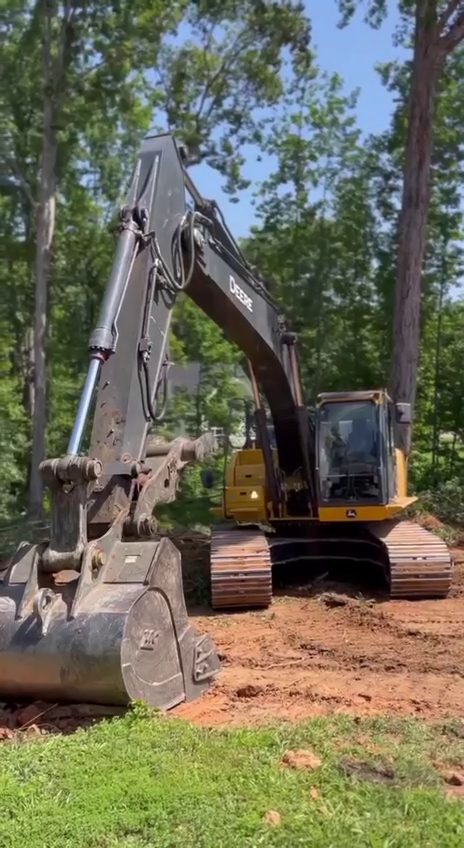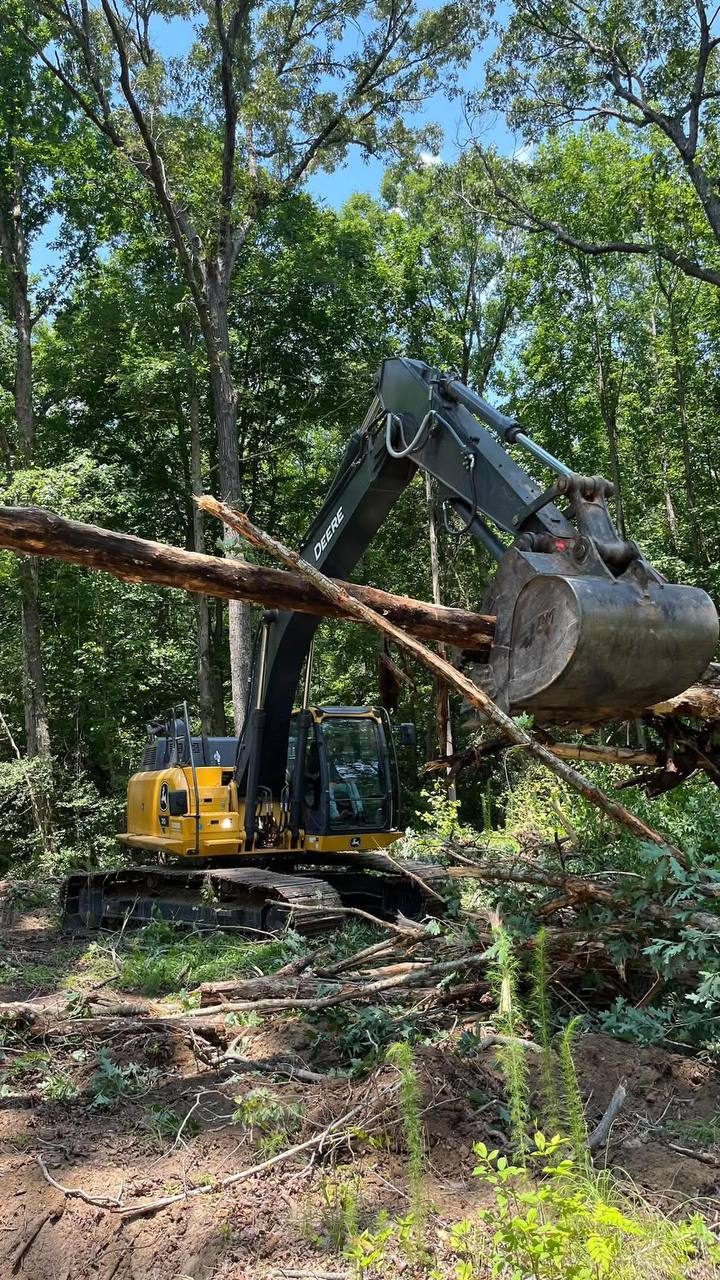
The invasive layer is what changes the job here
Greenville County sits in that stretch of Upstate SC where kudzu and Chinese privet don't just spread — they stack. A lot that looks like overgrown brush from the road often has three feet of vine mat on top of an established privet thicket on top of red clay that hasn't seen daylight in a decade. The crew you need for that isn't the one showing up with a bush hog and a half-day window; it's the one that knows what's living underneath the visible canopy and comes prepared for it.
That distinction matters most on the parcels people are trying to rescue: in-fill lots scattered through older Greenville neighborhoods, rural acreage transitioning near Simpsonville or Fountain Inn, and the rural-edge properties along the county's expanding growth corridors. A city in-fill lot might carry a single mature privet stand; a rural acre can hold dense tree canopy over a mat that took thirty years to establish. How the overgrowth is layered determines the job — which is why the scope conversation has to come before the quote.
Scope and cost by what you're actually working with
No two overgrown lots are the same, but the price movers are consistent: acreage, canopy size, and whether invasives have established root mass that needs treatment. The table below maps typical Greenville County clearing scopes to realistic cost ranges. These assume standard equipment access and don't include haul-off upgrades or grading work, which are separate line items on larger jobs.
| Scope | What it covers | Typical range |
|---|---|---|
| Light brush / scrub | Bramble, tall grass, scattered saplings under 3-inch caliper, under half an acre | $800–$2,500 |
| Mixed brush and small trees | Established privet, volunteer pines, light canopy — half to one acre | $2,000–$5,500 |
| Heavy overgrowth with invasives | Kudzu mat plus established understory, one to two acres | $3,500–$8,000 |
| Full clearing and grading prep | Canopy removal, stump grinding, rough grading for build or seed — over one acre | $5,000–$14,000 |
| Stump grinding (add-on) | Per stump, hardwood or pine | $150–$400 each |
Jobs that cross the one-acre disturbed-area threshold also trigger state stormwater review — more on that below. For a detailed cost breakdown with regional labor factors, the land clearing cost guide covers line items most quotes skip.
Permits and stormwater — what Greenville County requires
Greenville County's growth has pushed stormwater enforcement to the front of clearing conversations. If a project disturbs more than one acre — which full clearing jobs on neglected lots often do — federal EPA NPDES construction stormwater rules require a permit and an erosion and sediment control plan before ground disturbance begins. The Greenville County Land Development Division administers the local review side of that process and is the right first call before any sizeable clearing project starts.
Below the one-acre threshold, permit requirements are lighter, but Greenville County's red clay means exposed soil moves fast in a rain event. Responsible contractors install silt fence and drainage controls even on smaller jobs — both because it is good practice and because Greenville County has 23 federal disaster declarations on record (2003-2026), nearly all storm and flood events that underscore exactly how fast runoff becomes a neighbor's problem.
Who should be doing this work
Clearing a heavily overgrown lot is earthwork, not landscaping. In South Carolina, the contractor licensing threshold matters once the job involves grading or any structural land disturbance. The SC LLR Contractor's Licensing Board governs those thresholds; a crew working beyond their license class creates liability that lands on the property owner if something goes wrong. Ask for license class and proof of insurance before signing anything.
Practically, the right crew for an overgrown Greenville County lot is one that has cleared Upstate SC lots specifically. They will know the difference between a privet stand that pulls with equipment and one that requires treatment before mechanical removal, and they will give you a scope that includes a plan for what happens to the material. The brush clearing overview explains what a proper scope looks like for lots with invasive-dominant growth.
What comes after the clearing
A cleared lot is a window for what the land can become, but the first weeks after clearing are when invasive root systems make their move. Kudzu and privet resprout aggressively from established roots, so any clearing job without a follow-up treatment plan — chemical, mechanical, or ground cover — will need to be redone. That is not an upsell; it is the biology of these species in this climate.
After clearing settles, the next decisions depend on intent: seed and stabilize for a held lot, rough grade for a future build pad, or bring utilities to the edge for a development project. Each path has a different first step and a different contractor mix. The full land clearing guide maps those paths out by use case and covers the sequencing that keeps a cleared lot from sliding backward.