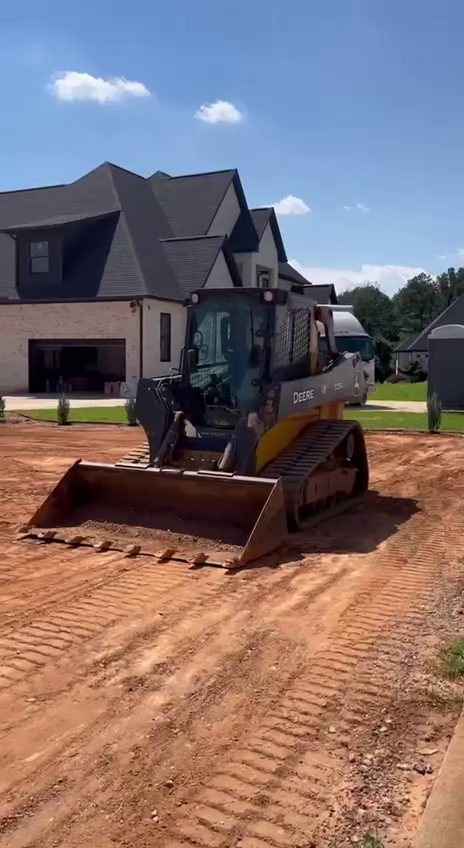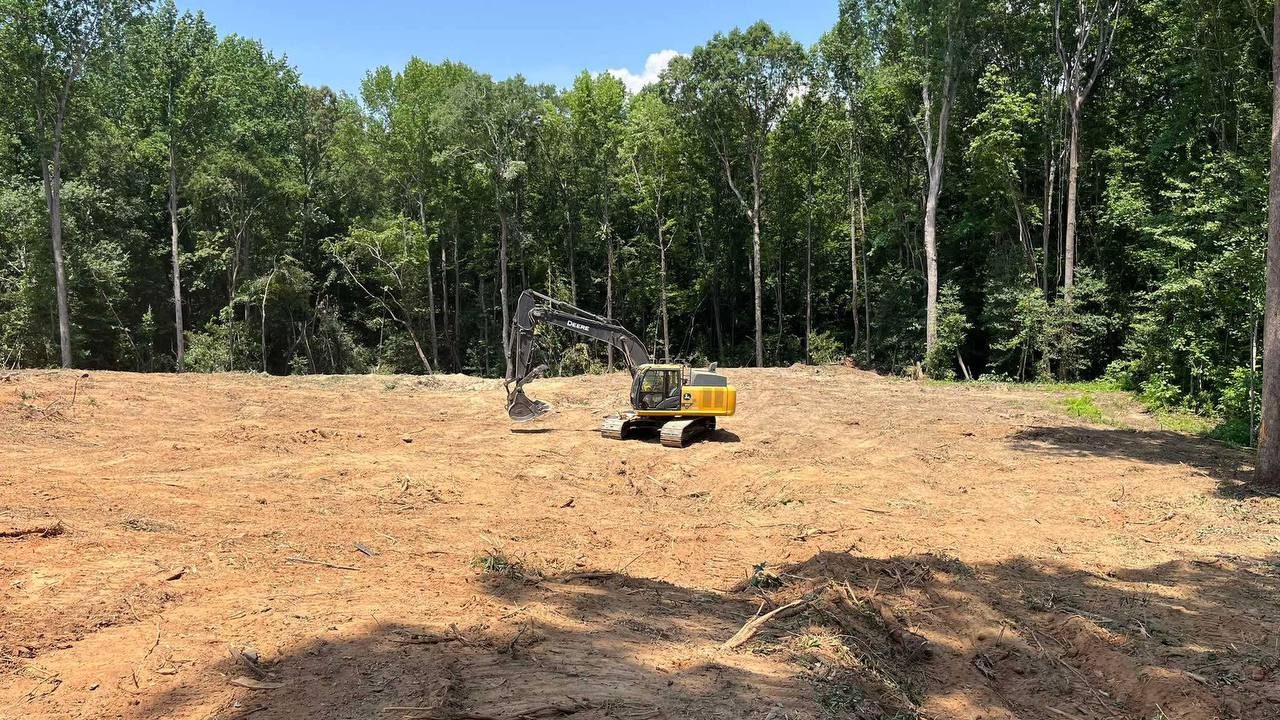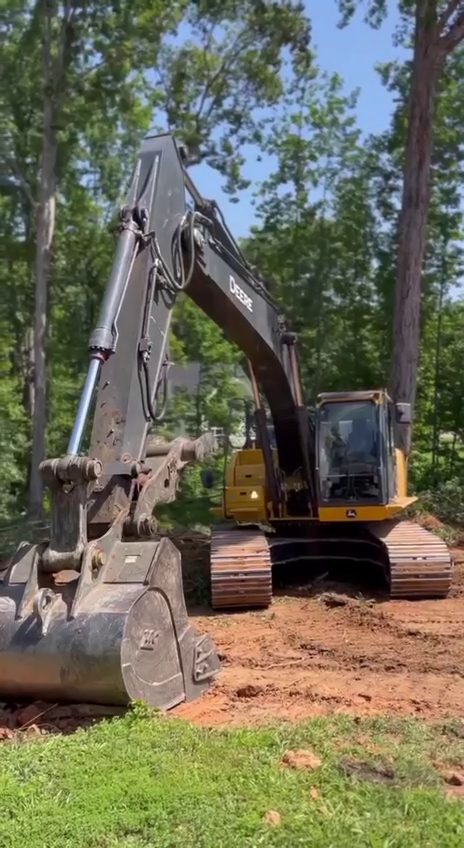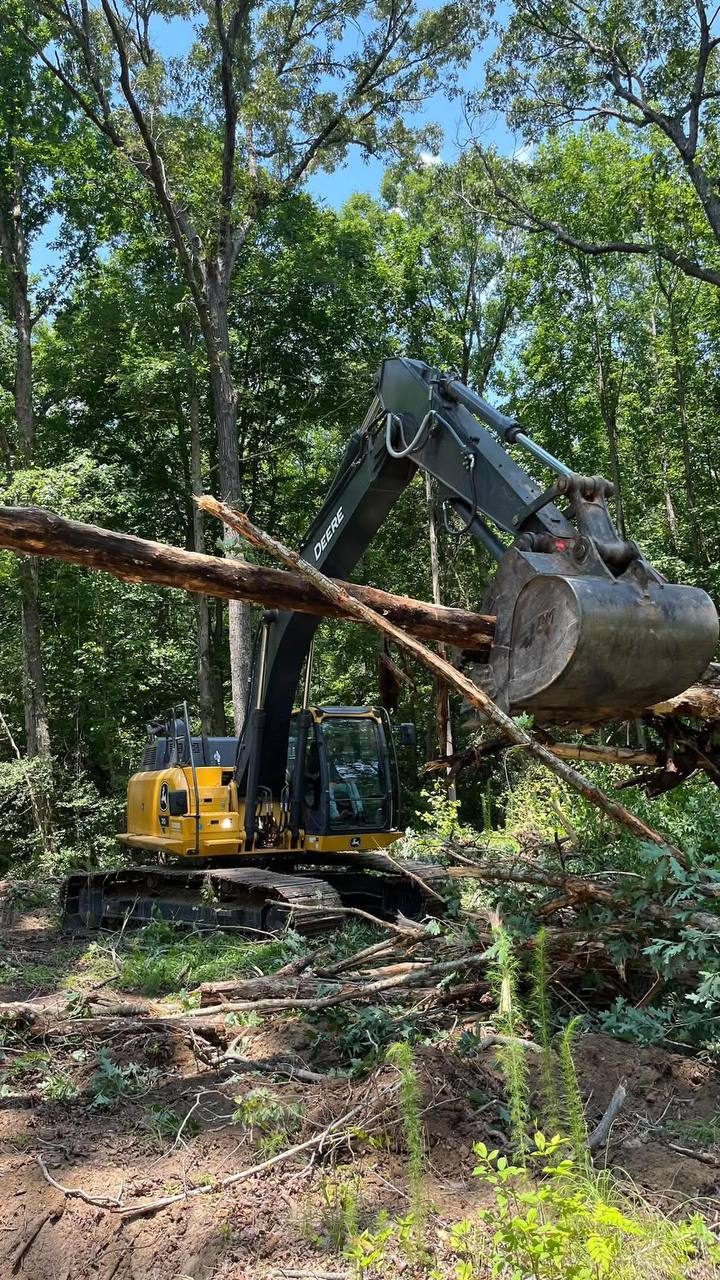
Red clay changes the job here
Greer sits squarely in the South Carolina piedmont, where the topsoil gives way quickly to red clay that holds water instead of passing it and shifts surface stone with every significant rainstorm. That clay layer is what separates a gravel driveway installation in Greer from one on the sandy coastal plain — a surface course alone will migrate, sink unevenly, and erode at the edges within a couple of seasons if the base course is not designed around it.
The housing pattern compounds the problem. Newer subdivisions off Hwy 29 and Hwy 101 were typically built on scraped, disturbed fill that settles unevenly and routes runoff toward whatever low point is closest — usually the driveway apron. Older homes on larger lots carry more stable native ground but face decades of compaction under repeated vehicle loads. Both need a dense-grade base layer under the surface stone; the right depth and drainage configuration differ based on what is actually happening underfoot.
Slope adds the third variable. Even a modest grade on a 150-foot driveway moves enough water volume in a hard Upstate South Carolina rainstorm to displace poorly anchored surface stone. The right installation accounts for that movement before it starts — the full range of approaches is covered in the gravel driveway overview.
What a Greer driveway installation includes
A gravel driveway is three distinct layers: a compacted subgrade, a dense-grade base course, and a surface course of angular crushed stone. The price picture shifts based on how much work each layer demands given your site conditions in Greenville County.
| Scope | Installed Range |
|---|---|
| Short driveway, up to 100 ft, relatively flat lot | $1,800 – $2,800 |
| Standard residential, 100–200 ft, standard base prep | $2,800 – $4,000 |
| Standard residential with clay subgrade work and edge drainage | $3,500 – $5,500 |
| Long driveway (200+ ft) or heavy base work required | $8,000 – $12,000 |
Ranges reflect installed cost including material, grading, and base preparation. Culvert work, retaining at the road edge, or significant regrading on the surrounding lot carry separate line items. The full Greenville County cost breakdown covers each variable and what drives it on piedmont clay sites specifically.
Stone selection matters as much as base depth. A 57 limestone or comparable angular crushed stone is the standard surface choice — the angular faces interlock under tire load and resist lateral migration better than rounded river gravel. Crusher run or 21-A compacted into the base layer provides the drainage path that red clay subgrade cannot supply on its own.
Upstate South Carolina rainfall and what it does to driveways
Greenville County has recorded 23 federal disaster declarations across 2003-2026, with storm and flooding events making up the bulk of that record. Those events reflect the same rainfall volumes that expose every shortcut in a gravel base installation. A poorly crowned driveway on a sloped lot does not fail in a single storm; it fails incrementally, one heavy rain moving surface stone a few inches closer to the downhill edge.
The National Weather Service data for Upstate South Carolina shows annual rainfall well above the national average, with the highest-intensity events concentrated in spring convective storms and late-summer systems. It is that intensity — not just total annual inches — that moves gravel. A fast four-inch rain overwhelms any drainage design built for average conditions rather than peak ones.
For projects that disturb a significant ground area beyond the driveway itself, the EPA NPDES stormwater program establishes permit requirements and erosion control obligations. Most stand-alone residential driveway replacements fall below that threshold, but driveway-plus-regrading combinations on larger lots sometimes reach it. A contractor who does not ask that question before quoting is leaving a compliance exposure on your property. If your current driveway is already washing, the causes and corrections are at gravel driveway washing out.
Greenville County requirements before work starts
Grading and land-disturbing activity in Greenville County falls under the oversight of the Land Development Division, which reviews projects for drainage impact and erosion control compliance. A straightforward driveway replacement on an unchanged footprint typically does not require a separate grading permit. Any project that modifies the lot's drainage pattern — relocating the apron, extending the drive, or regrading the surrounding area — may trigger a review. Confirming scope with the county before construction costs nothing and prevents stop-work orders after material has been placed.
South Carolina regulates contractors through the SC LLR Contractor's Licensing Board. Grading and excavation work above the residential licensing threshold requires a licensed contractor rather than simply someone who owns equipment. Asking for a license number and verifying it is a quick step that distinguishes properly covered crews from arrangements that shift liability to the homeowner when something goes wrong or leaves the site in a drainage-compromised condition.
Greer's position straddling Greenville and Spartanburg counties is worth noting for permit purposes. Most Greer addresses fall within Greenville County's jurisdiction, but properties near the county line should confirm which office governs their parcel before work begins, since the jurisdiction affects which standards apply and which office reviews drainage plans.
Getting a straight bid in this market
A gravel driveway bid that arrives as a single number without a scope breakdown is worth questioning in Greenville County. The variables on a Greer job — subgrade condition, clay content, slope, existing drainage patterns, stone depth — are real line items, not rounding errors. A contractor who cannot walk through each one is either pricing blind or quoting the minimum and planning for change orders once the base course is opened.
Three Greer-specific questions worth asking any crew: Have they worked on piedmont clay soils on residential lots in Greenville County specifically? Do they include edge containment and drainage swales in the base scope, or are those separate add-ons? And what gradation stone do they specify for the surface course? The answer to the stone question tells you whether the crew is thinking about tire load and rainfall behavior or simply moving material efficiently.
Bids from crews who have worked within a few miles of your property carry real value here. Drainage patterns, subgrade behavior, and stone availability vary across Greenville County, and local experience with piedmont clay means fewer surprises once the machine arrives. Full scope details for what a properly specified project includes are at the gravel driveway overview.