Red clay, rapid growth, and what erosion control costs here
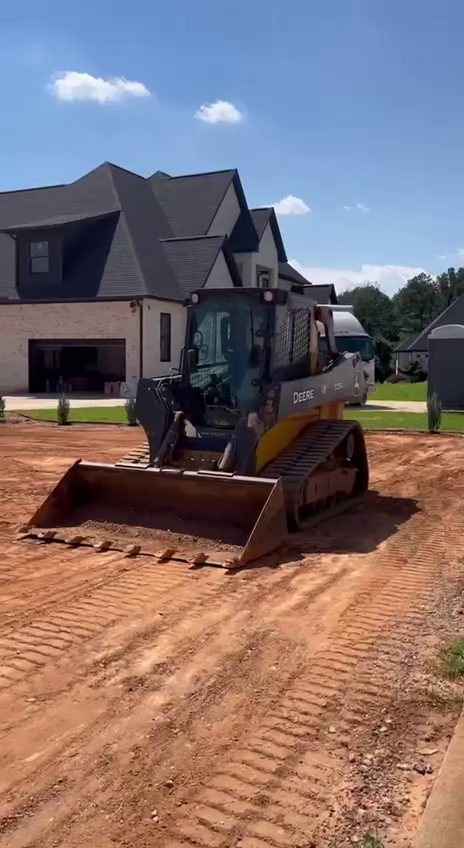
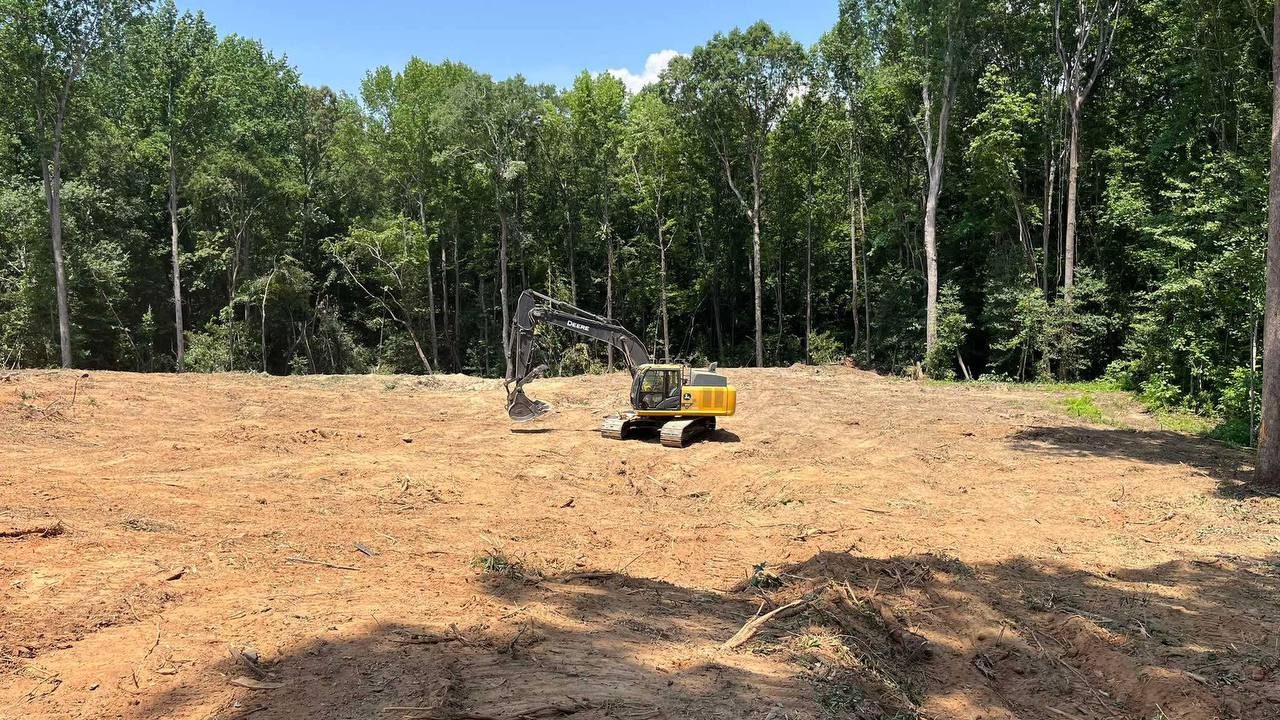
Greenville County is in the middle of one of the most sustained growth cycles in South Carolina's history, and each cleared acre leaves raw Piedmont clay exposed to rain. That red clay — dense, low-permeability, resistant to quick revegetation — is the controlling variable in every erosion control job in this county. It is what makes national averages misleading and what separates a one-season patch from a durable fix. When you see slopes shedding rust-colored sheets of soil into neighborhood ditches after a storm, that is not coincidence; it is the physics of disturbed Piedmont clay meeting the Upstate's rainfall.
For a regraded and permanently stabilized slope or drainage channel, Greenville County property owners typically pay $1,500 to $8,000. Equipment time runs $125 to $200 per hour. Where a job lands in that range depends on the amount of soil to move, the grade of the slope, and the drainage path below the work area.
| Scope of work | Typical Greenville range | What drives it |
|---|---|---|
| Residential slope: seed, erosion blanket, minor grading | $1,500 – $3,500 | area, slope pitch, soil condition and prep |
| Gully repair: fill, reshape, outlet, seed | $2,000 – $5,000 | gully depth, fill material, outlet design |
| Regraded slope with riprap-lined swale | $3,000 – $7,000 | slope length, stone type, grading scope |
| Full stabilization: regrade, rock channel, drainage tie-in | $5,000 – $8,000 | engineering input, channel extent, drainage correction |
Temporary controls — silt fence, straw wattles, check dams — are construction-phase additions included in most larger scopes. They degrade intentionally and are not designed as a finished product for a slope that will keep draining long after the construction crew leaves.
What the Upstate's terrain does to a typical scope
Greenville County runs from the edge of the Blue Ridge foothills in the northwest down to rolling Piedmont in the southeast, and that transition means slope grades vary considerably across a single neighborhood. What holds on a gentle residential lot in Mauldin may be insufficient on a steeper cut near the Reedy River corridor closer to the city. Steeper grades require more regrading, heavier stone in rock-lined channels, and sometimes engineered drainage plans before a permit is issued — all of which push costs toward the top of the range.
The red clay creates a secondary problem that contractors from outside the Upstate frequently underestimate: it compacts poorly when disturbed and pushed by equipment. Soil that is bladed to a grade without adequate compaction settles unevenly, creating new low points where water pools and new erosion begins. Experienced crews account for this by specifying the right compaction passes and timing seeding to close weather windows before rain arrives. Crews who do not know the clay end up back on-site after the first significant storm — at the homeowner's expense.
Work that involves reshaping a ditch or installing a stone-lined drainage channel is its own scope within a larger job. Our ditch and riprap guide covers what that piece of the work involves and how it typically prices out in this county.
Storm exposure and why timing is built into the price
The Upstate's humid subtropical climate delivers rain throughout the year, and storm systems tracking in from the Gulf and the Atlantic both reach Greenville County regularly. The federal disaster record — 23 declarations touching Greenville County across 2003-2026 — reflects that exposure, and the majority of those events are storm and flood related. That history matters for erosion work because a bare slope does not get to wait for a dry season to arrive before the next rain tests it.
Disturbed Piedmont clay exposed to heavy rainfall loses material fast. A contractor who underestimates precipitation risk builds stabilization timelines that the weather does not respect. The practical result: temporary controls designed for a mild rain event fail in a heavier storm, and the homeowner pays twice — once for the original work, and again for the gully that formed in the gap between grading and established cover.
Timing also affects seed establishment. The South Carolina Upstate's climate rewards cool-season grasses planted in fall and warm-season cover like bermudagrass for summer establishment. A contractor who seeds the wrong species for the season will return with a failed slope six weeks later. It is a small detail that separates contractors familiar with Greenville County from those who are learning it on a client's property.
For slopes that have already failed and are showing active gully formation, the right starting point is a scope-specific look at the failure. Our yard erosion and gully repair guide details the typical sequence for restoring a failed slope face and what it adds to a total project cost.
Permits and stormwater rules that govern this work in SC
Greenville County erosion control jobs can fall under two separate regulatory frameworks depending on the scope of disturbance, and knowing which one applies determines what a contractor must deliver before the first machine moves.
Projects disturbing one acre or more trigger South Carolina's Construction General Permit program, which implements federal stormwater requirements under the EPA NPDES program for construction activities. Those projects must have a Stormwater Pollution Prevention Plan on file before ground breaks. The plan specifies erosion controls, inspection schedules after each storm event, and corrective procedures for control failures. Developers and commercial builders most often carry this obligation, but residential construction on larger lots can cross the threshold too.
For work below that threshold, Greenville County's Land Development Division reviews grading and drainage plans and issues land disturbance permits for work that changes how drainage moves across a parcel. The county's review process protects downstream properties from runoff that regrading redirects. It is worth contacting the division directly before significant earthwork begins — thresholds and submittal requirements can change, and the cost of a delayed permit is usually lower than the cost of stop-work enforcement.
Contractors performing grading and excavation in South Carolina operate under the licensing structure maintained by the SC LLR Contractor's Licensing Board. A bid from an unlicensed crew puts liability for downstream damage squarely on the property owner if the work proceeds without proper authorization. How a contractor responds to a question about their license tells you roughly everything about how they handle the rest of the job.
Three practices that keep a Greenville estimate honest
Getting a durable outcome on an erosion control job in Greenville County comes down to asking the right questions before work begins.
Establish where the water goes when the job ends. On Piedmont clay, a regraded slope that drains against a foundation wall, a fence line, or a neighboring lot will fail again in the next significant storm. Every reputable bid should describe the outlet path — where runoff leaves the treated area and what it flows into. If a contractor cannot answer that question clearly, they have not designed the job yet.
Separate temporary from permanent in writing. Silt fence and straw wattles are construction-phase controls. Permanent stabilization means established vegetative cover, rock-lined channels where flow concentrates, and grading that eliminates the original failure path. A bid that describes temporary controls as the finished product on a residential slope is an incomplete scope, and accepting it moves the follow-up cost to the homeowner.
Price per unit of work, not per job. Regrading scopes change once equipment is on-site and subsurface conditions differ from what was visible at the surface. A contractor who prices by linear feet of channel or cubic yards of fill can write honest change orders; one who quotes a flat job rate and cannot explain their unit costs cannot. That distinction shows up clearly when the work gets complicated.
For a complete picture of the services that make up a grading and erosion scope in this county, see our erosion control overview.