Greenville's housing stock and what it adds to a demo budget
Greenville County holds one of the Upstate's largest concentrations of mill-village housing, with neighborhoods purpose-built for textile workers from the 1890s through the mid-1950s. Those blocks cluster near the Reedy River corridor, along former mill roads, and throughout the county's older municipalities. On a demolition job, that history creates a practical complication flatland suburban quotes rarely reflect: structures from that era routinely contain asbestos-containing materials (floor tile, pipe insulation, roofing felt, exterior siding) along with lead-based paint. Both require licensed remediation before the excavator touches the structure. That abatement runs as a separate contract with its own cost outside the per-square-foot rates below — budget for it on any pre-1980 structure in this county.
| Scope of work | Typical Greenville County range | What drives it |
|---|---|---|
| House demolition | $4 – $10 per sq ft | Story count, material type, foundation scope |
| Detached garage or shed | $1,000 – $5,000 | Size, site access, slab removal |
| Driveway or parking pad | $3 – $8 per sq ft | Concrete thickness, reinforcement, haul distance |
| Partial or selective demo | By scope and material | Hazmat present, structural walls, interior access |
These are working ranges, not quotes. The low end of each row assumes clean material, good site access, and a standard haul to an approved facility. The high end reflects masonry-heavy structures, tight lot lines, or jobs where debris must be sorted and diverted from the general waste stream. Any contractor quoting a firm total before walking the lot and asking about the structure's age is working without enough information.
Four variables that push a Greenville job toward the top of the range
Structure size is the obvious input, but it explains less of the final number than most property owners expect. Four other factors do more of the work in this county.
Site access in older neighborhoods. Mill-village blocks were laid out before modern demolition equipment existed. Alleys are narrow, lot lines are close, and a machine that works efficiently on a newer suburban lot may not fit without relocating a fence or clearing a utility riser first. Tight access adds time and sometimes requires smaller equipment, which costs more per hour to operate.
Material weight. A brick or block structure hauls heavier than a wood-frame ranch of the same footprint. Debris is billed by weight at disposal facilities, and sorting concrete or brick for recycling takes additional labor. Masonry-heavy structures consistently land toward the top of the per-square-foot range.
Buried infrastructure. Lots without a recent environmental assessment may contain abandoned oil tanks, old septic systems, or unmarked utility runs. Locating and decommissioning a buried tank is a separate regulatory item under state rules, and discovering one mid-job disrupts schedule and budget in roughly equal measure.
What happens to the site afterward. A lot going to immediate rebuild may keep its slab or need the foundation pulled entirely, depending on the building plan. A lot being cleared for grading needs the disturbed area properly filled and compacted. If fill dirt and hauling is part of the scope, coordinating it alongside the demo contractor avoids paying twice for mobilization and prevents demo-day staging decisions from creating problems for the grading phase that follows.
Permits, stormwater, and licensing requirements in Greenville County
A residential demolition permit is required before work begins. The Greenville County Land Development Division handles applications and coordinates the utility disconnection verification and inspection process. Demo work started without a permit creates complications at the subsequent building permit stage that are time-consuming and expensive to resolve, particularly on lots intended for immediate rebuild. The permit process moves efficiently on complete, compliant applications; most delays trace to incomplete utility release letters or skipped abatement documentation, not the review itself.
Contractor licensing is a state-level requirement. South Carolina's Contractor's Licensing Board oversees the classification and licensing of contractors performing demolition work. Verifying a contractor's current license before signing a contract takes less than a minute and protects you if something goes wrong on site. The SC Building Codes Council sets the structural and site standards that define what a lawful demolition scope looks like under state code.
Stormwater is the third layer. Any project disturbing one acre or more of land falls under the federal NPDES stormwater permit program for construction activities, which requires a Stormwater Pollution Prevention Plan before ground disturbance begins. Greenville County's moderate slopes draining toward the Reedy River watershed mean a combined demo-and-grade project can reach that acreage threshold faster than a flat site would. If your project is part of a larger clear-and-build scope, factor permitting sequencing and erosion control costs in from the start.
FEMA records show 23 federal disaster declarations tied to Greenville County (2003-2026), a portion of them storm and flooding events. Flood-damaged structures are among the most common demo triggers in the county, and those jobs tend to arrive on compressed timelines. The permit and abatement steps do not compress with them.
From cleared lot to finished grade
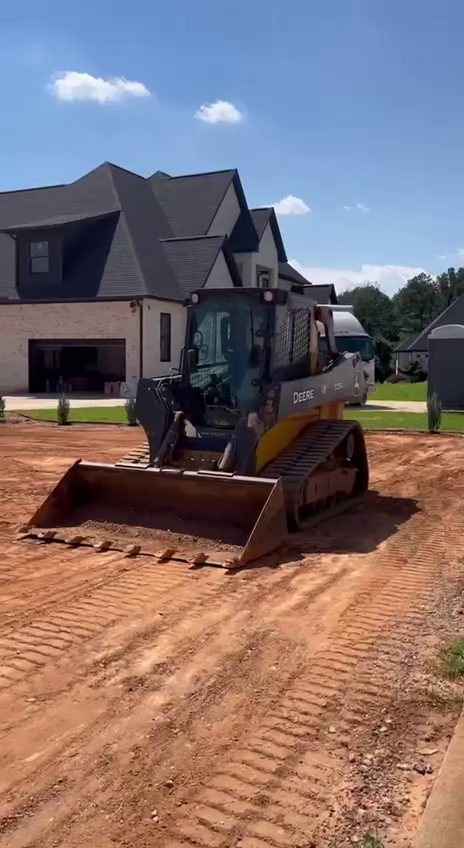
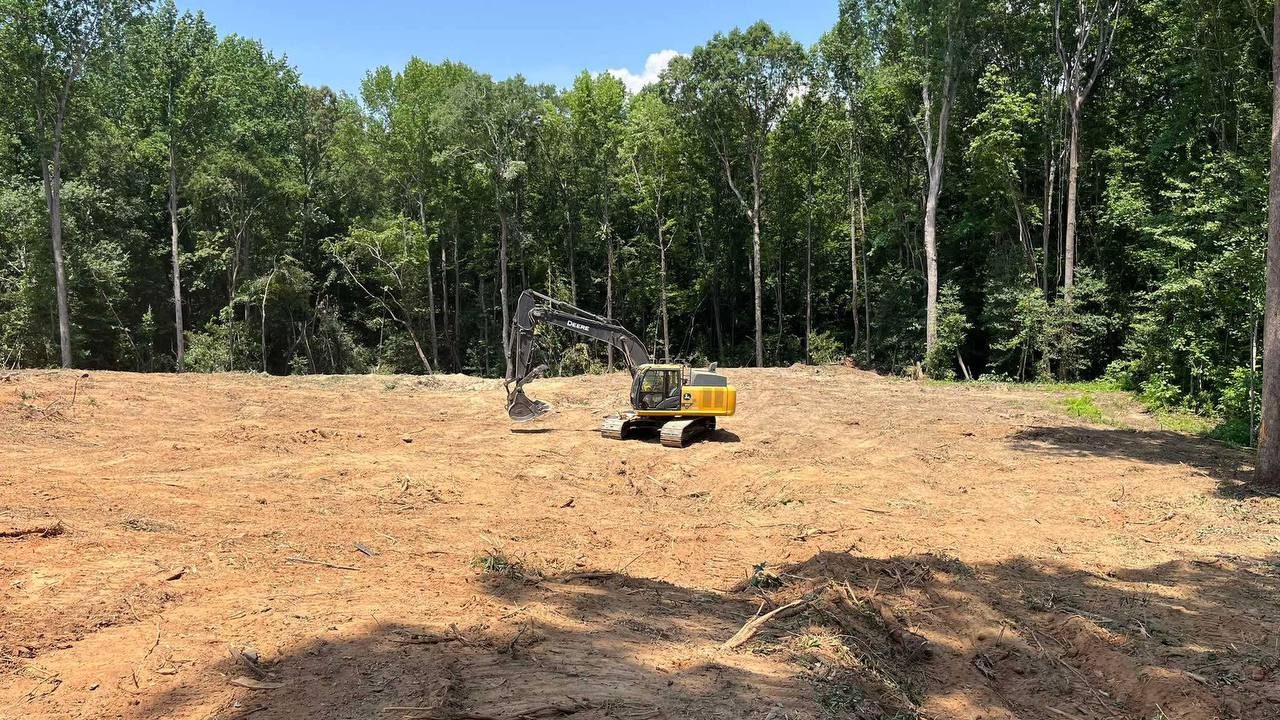
Demolition ends when the structure is down and debris is hauled. The lot still needs work before it is ready for what comes next. Proper grading, compacted fill where the foundation was pulled, and a rough cut that drains correctly are tasks that sit between the demo and the finished site. Our site prep cost guide covers what that phase typically costs and what drives it in Greenville County.
The handoff between demo and site prep is where uncoordinated projects lose money. Decisions made during demolition about how deep to pull the foundation, where to stockpile clean material, and how to stage equipment directly affect the grading scope and its cost. Greenville County's red clay soil compacts differently from sandy coastal fills, which matters for fill and grade work after a demo. A site left unattended after demolition, especially through a wet season, can develop drainage patterns that need correction before grading can begin cleanly. Getting both scopes under a single plan, or at minimum having both contractors coordinate before the excavator arrives, closes that gap before it becomes a change order.
If you are still in the planning stage, our demolition service overview walks through how a Greenville County tear-down is scoped from initial site walk through final debris haul, before the cost conversation starts.
How to read a demo bid honestly
Two straightforward bids on the same job can differ by thirty percent and both reflect accurate assumptions. Different haul distances, debris sorting requirements, foundation scope, and equipment staging explain most of the gap. Three questions cut through that variability:
- What does the per-square-foot rate actually include? Foundation removal, debris haul, and permit procurement are sometimes line items and sometimes buried in the base rate. Know which is which before you sign.
- How does the contractor handle hazardous materials? On any pre-1980 structure, the right contractor raises the asbestos and lead question before quoting. A bid that never addresses it is either assuming clean material without evidence or expecting you to manage the problem as a separate contract mid-job.
- Who pulls the permit? The permit fee is not a large cost, but responsibility for it should be explicit in the contract. Ambiguity here often signals that the contractor does not want to own the schedule risk tied to inspection timelines.