Growth, red clay, and why the permit question comes before the price question
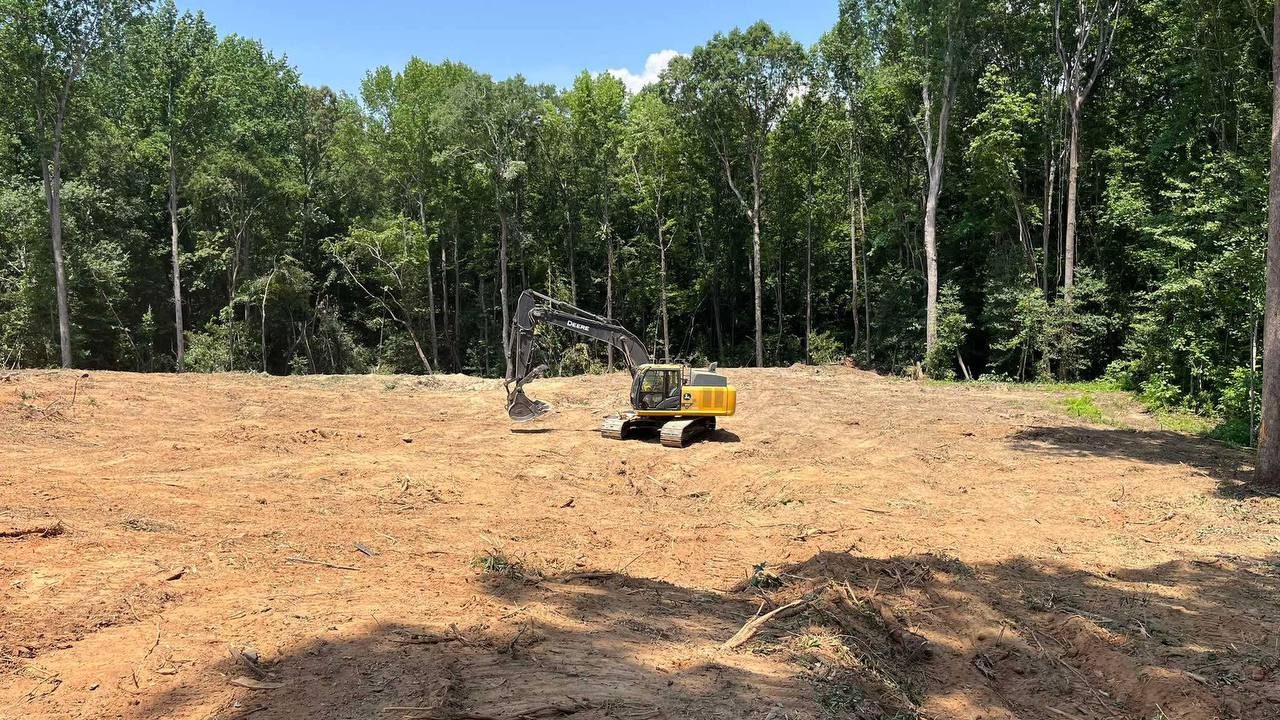
Greenville County is one of the fastest-growing counties in South Carolina, and that growth has pushed land clearing work into places it wasn't a decade ago — infill lots in established neighborhoods, subdivided farm tracts along county roads, and raw acreage slated for new residential pads. The terrain is characteristically Piedmont Upstate: gently rolling hills underlain by red clay that holds water rather than absorbing it, with stands of loblolly pine, sweetgum, and mature hardwoods that vary significantly from one parcel to the next. That combination of rapid development pressure and slow-draining soils means clearing here carries compliance weight that lighter-growth markets don't see as often.
South Carolina requires a construction stormwater general permit for any land disturbance of one acre or more, and Greenville County's Land Development Division enforces its own land disturbance permit requirements at the local level. On a mid-size clearing job, the permitting sequence can add days before equipment arrives on-site. A bid that doesn't address this on a job over an acre is either missing the cost or assuming you'll carry it separately. For lighter work — brushy fence lines, overgrown residential lots without large standing timber — the scope and pricing are closer to what's on the brush clearing page.
What a clearing job in the Upstate actually includes
Scope in clearing quotes varies enough to produce real surprises at job's end. These are the phases that belong in a complete clearing contract:
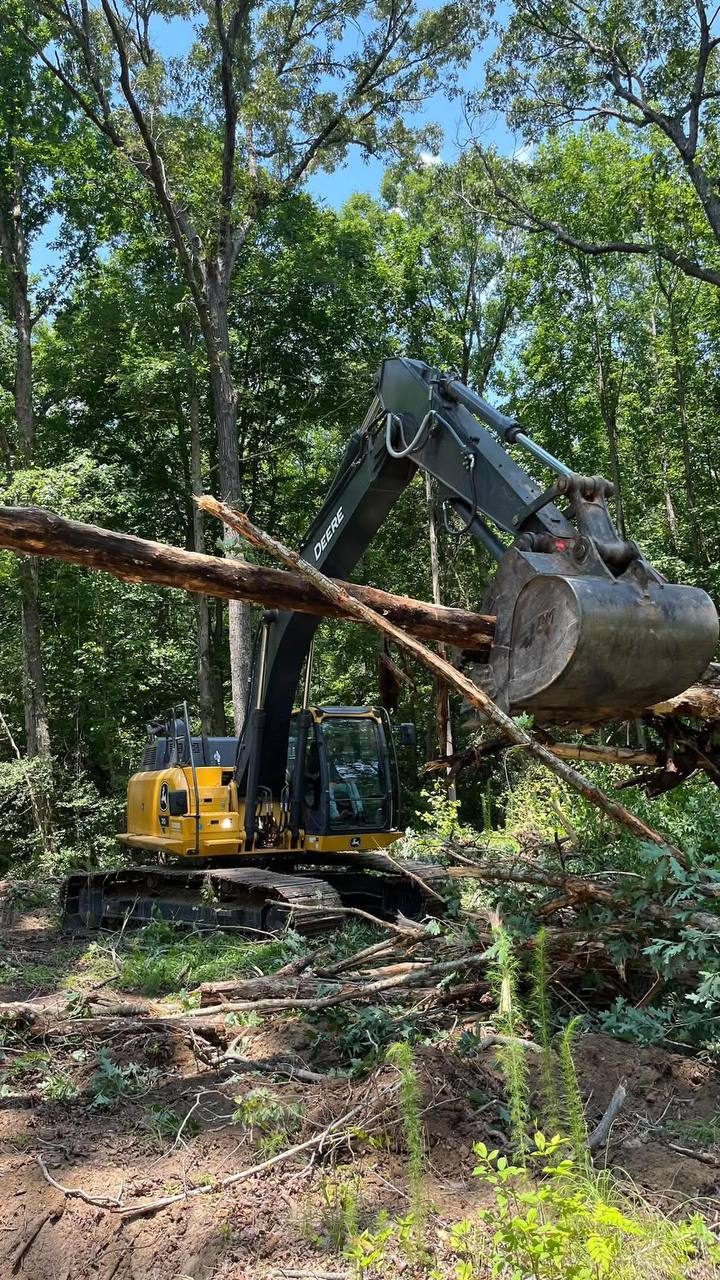
- Tree felling and limbing. Large trees come down first, limbed and cut into manageable sections. Hardwoods — white oak, hickory, water oak — take meaningfully longer per tree than loblolly pine of the same diameter. That difference compounds across a heavily wooded lot.
- Brush and understory removal. Smaller material is chipped or piled for haul-off. Whether chips stay on-site as temporary erosion cover or are removed affects both the final bid and the site's condition after clearing.
- Stump handling. Grinding leaves root mass in the ground, which is adequate for most landscaped and paved surface uses. Full removal pulls the root ball — necessary when footings, slabs, or underground utilities will occupy that soil. The end use should determine which method is specified before the contract is signed.
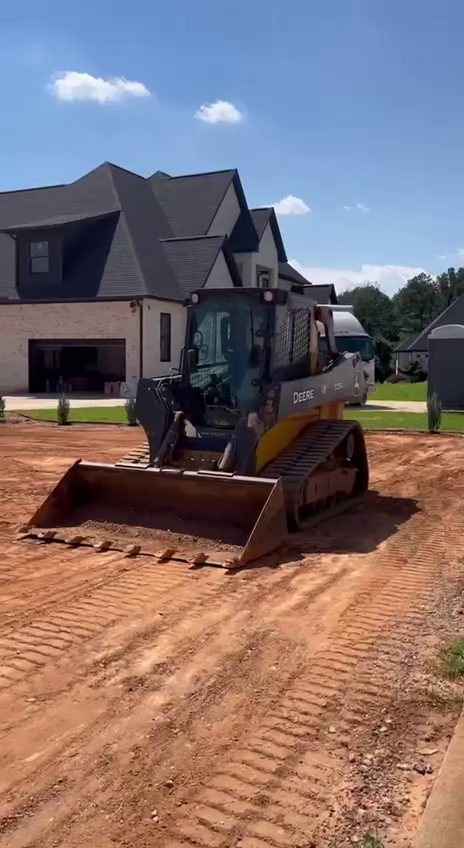
- Rough grading. Establishing positive drainage away from the structure footprint is part of a complete clearing job on a developed lot, not a deferred line item. Upstate red clay that isn't graded away from a building pad retains water against the foundation.
- Erosion control installation. Silt fence, sediment basins, and inlet protection are required on all permitted jobs. Even on smaller unpermitted jobs, they are the right practice when the lot drains toward a neighbor, road, or waterway.
Lots that have gone brushy without large standing timber — former pastures, abandoned residential lots, overgrown property margins — are a narrower scope covered on the overgrown lot page.
What clearing costs in Greenville County, and what moves the number
Pricing tracks job size, timber density, stump plan, and site-specific access. The full cost breakdown page covers county-level variables in more detail; this table shows the common scope brackets for the Upstate market:
| Scope | Typical Range |
|---|---|
| Brush and light vegetation only, under one acre, no large trees | $750–$1,500 |
| Light clearing with stump grinding, up to one acre | $1,500–$3,000 |
| Moderately wooded residential lot, stumps ground in place | $2,500–$5,000 |
| Heavily wooded lot, stumps removed, rough grade included | $5,000–$8,000 |
What moves the number within each bracket: species mix (hardwoods process more slowly than pine, particularly at large diameter), slope (steeper terrain limits equipment positioning and felling angles), debris haul distance, and whether a stormwater permit and erosion control plan are required. That last item can add days of coordination before work begins — a legitimate project cost that belongs in the initial quote, not as a later change order. Heavily wooded multi-acre tracts that require a full permit package price on scope; the cost page has guidance on those projects.
South Carolina's stormwater permit layer and why it matters on Piedmont soil
The EPA's NPDES stormwater program requires a Construction General Permit for any land disturbance of one acre or more. In South Carolina, that permit requires an approved Stormwater Pollution Prevention Plan before ground is disturbed and active erosion and sediment control throughout the project. At the county level, Greenville County Land Development issues its own land disturbance permits with specific grading and drainage standards that apply county-wide.
The practical consequence: a contractor who doesn't mention permitting on a job over one acre is pricing it one of two ways — without the permit (a cost the owner absorbs at inspection) or while planning to skip it (the owner's liability when the county inspector arrives). The permit number should exist before equipment shows up, not after. Ask for it before work begins.
Greenville County has seen 23 federal disaster declarations across 2003-2026, the majority tied to heavy rainfall events. The Upstate's red clay sheds water fast once vegetation is removed — a cleared lot without functioning erosion control can generate significant sediment runoff in a single storm. That is the practical reason the permit requirement exists in a county growing as fast as this one, and why crews who handle the compliance steps themselves are worth the difference in lead time and coordination.
Three questions that keep a clearing bid honest
"Is your contractor's license current, and what classification covers this work?" South Carolina requires a licensed contractor for projects above set thresholds, and classification matters — a license for one trade does not automatically cover grading and site work. The SC LLR Contractor's Licensing Board maintains a public license lookup. Verifying it before signing takes two minutes and closes the gap between a quote and a legal job. An unlicensed clearing job on a permitted site can expose the property owner to liability at inspection.
"What exactly is the stump plan, and is it written into the scope?" Grinding and removal are priced differently and produce different results. A quote that says "stump work included" without specifying which should be pinned down before the contract is signed. The end use (slab, lawn, driveway, utility corridor) determines which approach is correct, and changing it after equipment is on-site costs more than agreeing upfront.
"Who pulls the permit, and can I see the number before work begins?" On a permitted job, the contractor who pulls the land disturbance permit is the responsible party for compliance. Some contractors ask the owner to pull it — worth understanding clearly before signing, because it transfers regulatory exposure. If a permit number does not exist before equipment arrives, that is the moment to ask why.