Clay base, Upstate storms: what changes every Spartanburg road job
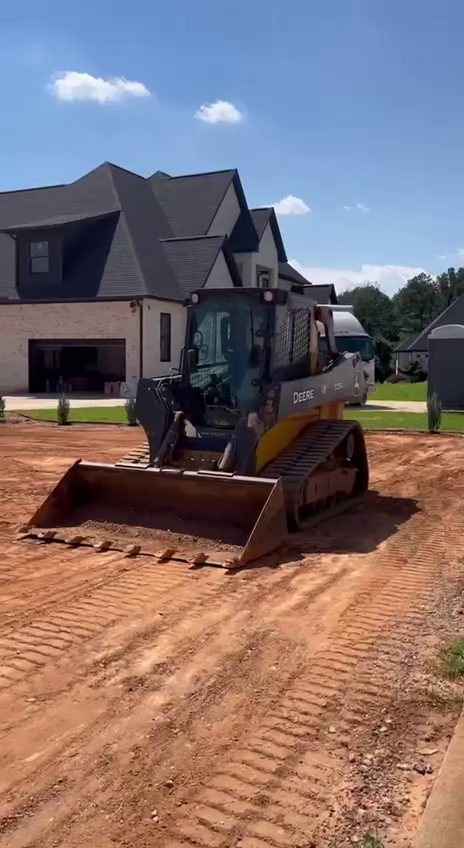
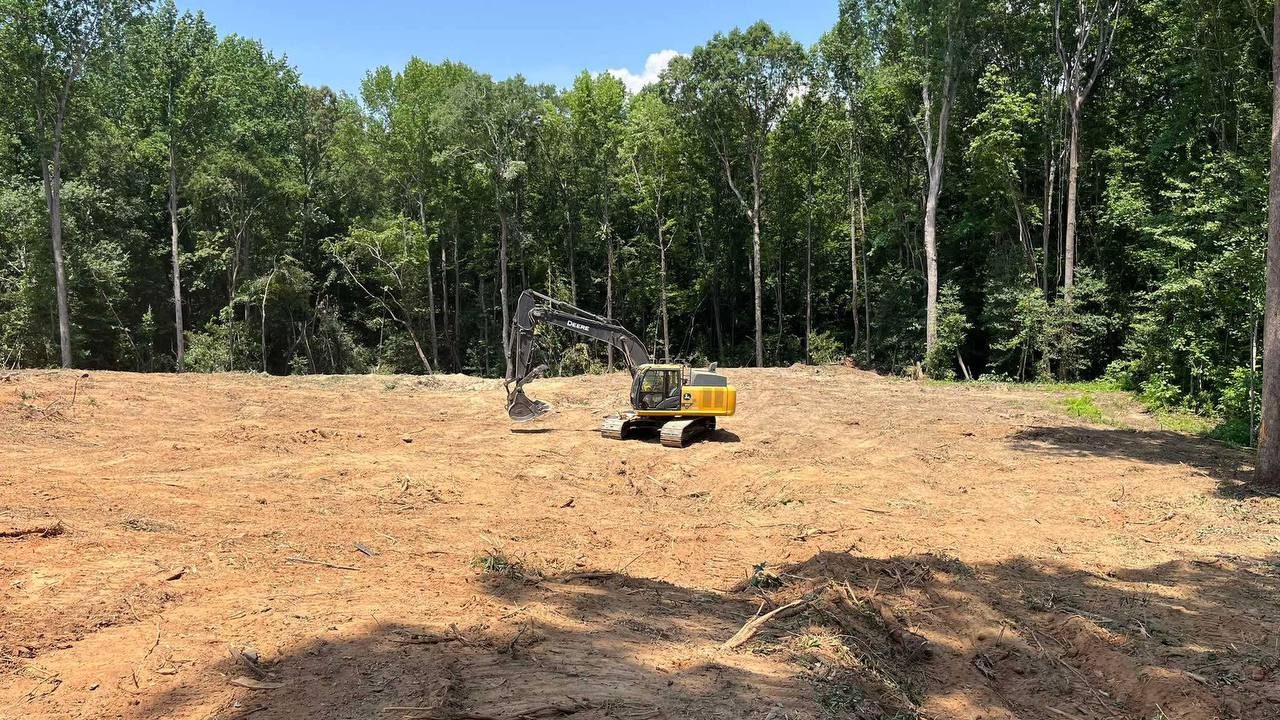
Spartanburg County sits in South Carolina's Upstate piedmont, in terrain that rolls without ever fully flattening, over a subsoil of red-orange clay that behaves differently from the sandy material common in the Lowcountry or the mountain soils to the northwest. That clay is the defining fact of private road repair work here. It compacts hard in a dry summer and turns near-plastic under sustained rain, sheds water poorly and traps it at the base course when it does infiltrate. A road that felt solid in August can rut deeply before Thanksgiving without a single maintenance pass in between.
Towns across this county, including Greer, Duncan, Lyman, Inman, and Chesnee, all sit in terrain where late-afternoon thunderstorms routinely drop an inch or more in under an hour. That rainfall intensity is what tests a private road's crown and ditch design, and it's why a re-crown job done without correcting silted ditches or undersized culverts tends to fail in the same spot the following season. The clay amplifies every drainage mistake. County-maintained roads hold up because they're built and graded to published standards; private roads cut decades ago without formal drainage engineering often weren't. Any repair scope that skips the drainage question is a temporary patch on a permanent problem.
How private roads fail in this county
Private road damage in Spartanburg County follows a few predictable patterns. The most common is a washed-out low section where the road dips toward a natural draw and the culvert (if one exists) has either been sized too small for the contributing drainage area or has silted shut over years of use. Second is washboard on a gravel road that hasn't been graded in a couple of seasons, where aggregate has migrated to the edges and the clay base is exposed down the center. Third is edge erosion where a cut-bank on a hillside lot lets water sheet across the surface instead of around it.
The signs that move a job from maintenance to repair: ruts deeper than three inches that refill within a week of grading, any section where water ponds after a storm instead of draining within a few hours, and a culvert crossing where the headwall has started to separate from the road embankment. Each of those is a drainage failure first and a surface failure second. The pothole and washboard guide walks through identifying which failure mode applies before a crew comes out; that determination matters for how the job is scoped and what it costs.
Scope and cost on a Spartanburg County road
Cost on a private road job runs from maintenance-level to full reconstruction depending on what failed and how far. The ranges below reflect typical conditions in this county: clay base, gravel surface, rural residential or farm access use. See the full private road repair cost breakdown for line-item detail and the factors that push a job toward the top of each range.
| Scope | Typical Range |
|---|---|
| Motor grading and re-crown (per sq ft) | $1–$2 |
| Regrade with gravel top-dress (per sq ft) | $1.50–$3 |
| Culvert replacement (per crossing) | $800–$2,500 |
| Washed-out section rebuild (per 100 ft) | $4,000–$10,000 |
| Full drainage correction and rebuild | Written scope required |
The bottom of each range assumes flat access, stable adjacent base, and a single damage point. The top assumes steep grade, significant base failure, and multiple drainage corrections required. A road that needs both a washed-out section rebuild and several culvert replacements is priced on the full scope, not by the linear foot of the worst section. Any bid that prices only visible damage without walking the entire road length is an incomplete scope, not a bargain.
What the storm record means for Spartanburg road drainage
Spartanburg County has seen 22 federal disaster declarations over 1991-2026 of record, most of them storm and flooding events. Each of those events hit roads that were built for ordinary rainfall, not the kind of slow-moving system that parks over the Upstate for twelve hours or the fast-moving line storm that drops two inches before the ditches can respond. When a road is rebuilt or significantly repaired today, it's worth designing drainage for that upper rainfall scenario rather than the median year. One washout can erase several seasons of maintenance savings.
Construction activity that disturbs an acre or more of land requires an NPDES permit under federal stormwater rules. The EPA NPDES construction stormwater guidance covers what triggers that threshold and what erosion controls must be in place. On a typical private road repair, that threshold is rarely reached by the road alone, but a combined project involving significant clearing or earthwork on adjacent parcels may cross it. Worth confirming with the contractor before work starts so the permit question doesn't surface mid-project.
Hiring the right crew for this work
Three checks specific to Spartanburg County road work. First, verify contractor licensing through the SC LLR Contractor Licensing Board — grading and excavation contractors working above certain dollar thresholds are required to hold a state license, and the license lookup is public and takes two minutes. Second, ask how the crew handles ditch sizing and culvert selection, not just surface grading. A contractor who re-crowns without correcting the drainage is scheduling your next repair call. Third, ask for references on clay-based private roads specifically. Gravel road work in coastal sand or crushed rock over hardpan behaves differently from piedmont red clay; experience in one doesn't transfer cleanly to the other.
For an overview of what a full private road repair scope looks like from initial drainage study through final compaction, the private road repair overview walks through the typical sequence, what each phase costs, and what to ask before anyone moves equipment onto your road.