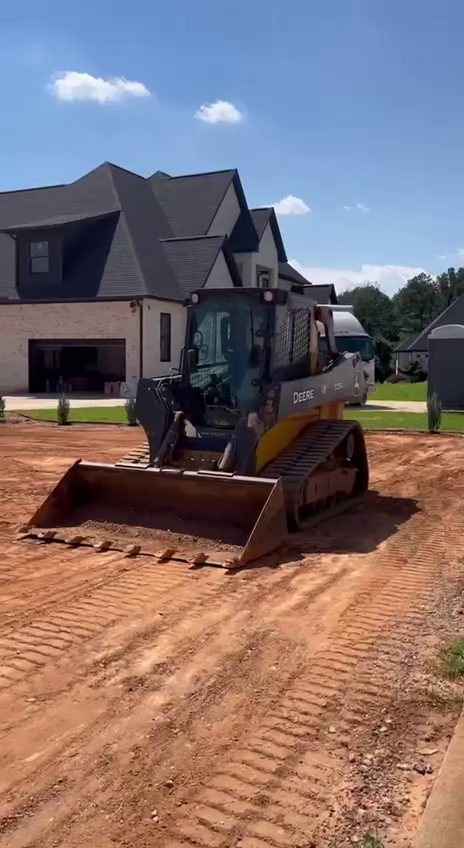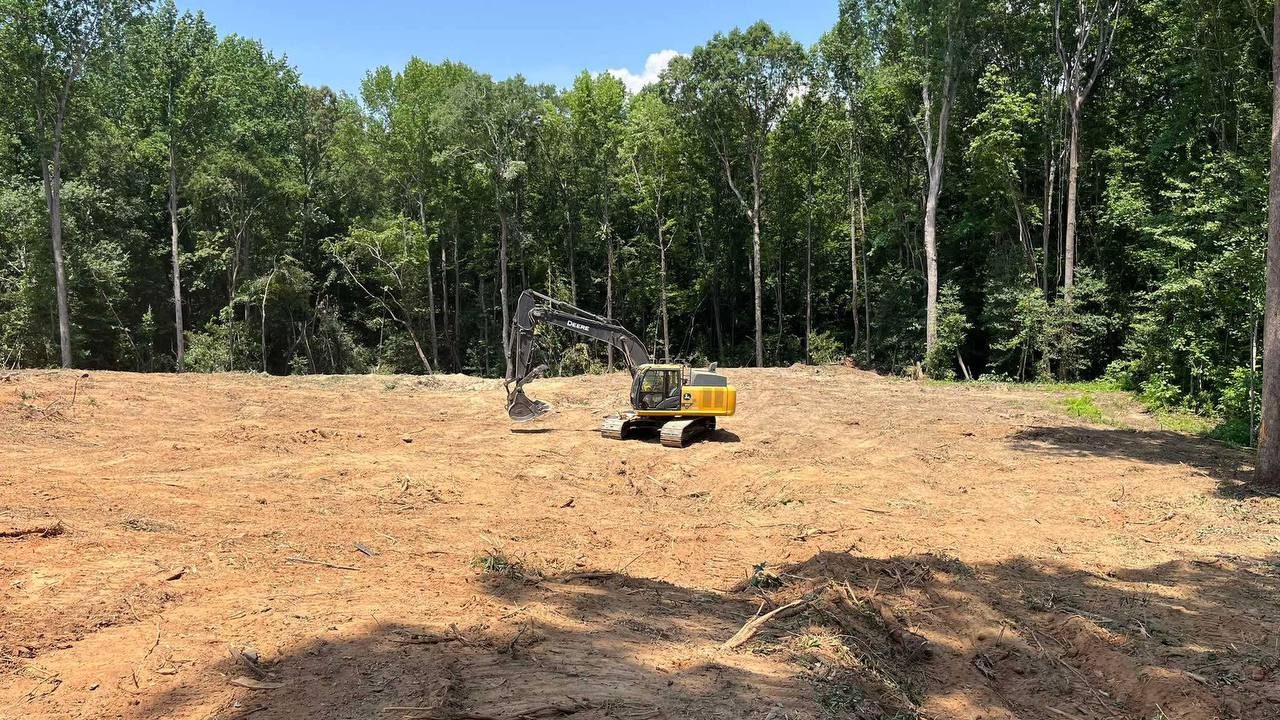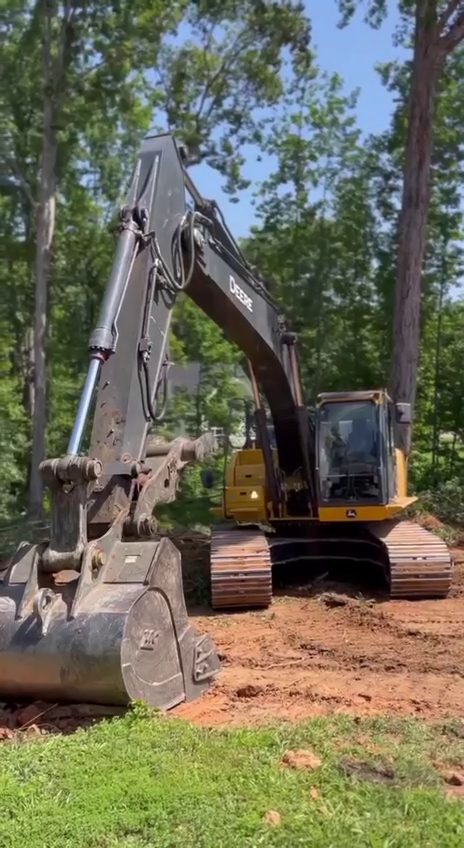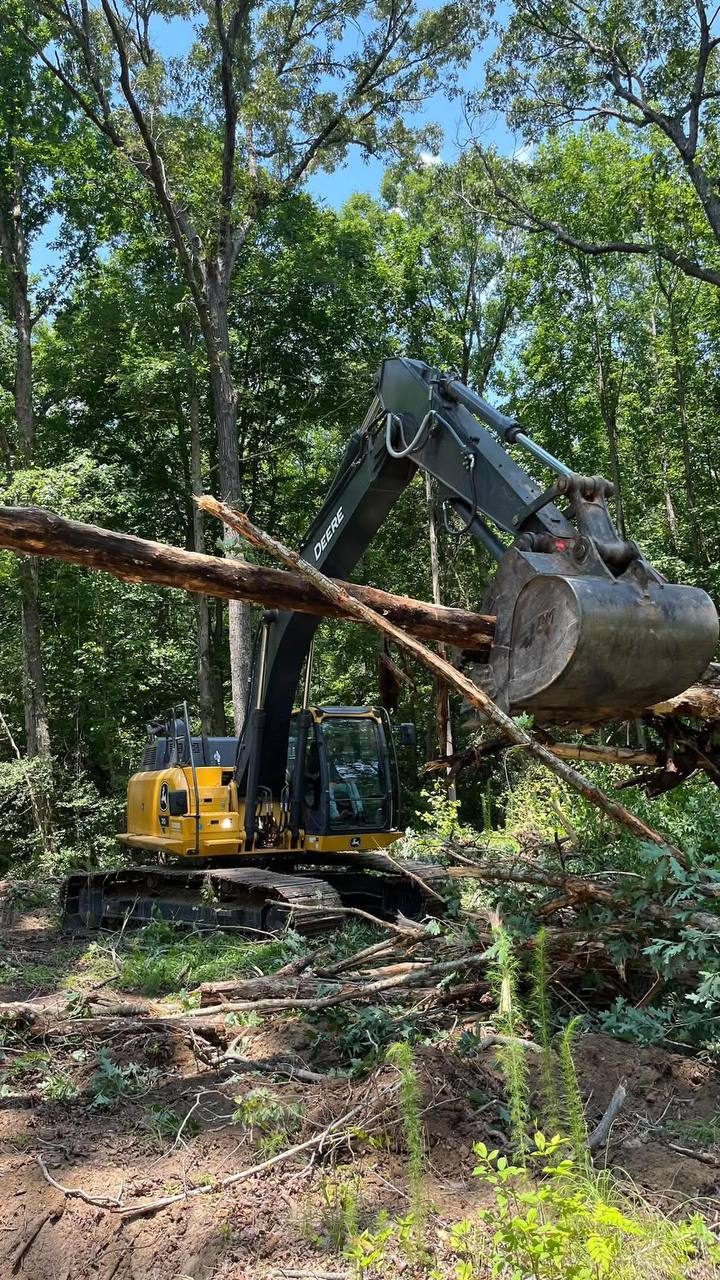
Piedmont Clay Is What Changes the Job Here
Most of Duncan and the surrounding Spartanburg County countryside sits on Piedmont red clay — soil that swells when saturated and hardens into ruts when it dries. That seasonal movement is not a background detail; it is the reason private gravel roads in this part of upstate South Carolina fail faster and more predictably than they do in sandier coastal counties. A road built on top of this subgrade without adequate base depth and crown slope will invert within a few seasons regardless of how fresh the stone was at install. The clay layer is not a problem you grade over. It is a problem you engineer around.
That distinction shapes every honest evaluation in this area. Regrading without correcting the drainage that keeps the clay saturated is temporary work. Drainage work that ignores how the base moves under load is incomplete work. The private road repair overview covers the full range of approaches — the right one for a given road starts with which layer is actually failing.
Reading What a Failing Road Is Telling You
The failure sequence on a clay-subgrade gravel road follows a recognizable pattern. First the crown flattens or inverts, and water begins tracking in the wheel ruts instead of sheeting off the edge. Then corrugation and washboard set in as vehicles work the softened surface — the mechanics behind that damage and what stops it are covered in the pothole and washboard guide. Left unaddressed, the ditches silt in, culverts back up, and isolated soft spots grow into the full-section washouts that carry the highest repair cost.
Signs worth acting on before they compound: gravel migrating into the ditch line, any low point that holds standing water more than a day after rain, edges crumbling at the shoulder, and any section that feels soft or spongy underfoot when it should be firm. Movement that develops after every significant rain event and then recovers is a drainage failure. Movement that keeps growing between storms points to base failure. The two have different fixes, and confusing them is the most common way a road owner pays for the same stretch twice.
What Scope Costs Around Duncan
The full private road cost breakdown gives line-item detail; the table below maps scope to typical range for jobs in Spartanburg County. Clay subgrade and equipment access are the two factors that push jobs toward the high end of each range — a road reachable by a motor grader from a paved county road costs less per foot than one that requires equipment staging through soft or restricted ground.
| Scope | Typical Range | Notes |
|---|---|---|
| Re-crown and regrade | $1–$3 per sq ft | Gravel and compaction included; clay base prep may widen scope |
| Washed-out section rebuild | $4,000–$10,000 per 100 ft | Base material, gravel, and compaction; access is a cost driver |
| Ditch cleaning and reshaping | Additive to above | Silted-in ditches are a common companion job in this area |
| Culvert replacement or upsizing | Additive to above | Diameter and site access drive the number |
Any bid that leaves drainage off the scope on a clay-subgrade road is an incomplete scope, not a savings. Work that disturbs an acre or more of ground also runs into EPA NPDES stormwater requirements for construction activity — a contractor working on longer or more complex sections should be prepared to address those requirements, not surprised by them.
Storm History and What It Means for Drainage Design
Spartanburg County carries 22 federal disaster declarations on record (1991-2026), the majority of them storm and flood events. Each one pushed water at infrastructure built for lighter assumptions — and private gravel roads, without the engineered drainage of a paved county road, absorb that stress disproportionately. The upstate South Carolina storm pattern regularly delivers intense convective rainfall in short windows: a culvert or ditch sized for a moderate event will back up in a heavier one, and that overflow finds the nearest road surface.
Matching culvert diameter and ditch capacity to realistic storm loads is not over-engineering a private road — it is the difference between a road that comes through a heavy summer storm passable and one that needs a rebuild call by morning. Any repair bid worth taking seriously should specify crown slope and ditch profile, not just gravel tonnage. If those numbers are absent, ask why before signing.
Choosing a Contractor Who Knows This Ground
Grading and earthwork in South Carolina is regulated under the SC LLR Contractor's Licensing Board once projects reach the applicable threshold — confirm that any contractor you hire is appropriately licensed for the scope and can tell you so directly. The licensing requirement exists because grading work that affects drainage has real downstream consequences for neighboring property and public infrastructure, and the accountability structure matters when something goes wrong.
Beyond the license: ask specifically about clay-subgrade experience. A contractor whose background is concentrated in sandy or loam-dominant soils will under-specify base depth and subgrade prep for this region. Ask for references on jobs in Spartanburg County or the surrounding upstate area with similar road lengths and soil conditions. The right answer to how the clay layer gets handled is a specific one — base thickness, compaction standard, geotextile fabric where warranted. A vague answer to that question tends to produce a vague fix. Get the scope in writing before equipment shows up.