Ground that changes at the edge of town
Travelers Rest occupies the last flat stretch of Greenville County before the landscape climbs toward the Blue Ridge. That geography is not background color — it is the single fact that separates grading work here from most other jobs in the county. A subdivision lot on the south end of town grades like any other Upstate South Carolina parcel: modest slope, predictable red clay, standard drainage calculations. A lot pressed against the foothills north of downtown, backing up toward Paris Mountain State Park, or running along the Saluda Grade corridor is a different job entirely: steeper pitch, fractured substrate, and runoff volumes from uphill terrain that a standard flatland drainage plan was not built to handle.
The housing stock reflects that split. Established neighborhoods on gentler ground built in prior decades, newer subdivisions pushed into the foothills as Greenville's growth corridor moved north, and infill parcels that sat undeveloped for years precisely because they required proper site preparation before anything could safely be built. Greenville County is among the fastest-growing counties in South Carolina, and much of that growth has pressed development into terrain that previous generations left alone for a reason. That history is why a contractor quoting in Travelers Rest has to walk the lot, both the downhill edge and the uphill boundary, before any number means anything.
What the numbers look like here
Standard residential grading around Travelers Rest runs $1,200 to $5,500 for a typical lot. The full grading cost breakdown has line-item ranges; the table below shows where most jobs land and what drives the variation:
| Scope | Typical Range | Main cost driver |
|---|---|---|
| Finish grade, flat suburban lot | $1,200–$2,000 | Area, final compaction pass |
| Residential regrade, moderate slope | $2,500–$4,500 | Cut depth, fill volume, haul-off |
| Steep foothill build pad | $4,500–$5,500 | Engineered fill, slope stability, erosion controls |
| Heavy fill, drainage correction, or large regrading | $6,000–$8,000+ | Import fill, retaining work, survey staking |
Lots on the northern end of town consistently land in the third and fourth rows of that table. Any bid for a hillside parcel that carries no line item for erosion control or drainage swales should be read as incomplete, not as a competitive price: the terrain here makes those items real line costs, not upsells. For grading and excavation projects that pair earthmoving with utility trenching or foundation prep, plan the full scope together from the start; staging separate contracts adds mobilization charges and often requires regrading after utilities are set in the wrong position.
Permits, stormwater, and what county review actually covers
Grading that alters drainage patterns or disturbs substantial ground area requires a land disturbance permit in Greenville County. The Greenville County Land Development Division administers that process for Travelers Rest parcels, and the specific thresholds are worth confirming before work starts. For disturbances of one acre or more, federal stormwater requirements also apply: the EPA's NPDES program for construction activities requires a Stormwater Pollution Prevention Plan and a notice of intent filed before ground breaks.
Greenville County has recorded 23 federal disaster declarations over 2003-2026, many tied to flooding and storm events of the kind that concentrate on foothills terrain exactly like what sits at the north end of Travelers Rest. The county's permit review reflects that history. Drainage and erosion plans are examined against those terrain conditions, not rubber-stamped. A grading contractor who treats SWPPP documentation as optional paperwork on a hillside lot creates liability for the property owner above and the neighbor below.
SC licensing runs as a parallel requirement. Contractors performing grading and site work in this state must hold the appropriate classification through the SC LLR Contractor's Licensing Board. Ask for the license class before authorizing anyone to pull a permit in your name.
Drainage decisions made at grade time
The foothills terrain at the north end of Travelers Rest concentrates stormwater in ways that catch property owners off guard even on parcels that look manageable from the road. Sheet flow off the Blue Ridge escarpment moves quickly and does not dissipate the way it would across flat piedmont ground. A finished grade that directs water toward a property line without a defined swale, outlet, or drainage structure is not a finished grade — it is a deferred dispute with a downhill neighbor. The drainage question must be answered in the grading plan, not after the equipment leaves the site.
Swales and berms installed during the grading operation cost a fraction of what drainage corrections run after a structure is occupied and the grade is under a lawn. The practical check for a complete scope: the contractor asks where water enters the parcel from uphill, not only where it exits at the low side. On foothills lots north of downtown, uphill drainage volume can exceed what a standard Greenville County flatland estimate assumes by a significant margin. A contractor who does not walk the full parcel, including the uphill boundary, has not scoped the job.
Before the first machine arrives on your lot
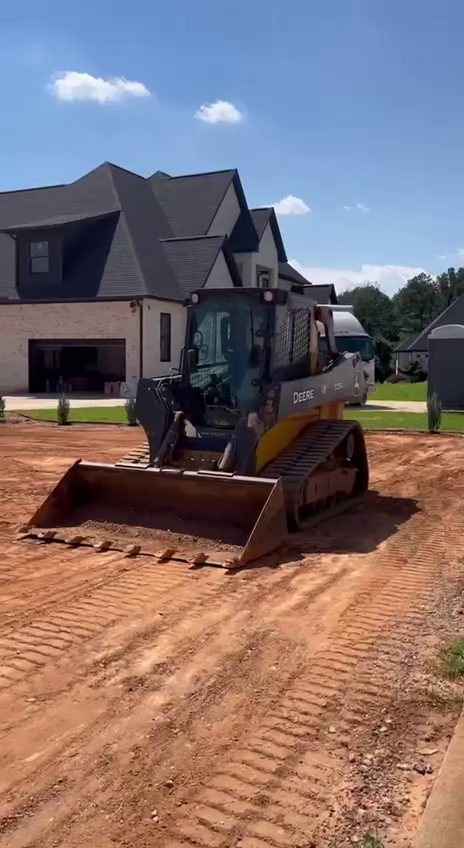
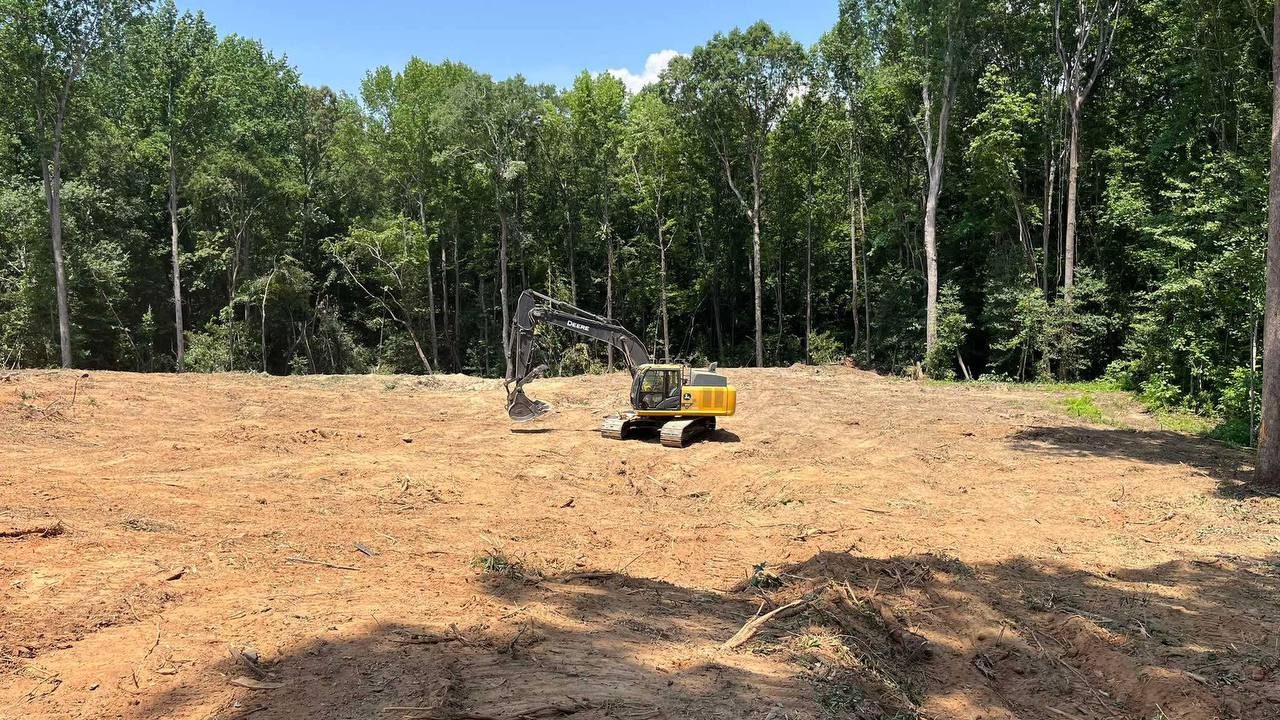
A thorough grading scope for a Travelers Rest project does more than describe how much dirt moves. It starts with a site visit that maps existing slope angles, identifies drainage inlets and outlets, and establishes finished-grade elevations relative to the planned structure. It includes a cut-and-fill calculation showing where excess material goes: exported off-site, redistributed on the parcel, or placed as structural fill under specified compaction tolerances. It closes with an erosion-control plan that meets both Greenville County permit conditions and applicable federal thresholds, and a drainage path that moves water away from the building pad and the property line in every storm event the site is designed for.
The coordination step that most bids omit: when grading precedes foundation or hardscape work, the grade plan has to align with the adjacent contractor's elevation requirements before equipment arrives. A build pad set at the wrong elevation relative to finished floor height is a costly correction once the slab is poured. The same applies to underground utility rough-ins — lines placed before final grade is established sometimes require re-trenching when depths do not match the finished surface. A single sequenced plan that covers grading, drainage, and rough-ins together avoids those conflicts in the field. That is the standard a complete scope should meet, and the question to ask before signing any contract.