Why Spartanburg drainage jobs start with the soil
Spartanburg County sits in the South Carolina Piedmont, where red-orange clay subsoil runs deep under nearly every residential lot. That clay is dense, nearly impermeable when compacted, prone to swelling when wet and shrinking when dry — a cycle that creates sustained moisture at grade after every rain and slow recovery through every dry stretch. Water that would slowly percolate through the sandier soils closer to the coast simply pools against the top of Spartanburg's clay layer, saturating lawns, pressing against foundation walls, and collecting under slabs until something gives.
The pattern holds county-wide. Older mill-village neighborhoods inside the city limits were graded flat during construction and have no natural escape route for runoff. Newer subdivisions in the Duncan, Lyman, and Moore corridors were built to minimum slope, leaving utility crossings to interrupt natural drainage draws. Rural acreage outside Greer and Inman sees culvert crossings that back water onto fields and yards during heavy rains. Standing water after a normal rain is the most visible sign, but Spartanburg's clay means that symptom can appear even on lots with modest impervious cover. A properly designed French drain is almost always the first corrective tool, but red clay requires a different installation than the textbook approach: backfill material, pipe slope, fabric wrap selection, and outlet placement all have to account for a medium that resists drainage rather than supporting it.
The Spartanburg price picture
The full cost breakdown has the line-item ranges. The short version: a single contained problem — one side of a yard, a foundation wet spot, a low corner that floods — typically runs between $3,000 and $5,500 for a standard trench and pipe installation. Once you add surface inlets for sheet-flow collection, multiple drainage runs, or a perimeter loop around a foundation, jobs regularly reach $6,000 to $12,000. Whole-yard regrading, when grade correction is the real fix rather than a drain line, starts around $15,000.
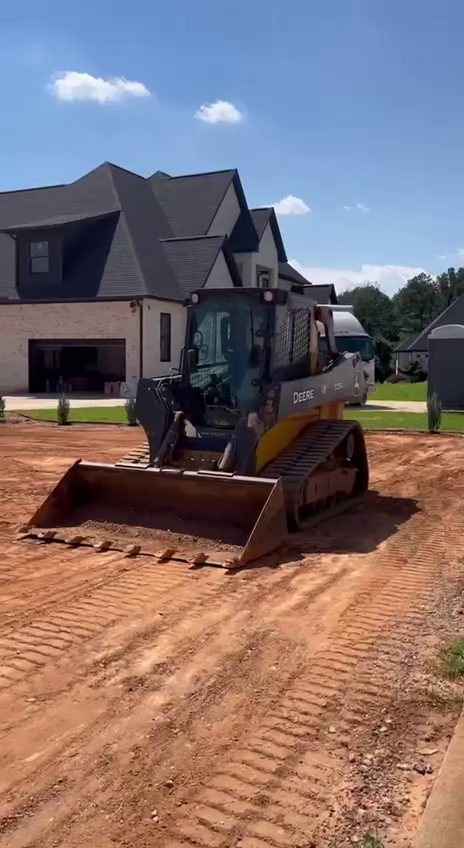
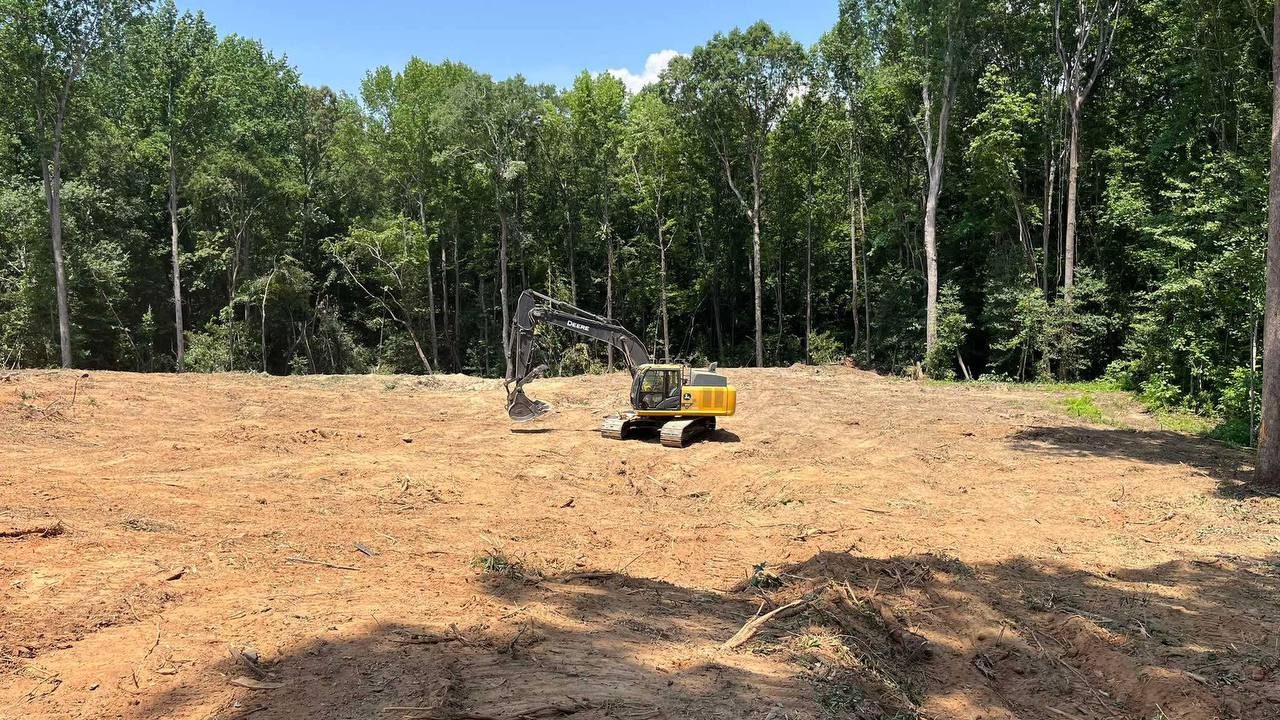
Red clay adds to the number at two points. Excavation through dense, compacted subsoil is slower and harder than work in sandy or loamy material. Backfill also has to be clean crushed stone rather than native material — returning Spartanburg clay to the trench defeats the purpose. Those are not add-ons; they are requirements of doing the job correctly here.
| Scope | Typical Range |
|---|---|
| Single trench run, 30–50 ft | $3,000–$5,500 |
| Single run with surface inlet | $4,000–$7,000 |
| Multi-run yard drainage system | $6,000–$12,000 |
| French drain at foundation perimeter | $3,500–$9,000 |
| Whole-yard regrading with drainage | Starts around $15,000 |
Jobs that look simple at the quote stage sometimes reveal buried utility lines, root intrusion from mature hardwoods, or old fill material that shifts once excavation starts. Spartanburg's older mill neighborhoods have all three. That is why a full lot walk belongs in every serious estimate — not just a look at the wet spot.
Storm history and what it asks of a drainage system
Spartanburg County's federal disaster record frames the calls drainage contractors receive here. 22 declared events across 1991-2026 are dominated by storm and flooding categories, and each major event saturates soil that was already slow to drain. In denser residential corridors the water has fewer natural outlets than when development was lighter, and each new subdivision that fills a former field raises the runoff burden on the properties below it.
That history shapes what a durable system needs to handle. One sized only for average rainfall will fail visibly the first time a genuine storm moves through. The National Weather Service maintains the precipitation record for Upstate SC, and design professionals use that data to size systems for realistic storm frequencies rather than the lightest plausible event. Projects that disturb an acre or more of land also trigger federal oversight: the EPA's NPDES Construction Activity stormwater rules require a pollution prevention plan and erosion controls. A residential French drain rarely crosses that threshold on its own, but a combined regrading and drainage project often does — and a contractor who doesn't know the line creates regulatory exposure on your property.
When a French drain is enough and when it isn't
A French drain solves one specific problem: it intercepts subsurface water moving through the soil profile and routes it to a controlled outlet. It does not change grade, waterproof a foundation wall, or stop surface sheet flow arriving from a neighboring property. Those require different tools, and getting the diagnosis right before the excavator arrives matters more than the fastest quote.
In Spartanburg's older neighborhoods, the connection between drainage and foundation condition is especially direct. The same clay that retains water also exerts lateral pressure on foundation walls when saturated, and prolonged moisture against an older block or poured foundation accelerates deterioration. A French drain installed at the foundation perimeter intercepts groundwater before it reaches the footing — that is preventive maintenance as much as repair. Left unaddressed, the water filling a low corner of the yard is working on the footing below at the same time. Solving the yard problem first typically addresses both.
For lots where grade is the fundamental issue and no drain line can compensate, regrading is the upstream fix and drainage is the reinforcement. Those projects are larger and priced accordingly, but they are also more permanent — a drain line fighting soil that actively resists drainage has a shorter service life than one installed where grade supports it.
Permits, licensing, and hiring well in this market
South Carolina requires contractor licensing for grading and drainage work above residential exemption thresholds. The SC LLR Contractor's Licensing Board governs those requirements, and any project that connects to county stormwater infrastructure or involves significant earthwork will also touch code standards maintained by the SC LLR Building Codes Council. For a residential French drain, that means a site permit from Spartanburg County before work starts and a discharge plan that proves water exits your property in a controlled way rather than shifting the problem to the next lot downhill.
Three Spartanburg-specific questions worth asking any drainage contractor: has the crew worked specifically in Piedmont red clay — backfill choices here are not interchangeable with sandy or silt soils; how do they handle outlet placement when the lot's natural low point is at or near a property line; and does the contractor pull the county permit or leave that to you. The first filters genuine local experience. The third tells you whether the work is designed to last. When you are ready to compare bids, the French drain installation guide details exactly what a proper site assessment should include before any digging starts.