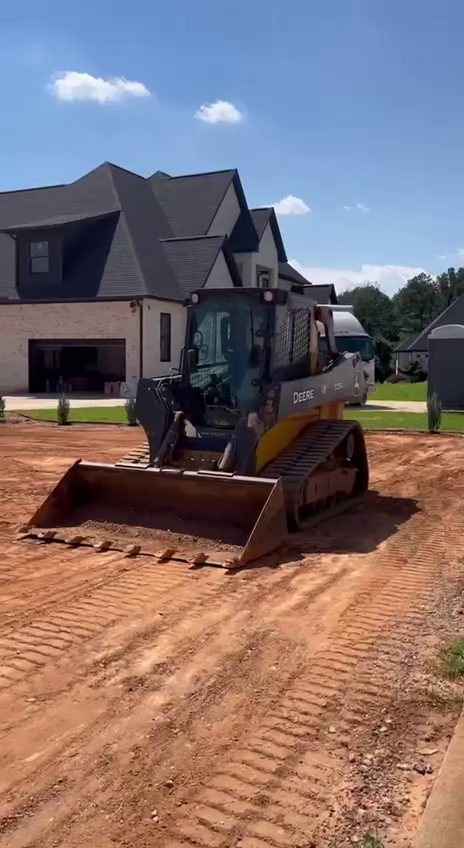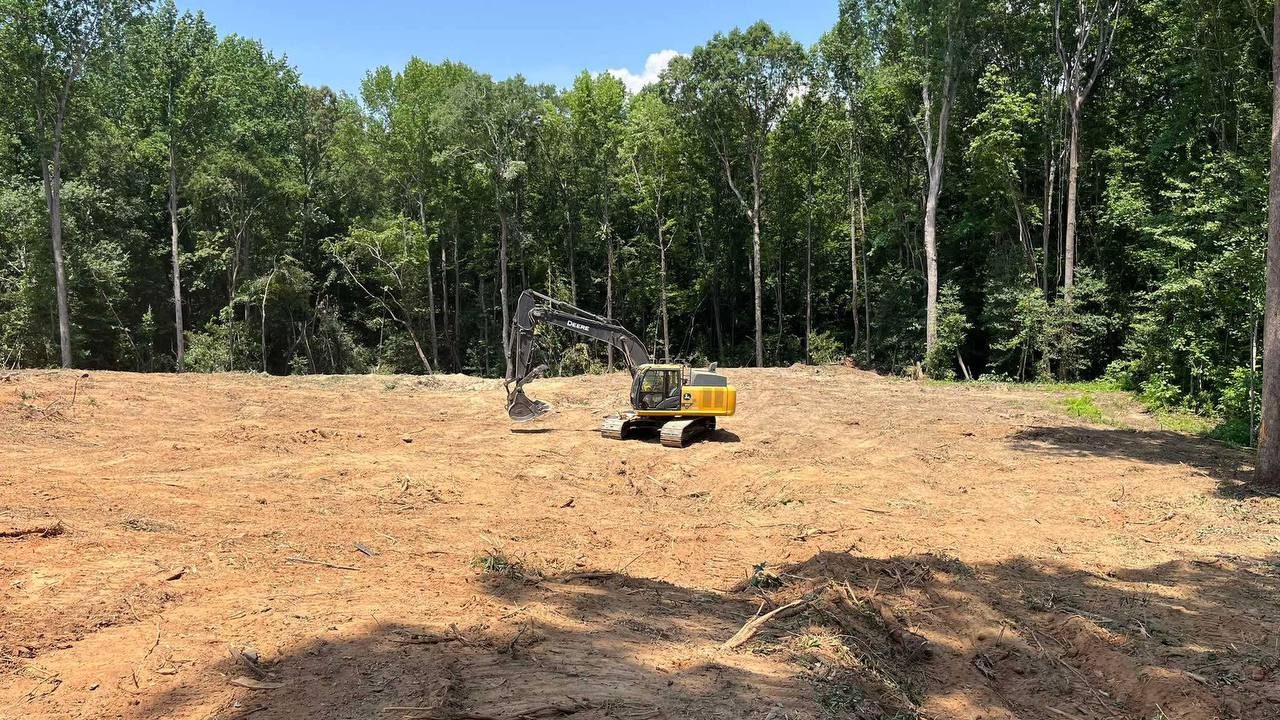
Why Greenville County clay sets the terms for every repair
Fountain Inn occupies the Piedmont transition zone — not the sandy coastal plain two hours south and not the rocky foothills that begin near Travelers Rest. It sits in the red-orange clay belt that runs through southern Greenville County toward the Laurens County line, and that geology makes private road maintenance here different from either end of the state. The clay sheds surface water quickly enough to carve ruts on any grade over three percent, then holds subsurface moisture long enough to undermine the aggregate base beneath a gravel road surface. A road can look serviceable through a dry summer and lose half its edge in a single November rain event.
The I-385 growth corridor added substantial residential development to this part of Greenville County through the 1990s and 2000s. Many of the private subdivision roads built to serve those neighborhoods are now reaching their first real maintenance cycle, often without HOA budgets calibrated for what a full regrade actually costs. A gravel topdress without correcting the drainage profile buys one season at most. See the full scope framework at our private road repair overview before deciding which approach fits your road.
Reading the failure type before calling anyone
Private roads in this part of Greenville County tend to fail in one of three recognizable patterns. Edge erosion is the most common: lateral drainage with nowhere to go cuts channels along the shoulder, widening each season until vehicles start dropping a tire off the travel surface. Washboard is the second pattern — the corrugated ripple that develops on unpaved grades when the surface loses its crown and traffic redistributes loosened aggregate into waves. That ripple tells you water has been running down the centerline instead of shedding to the sides. The third pattern is sub-base saturation near culverts: a blocked or undersized culvert at a low crossing backs water into the roadbed and softens the sub-grade below the gravel, turning what felt solid into something that moves underfoot after rain. In Greenville County clay, that saturation can develop in a single heavy-rain event once drainage is compromised.
Clusters of potholes near a culvert outlet are a drainage problem first and a surface problem second. Patching the surface without clearing the culvert restores the appearance for one season and nothing more. The potholes and washboard guide covers how to match the symptom to the correct repair before scheduling any work.
Scope and cost for roads in this area
The table below covers the most common repair combinations for private roads in Greenville County. Haul distance from local aggregate suppliers, existing sub-base condition, and slope grade are the main price movers. Any scope that involves base reconstruction on clay sub-grade will sit toward the upper end of its range. Full line-item detail is at the private road repair cost page.
| Scope | Typical Range | When it applies |
|---|---|---|
| Regrade & re-crown (base intact) | $1–$3 / sq ft | Crown lost, edges soft, sub-base still competent |
| Gravel topdress after regrade | Varies by haul & tonnage | Surface depth below minimum after regrading |
| Culvert clearing or reset | Varies by size & access | Blocked outlet or misaligned pipe at a low crossing |
| Partial washout rebuild | $4,000–$8,000 / 100 ft | Base loss on a section, sub-base still sound |
| Full section rebuild | $7,000–$10,000 / 100 ft | Sub-base failure, severe slope erosion, standing water |
Road repair scopes that disturb a significant area may fall under EPA NPDES stormwater permit requirements for construction activity. Most maintenance regrading stays well under the threshold, but longer driveways or multi-lot access roads requiring extensive cut-and-fill work can cross it. Confirm disturbed-area totals with your contractor before scheduling.
Storm history and what it has done to road drainage here
Greenville County has accumulated 23 federal disaster declarations over 2003-2026, the majority tied to severe weather and flooding. Each event pushes a rainfall pulse through private road drainage systems that were originally sized for more routine storm frequencies. Roads that held through earlier events may fail on the next one if the crown has gradually degraded, culverts have silted in, or upstream development has increased the runoff volume the road receives. The National Weather Service maintains the precipitation records that inform proper drainage sizing for this region.
The practical effect in this corridor: a road built in 1997 to serve a ten-lot subdivision may now drain runoff from three times that impervious area as the surrounding parcels have been cleared and developed. Greenville County Land Development regulates stormwater on private development projects under standards that also apply to road repair work that modifies existing drainage patterns. Understanding where the upstream water comes from is part of scoping any repair correctly — a road that gets rebuilt without accounting for changed upstream conditions is a road that gets rebuilt again.
What to look for in a contractor for this work
Grading and site work contractors performing private road repair for hire in South Carolina are subject to licensing requirements administered by the SC LLR Contractor's Licensing Board. Verify that any firm you consider holds an active license and that the license class covers your specific scope — a grade-and-topdress job sits in a different category from a scope that involves culvert structure work or significant base reconstruction.
Beyond licensing, ask three questions before accepting a price: whether they have worked on clay-base private roads in Greenville County specifically and not just general site prep; whether their quote includes a cross-section check at multiple points along the road before they set a number; and how they plan to handle drainage during active construction. A contractor who can answer the third question with specifics understands that the road surface and its drainage are one system. One who cannot is likely to deliver a road that reloads with water within the first month after their equipment leaves the site.