The foothills lot problem in a fast-growing county
Greenville County has absorbed some of the fastest residential growth in South Carolina for the better part of a decade. Buyers who cannot find flat-lot inventory near the city proper push northwest — toward Travelers Rest, Marietta, and the Tigerville corridor — where land is available and prices drop. What those lots share: they slope. Some slope manageably; some are genuinely a lot too steep to build on without serious engineered earthwork. Knowing which you have determines whether your purchase was a good deal or a hidden liability.
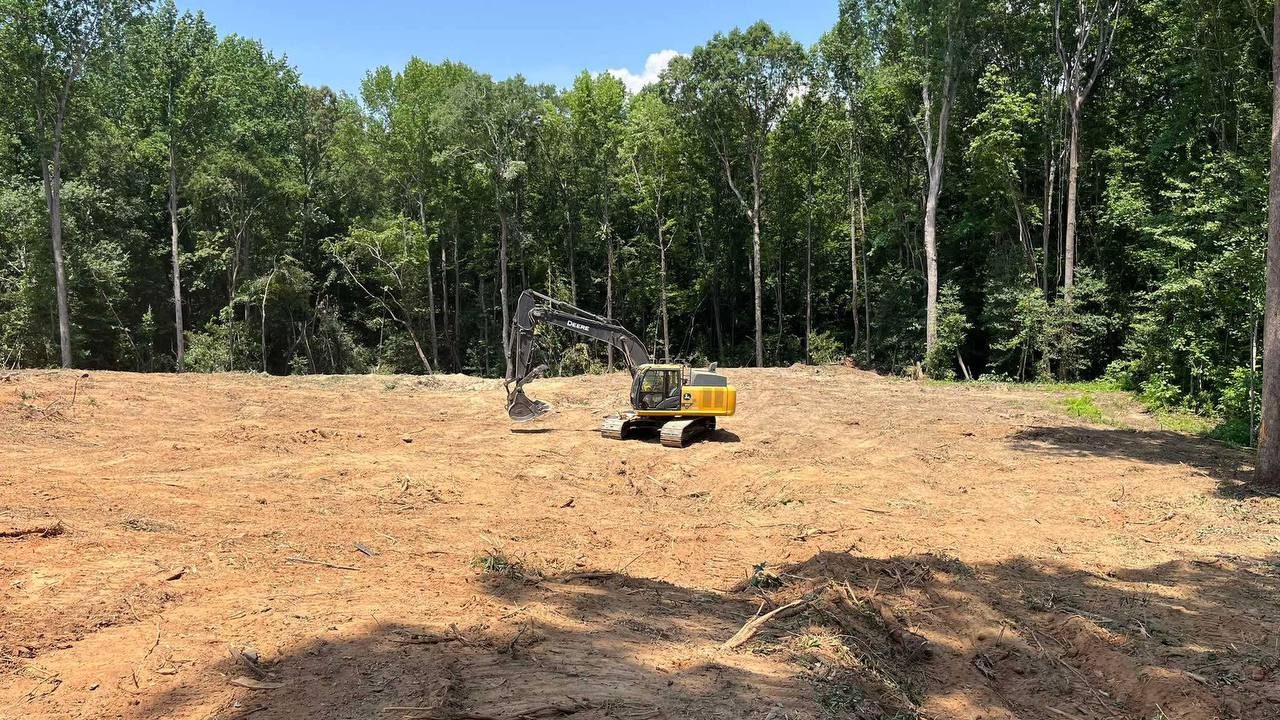
The Piedmont grades up sharply as it approaches the Blue Ridge escarpment. Lots that read as "wooded" or "private" on a listing often carry 20-to-30-degree cross slopes, rock close to the surface, and drainage channels that become significant stormwater events after a heavy rain. None of that is obvious on a plat map, and none of it is cheap to address without a plan built around this terrain specifically. The grading and excavation scope on a foothills lot starts with an honest look at what the land is actually doing.
When slope becomes a permit and engineering requirement
Different grade thresholds trigger different review requirements. The South Carolina building framework administered through the SC LLR Building Codes Council establishes baseline standards for grading and drainage, while Greenville County's Land Development Division enforces its own grading permit process for disturbed sites. On a steep foothills lot, work will almost certainly cross the acreage and disturbance thresholds that require a formal permit and an engineered grading plan before the first machine moves.
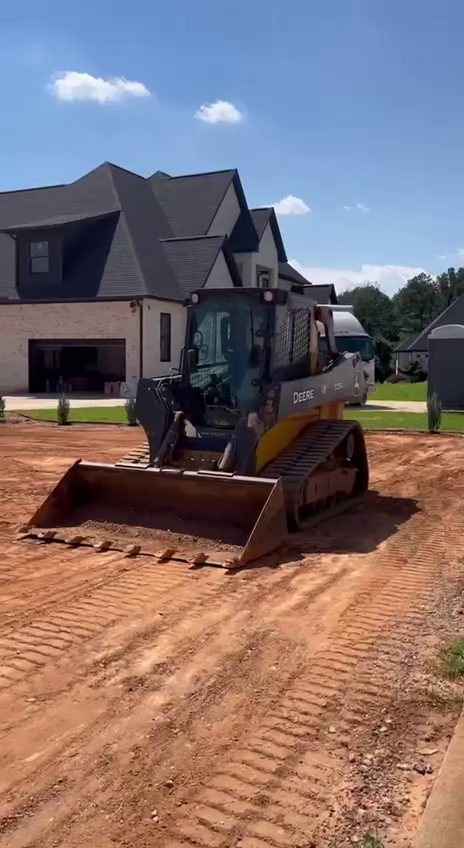
An engineer's input is not optional on a genuinely steep site. The questions that drive the plan: where the building pad sits relative to the natural grade, what retaining structures hold the cut-side and fill-side, and where water exits the site without damaging adjacent properties. A properly engineered building pad on a foothills lot looks nothing like a standard residential grading job. The full site preparation scope expands to include drainage rough-in, retaining wall design, and stabilization before a foundation contractor can be called. Any bid that skips the engineering line entirely is a flag, not a bargain.
What this work costs across Greenville County
Costs scale with grade, soil type, and the retaining requirements the engineer's plan calls for. Rock close to the surface — common in the Blue Ridge foothills — adds removal costs that do not show in a drive-by estimate. The ranges below reflect typical Greenville County conditions; lots toward the northwest end of the county regularly land at the higher end of each band due to grade severity and rocky soil.
| Scope | Typical Range |
|---|---|
| Survey and site engineering (grading plan) | $1,500 – $5,000 |
| Moderate slope grading (8–15% grade, basic cut-fill) | $8,000 – $22,000 |
| Steep slope pad work (15–25% grade, retaining walls needed) | $22,000 – $55,000 |
| Very steep or major cut (25%+ grade, engineered walls) | $50,000 – $100,000+ |
| Stormwater and erosion control installation | $3,000 – $14,000 |
| Retaining wall (per linear foot, block or poured) | $40 – $120 |
These figures assume a single-family residential pad. Any bid that bundles engineering, stormwater, and earthwork into a single line item without separating them is hiding something. A scope broken out by phase is the standard to expect from any crew working Greenville County foothills lots.
Stormwater obligations that follow the grade
Disturbing more than one acre of a steep lot — a common threshold on these jobs — triggers federal NPDES permit requirements for construction stormwater under the EPA's program for construction activities. That means a Stormwater Pollution Prevention Plan, site inspections, and erosion controls that must be in place and maintained through construction completion. On a 25-percent grade with tree cover removed, this is not a paperwork formality; it is a physical requirement to keep the job from washing into the Reedy River watershed.
Greenville County has recorded 23 federal disaster declarations over 2003-2026, the majority tied to storm and flooding events. That history shapes what county reviewers expect from steep-lot grading plans: routing water off your pad onto an adjacent property or into an undersized drainage swale will not clear review. Where the water goes after it leaves your site is part of the scope from the first planning meeting, not something addressed after grading is finished. A proper erosion control plan built for this terrain keeps the job compliant and the site stable through every rain between mobilization and final seeding.
Hiring the right crew for foothills work
Grading and excavation on a steep lot requires a licensed contractor in South Carolina. The SC LLR Contractor's Licensing Board sets those thresholds — asking for license documentation before signing anything is standard due diligence. Beyond licensing, ask for the engineer's name on the grading plan, ask for references on jobs with comparable grades in the foothills, and ask how the crew sequences cut, fill, and drainage. A contractor who bids a 30-percent slope the same way they bid a lawn grading is making assumptions that become change orders mid-job.
Foothills grading typically runs in stages: cut and fill to build the pad, retaining structures to hold both sides, drainage rough-in, then erosion seeding and stabilization before the site is closed. Compressing the sequence to save schedule creates slope failures and stormwater violations that cost more to correct than the savings ever justified. The phased approach also gives county reviewers and the engineer checkpoints to verify progress — which matters on steep-lot work where a single heavy rain between phases can undo days of earthwork.